
Pruning
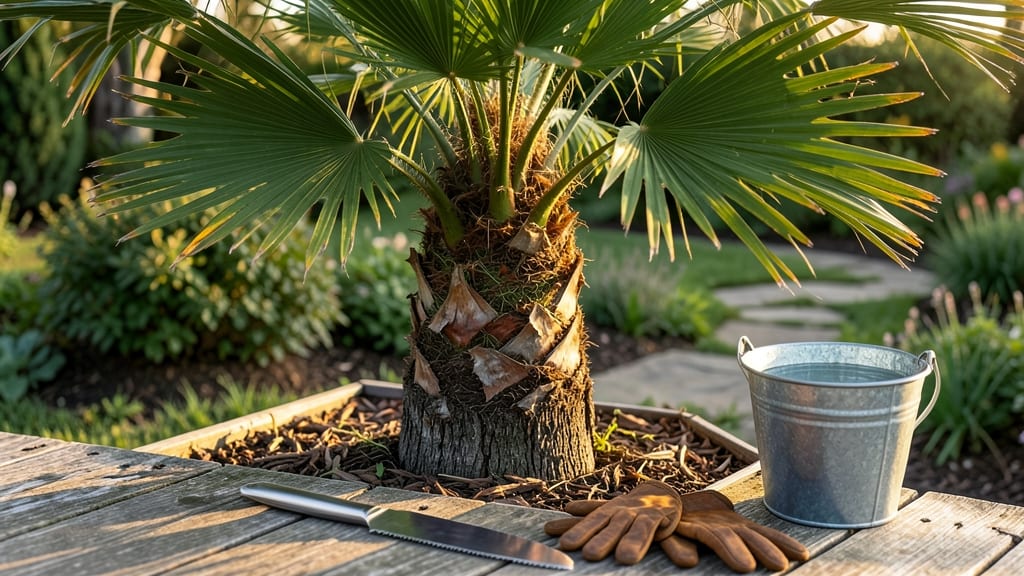
Your palm tree's bark falling off isn't always a death sentence—it's often a cry for help. 🌴 I've nursed back several palms where the trunk looked like it had been sanded down, and the key was identifying whether it was natural shedding, wind damage, or something more serious like fungal rot.
The first step is checking for clues: is the bark peeling in clean sheets or coming off in ragged patches? Clean peeling usually means it's just growing out, but ragged, discolored areas with a musty smell signal trouble—likely Ganoderma or another fungal infection.
Healthy bark should stay firmly attached unless it's a naturally shedding species like the California fan palm.
For infected areas, prune out the damaged sections with sterilized tools, then seal the wound with a fungicidal paste. Improve drainage around the base and avoid overwatering—palms hate soggy roots. Within a few months, you'll see fresh growth pushing through, and the canopy will thicken again.
If more than 25% of the trunk is affected or you see oozing sap, call an arborist. Some infections spread faster than you can treat them, but caught early, most palms bounce back with the right care. The goal is a healthy canopy that keeps shading your patio for decades.
Understanding Bark Shedding Triggers
When your palm tree’s bark starts peeling away like sunburned skin, it’s rarely a random event—it’s a cry for help or a natural cycle gone awry.
Below, we break down the science behind why palm tree bark falls off, so you can diagnose the issue with confidence and act fast. 🌿🔍
Palm trees are tropical survivors, but they’re not immune to thermal shock. Sudden swings—whether from scorching summer heat or a brutal winter freeze—can cause the bark to split and slough off as the tree’s protective layer struggles to adapt.
Why it happens:
- Cold damage: When temperatures drop below 30°F (-1°C), cell walls in the bark rupture, leading to peeling. This is especially true for cold-sensitive species like Cocos nucifera (coconut palms) or Phoenix dactylifera (date palms).
- Heat stress: Prolonged exposure to 100°F+ (38°C+) can dry out the bark, causing it to crack and flake like overcooked pastry. Think of it as desiccation stress—the tree’s outer layer loses moisture faster than it can replenish it.
- Sunburn effect: Intense UV rays (especially after rain or frost) can bleach and weaken the bark’s protective layer, making it more prone to shedding.
Actionable fix:
- ✅ Mulch the base with 3–4 inches of organic mulch (wood chips, straw) to insulate roots and moderate soil temps.
- ✅ Water deeply during heatwaves (1–2 inches per week) to hydrate the bark and prevent cracking.
- ✅ Use shade cloth (30–50% coverage) in extreme heat to reduce UV stress on young or sensitive palms.
Too much love (or the wrong kind) can drown your palm’s roots, leading to bark degradation as the tree diverts energy to survival. Waterlogged soil creates anaerobic conditions, which suffocate roots and trigger bark peeling as a secondary symptom.
Why it happens:
- Root rot: Palms hate soggy feet. Phytophthora fungi and Pythium thrive in waterlogged soil, rotting roots and starving the tree of nutrients. The bark peels as the tree sheds damaged tissue to conserve energy.
- Salt buildup: Overwatering with tap water high in chlorine/sodium leaves saline residue on the bark, causing it to harden and flake like dried mud.
- Compacted soil: Heavy or clay soil restricts oxygen flow to roots, leading to stress signals that manifest as bark shedding.
Actionable fix:
- ✅ Test your soil—aim for well-draining mixes (60% sand, 30% peat, 10% perlite). Amend clay soil with gypsum or compost.
- ✅ Water only when top 2–3 inches of soil are dry. Use drip irrigation to avoid wetting the bark (which promotes fungal growth).
- ✅ Flush the soil every 3 months with 1–2 gallons of water to leach out salts. Use rainwater or distilled water if possible.
Not all bark fallers are innocent bystanders—some are unwanted houseguests wreaking havoc. Pests and pathogens chew, burrow, or infect the bark, forcing the tree to shed damaged layers as a defense mechanism.
Why it happens:
| Culprit | How It Attacks | Bark Reaction |
|---|---|---|
| Palm Weevil Larvae (🐜) | Larvae bore into the crown, disrupting nutrient flow. Adult weevils lay eggs in cracks in the bark. | Bark peels in irregular patches near the trunk or fronds. Foul odor may accompany frass (insect droppings). |
| Ganoderma Butt Rot Fungus (🍄) | Invades via wounds or weak bark, rotting the vascular system. Thrives in humid, poorly ventilated areas. | Bark darkens and sloughs off in large, wet-looking patches. Trunk may oozes sap. |
| Scale Insects (🐛) | Sap-sucking pests cluster under bark, excreting honeydew that attracts sooty mold. | Bark turns black and peels due to mold growth. Sticky residue on fronds is a dead giveaway. |
Actionable fix:
- ✅ Inspect regularly for holes, sawdust-like frass, or oozing sap. Use a flashlight and magnifying glass for hidden pests.
- ✅ Apply systemic fungicides (e.g., propiconazole) for Ganoderma at the first sign of discoloration.
- ✅ Use neem oil or insecticidal soap for scale/weevils. Spray undersides of fronds and bark crevices every 7–10 days.
- ✅ Prune infected areas with sterilized tools (70% isopropyl alcohol), then dispose of debris far from the tree.
Not all bark shedding is a red flag—some palms shed naturally as they mature, like a snake sloughing off skin. However, accelerated shedding in young trees may signal deeper issues.
Why it happens:
- Species-specific cycles: Palms like Washingtonia filifera (California fan palm) or Trachycarpus fortunei (windmill palm) shed old bark annually
Reviving Your Palm Tree’s Canopy
Seeing your palm tree’s bark peeling away or fronds turning brown can feel like a slow-motion disaster—but don’t panic! With the right approach, you can nurse your tree back to health and even prevent future damage.
Below, we break down practical, step-by-step solutions tailored to the most common causes of bark loss and canopy decline. Think of this as your palm tree’s emergency repair kit, complete with prevention tips to keep it thriving for years.
If your palm’s bark is peeling due to nutrient starvation, it’s time to give it a boost. Palm trees are heavy feeders, especially in sandy or poor soils, and they need a balanced diet to maintain their structural integrity.
🍽️ Step 1: Test Your Soil
Before grabbing a bag of fertilizer, know what’s missing. Conduct a soil test (available through local extension offices or DIY kits) to check for deficiencies in:
- Nitrogen (N) – Yellowing fronds or stunted growth?
- Potassium (K) – Weak stems or brown leaf tips?
- Magnesium (Mg) – Interveinal chlorosis (yellowing between veins)?
- Zinc or Manganese – Distorted or small fronds?
💡 Pro Tip:
If testing isn’t an option, Epsom salt (magnesium sulfate) can be a quick fix for magnesium deficiencies. Mix 1 tablespoon per gallon of water and spray it on the soil monthly during dry seasons. 🌡️ (Avoid overdoing it—too much magnesium can block other nutrients!)
🍂 Step 2: Choose the Right Fertilizer
Palm trees thrive on a slow-release, palm-specific fertilizer with a balanced NPK ratio (e.g., 8-2-12 or 6-3-6). Look for formulas with:
- Micronutrients like zinc, manganese, and iron (critical for bark health).
- Humic acid or seaweed extract (boosts root absorption).
When to apply:
- Spring (March–May): Heavy feeding to kickstart growth.
- Fall (September–November): Lighter feeding to prepare for winter.
❌ Avoid: High-nitrogen lawn fertilizers—they can burn roots and worsen bark issues.
🌱 Step 3: Improve Soil Drainage
Compacted or waterlogged soil starves roots of oxygen. Amend the soil with:
- Organic matter: Compost or well-rotted manure (2–3 inches mixed into the top 6 inches of soil).
- Perlite or coarse sand: Improves aeration in heavy clay soils.
If insects or pathogens are gnawing away at your palm’s bark or roots, you’ll need targeted intervention. Act fast—these issues spread like wildfire (literally).
🐜 Step 1: Identify the Invader
Common pests/diseases causing bark fall and canopy decline:
| Problem | Signs | Solution |
|---|---|---|
| Palm Weevil (🔪 Most destructive!) | Fronds yellowing from the bottom up, oozing sap, hollow stems. |
|
| Scale Insects | Sticky residue ("honeydew"), white/brown bumps on bark, sooty mold. |
|
| Fungal Diseases (e.g., Ganoderma) | Shelf-like brown fungus at the base, rotting trunk. |
|
💡 Pro Tip:
For palm weevil infestations, act within 48 hours of spotting symptoms—delaying treatment often means losing the tree. 🚨 (If the trunk is hollow, the tree is likely beyond saving.)
Extreme conditions—whether too much sun, salt, or drought—can cause bark to crack, peel, or die back. Adjusting your palm’s environment is often the easiest fix.
☀️ Step 1: Protect from Sun Scorch
Young palms or those recovering from stress need partial shade during harsh afternoons (especially in desert climates).
- Use shade cloth (30–50%) for newly planted palms.
- Plant tall, fast-growing trees (e.g., sycamore or eucalyptus) as windbreaks.
- Avoid pruning too aggressively—remove only dead fronds (never more than 1/3 of the canopy at once).
🌊 Step 2: Combat Salt or Chemical Burn
If your palm is near a road (salt spray) or treated with herbicides, the bark and roots suffer. Flush the soil with:
- Water + chelated iron (1 tbsp per gallon) to counteract salt buildup.
- Apply mulch (3–4 inches of wood chips) to insulate roots and block salt spray.
💧 Step 3: Water Wisely
Overwatering or underwatering both stress palms. Follow this rule:
- Deep watering: Soak the root zone 1–2 times per week (adjust for clay vs. sandy soil).
- Check moisture: Stick your finger 2–3 inches into the soil—if it’s dry, water.
- Avoid wetting fronds (encourages fungal growth). Use drip irrigation or soaker hoses.
An ounce of prevention is worth a pound of cure! Here’s how to future-proof your palm tree:
Frequently asked questions about palm tree bark falling off
Is it normal for palm tree bark to peel naturally?
Yes, some palm species like the California fan palm or windmill palm shed bark naturally as they mature, similar to how snakes shed skin. However, if your palm is young or the shedding is excessive, it could signal stress from environmental factors or pests. Look for clean, even peeling—if it's ragged or accompanied by discoloration, investigate further.
What does fungal infection look like on palm bark?
Fungal infections like Ganoderma butt rot typically show as dark, wet-looking patches on the bark that often ooze sap. You may also see shelf-like fungal growth at the base of the trunk. Unlike natural peeling, infected bark smells musty and often falls off in large, irregular chunks rather than clean sheets.
How can I tell if my palm tree has palm weevil?
Watch for fronds yellowing from the bottom up, oozing sap from the trunk, and a foul odor. The weevil larvae bore into the crown, creating hollow areas inside the trunk. If you see sawdust-like frass (insect droppings) or notice the trunk feels soft when tapped, you likely have an infestation that requires immediate treatment.
Will pruning help stop bark from falling off?
Pruning alone won't fix the root cause, but removing dead or infected fronds can improve air circulation and reduce stress on the tree. Always use sterilized tools and prune at the right time (during dry seasons). For severe cases, consult an arborist—sometimes the best solution is removing heavily infected sections while preserving healthy growth.
How long does it take for a palm tree to recover from bark damage?
Recovery time varies based on the cause. With proper care (correct watering, fertilization, and pest control), you may see new growth within 3-6 months. However, if the damage is extensive (like fungal rot or weevil infestation), recovery could take 1-2 years or may not be possible. The key is early intervention—don't wait until the problem spreads.