
Pruning
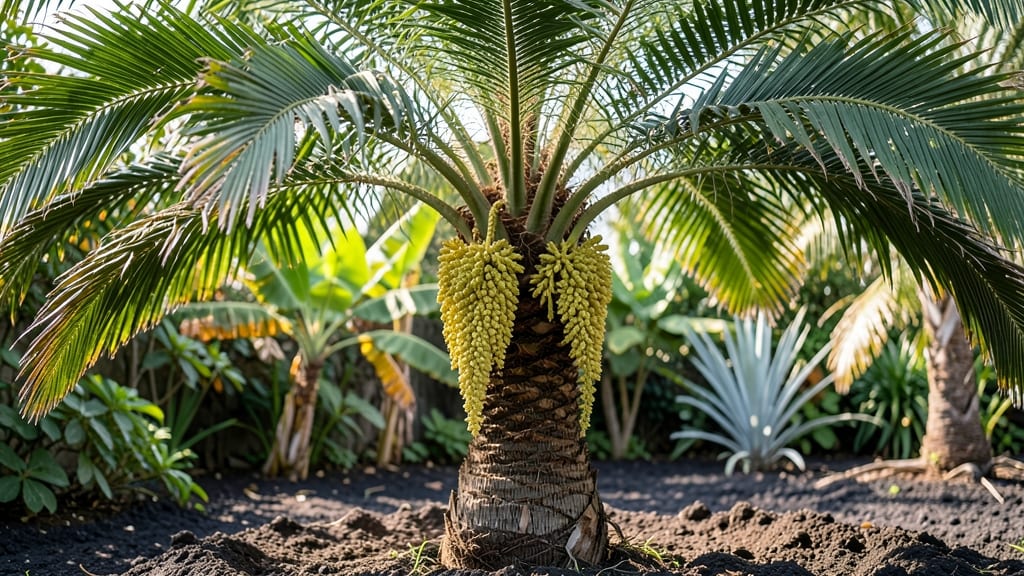
Male palm trees don't have separate sexes like flowering plants, but certain species like the sago palm or palm cycads develop distinct male and female reproductive structures—cones or fronds. Recognizing these differences early is key for successful pollination or propagation in both decorative and agricultural settings.
Most palms you see in landscapes are actually hermaphroditic, meaning each flower contains both male and female parts.
However, species like the sago palm (Cycas spp.) or palm cycads produce separate male and female cones that appear on different plants. 🌿 The male cones are typically yellowish and pollen-heavy, while female cones develop into large, woody structures that eventually produce seeds.
This distinction matters for gardeners because female palms often require male counterparts nearby for successful pollination—or you might end up with a yard full of seed-producing plants you didn’t plan for!
For those growing palms for fruit (like coconut palms), keeping a male plant nearby ensures pollination and harvest. Meanwhile, ornamental growers might prefer male-only plantings to avoid messy seed drop.
The key is observing leaf shape and cone formation early—male plants often develop cones along the underside of fronds first, while females may show subtle swelling before cones emerge.
💡 In This Article
- How Palm Tree Reproductive Structures Differ by Species
- Practical Tips for Identifying and Managing Male vs Female Palms
How palm tree reproductive structures differ by species
The most striking difference between male and female palms lies in their reproductive structures. While many palms are hermaphroditic (like the common date palm), species such as the sago palm (Cycas revoluta) and palm cycads exhibit unisexual reproduction.
Male plants produce yellow, pollen-laden cones that hang beneath the fronds, often measuring 6-12 inches long and covered in tiny sacs that release clouds of pollen when mature. In contrast, female plants develop woody, spherical cones that swell over time, eventually housing seeds after successful pollination.
What makes this fascinating is the developmental process. Male cones begin as small, compact buds along the underside of fronds, gradually elongating as they mature. The pollen they produce is highly specialized—each grain contains a single sperm cell, unlike flowering plants where pollen carries two sperm cells.
Female cones, however, start as small, rounded structures that harden into a protective casing as they grow. This difference in texture and form is your first clue when identifying gender in young plants.
The coconut palm (Cocos nucifera) offers another example where gender matters. Male flowers appear in long, drooping clusters called inflorescences, while female flowers develop into the familiar coconut fruit. The key distinction?
Male inflorescences are 10-20 feet long and produce copious amounts of nectar to attract pollinators, whereas female flowers are solitary or in small clusters, each potentially developing into a coconut. 🌴 This separation ensures cross-pollination, which is critical for fruit production.
Not all palms follow this pattern. Some, like the Kentia palm (Howea forsteriana), are hermaphroditic, meaning each flower contains both male and female parts. Others, such as the palmetto (Sabal spp.), produce separate male and female flowers on the same plant—a condition called monoecious.
Understanding these variations helps explain why some palm species thrive in mixed plantings while others require careful gender management for optimal results.
For gardeners, recognizing these differences early can prevent unwanted seed production or ensure successful fruit-bearing. Male cones often appear first in spring, while female cones may take months to develop fully. The sago palm, for instance, can take 5-10 years to produce cones, so patience is key.
Meanwhile, coconut palms may show gender differences within 3-5 years, making early identification crucial for orchards or home gardens.
Here’s what to watch for: male plants typically have longer, more slender fronds with cones forming along the underside, while female plants may show thicker, more robust fronds with cones developing at the tips.
The scent also differs—male cones emit a faint, sweet pollen aroma, whereas female cones have a more earthy, woody fragrance as they mature. 🌿