
Container Gardens
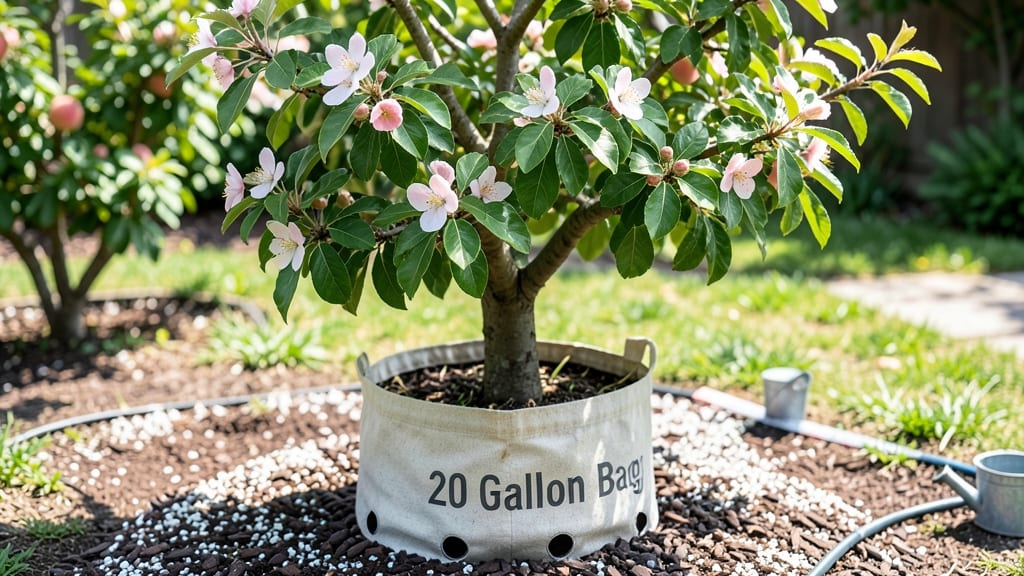
Your peach tree's future fruit depends on the right container size—at least 24 inches wide and deep, but bigger is always better for long-term health. 🌱 I learned this the hard way when my first dwarf peach struggled in a 15-gallon pot, producing tiny fruit and weak branches.
The roots need space to spread and anchor the tree as it matures, especially since peaches are heavy feeders. Most gardeners underestimate how quickly a peach tree outgrows its container.
A 30-gallon pot gives you 3-4 years of growth before repotting, while a 50-gallon container can handle a mature dwarf peach for a decade.
The key is matching the pot size to your tree's variety—dwarf peaches need less space than standard trees, but they still demand room for roots to breathe. You'll notice the difference in just one growing season: stronger branches, heavier fruit set, and fewer stress-related problems like leaf drop.
The right container also means better drainage—peach trees hate soggy roots—and easier winter protection when temperatures dip below freezing. For best results, choose a fabric grow bag or heavy-duty plastic pot with drainage holes.
Avoid decorative containers without proper drainage, and always use a high-quality potting mix designed for fruit trees. With the right setup, your container-grown peach could outperform many in-ground trees.
📚 In This Guide
- What you need
- Instructions
- Tips and common mistakes
- Wrapping up and next steps
What you need
- ● Container: Minimum 5-gallon capacity (for dwarf varieties) or 15+ gallons (for standard-sized trees).
- ● Width: At least 18–24 inches (wider = better root spread).
- ● Depth: 24+ inches (deeper = stronger root system).
- ● Drainage holes (non-negotiable—peach trees hate soggy roots!).
- ● Potting Mix: Well-draining, slightly acidic soil (pH 6.0–7.0). Use a blend of: 60% high-quality potting soil (e.g., Miracle-Gro or FoxFarm).
- ● 30% perlite or pumice (for aeration).
- ● 10% compost or worm castings (for nutrients).
- ● Peach Tree: Choose a dwarf or semi-dwarf variety (e.g., ‘Bonanza’, ‘Redhaven’, or ‘Elberta’) for containers.
- ● Fertilizer: Slow-release granular fertilizer (10-10-10 or 5-10-5 NPK ratio) or organic options like fish emulsion.
- ● Tools: Trowel or small shovel.
- ● Garden gloves.
- ● Watering can with a rose attachment (for gentle watering).
- ● Self-watering container (to maintain moisture without overwatering).
- ● Mulch (2–3 inches of straw or wood chips to retain moisture).
- ● Support stake or trellis (for heavier fruit-bearing branches).
- ● pH test kit (to monitor soil acidity).
- ● Container saucer or tray (to catch runoff and prevent messes).
How to select the perfect container size for peach trees
Peaches need space to thrive, but containers let you grow them anywhere—here’s how to choose the right dimensions.
🪴 Step 1: Determine Minimum Container Dimensions
Peach trees require a minimum 24-inch diameter container with 30+ inches of depth to support their root systems and fruit production. Smaller pots restrict growth, leading to stunted trees and poor yields. I always opt for 36-inch diameter containers for dwarf varieties, as they provide better stability and soil volume for nutrient storage.
Check the container’s height too—roots need room to spread downward. A 3-foot-tall pot ensures adequate depth for dwarf peach trees, while standard-sized varieties may need 4-foot containers. If your tree is already planted, dig down to see how far roots extend—this tells you the minimum depth required for your specific variety.
🌱 Step 2: Calculate Soil Volume and Drainage Needs
Peach trees need at least 30 gallons of soil in their container to thrive. This ensures proper moisture retention and nutrient availability. I use a well-draining potting mix blended with 20% perlite or sand to prevent compaction and root rot. Fill the container to 1 inch below the rim before planting, leaving space for watering.
Drainage is critical—two or more 1-inch holes at the bottom are non-negotiable. If your container lacks holes, drill them yourself. Place a 1-inch layer of gravel or broken pottery at the bottom before adding soil to prevent clogging while still allowing excess water to escape.
☀️ Step 3: Select a Container Material for Stability and Insulation
Heavy containers prevent tipping, especially when laden with fruit. Fiberglass or thick plastic pots (5+ gallons) are lightweight but sturdy, while clay or ceramic containers add weight and insulation. I prefer fiberglass half-barrels for larger varieties—they’re durable, weather-resistant, and provide ample space for root expansion.
Color matters too—light-colored containers reflect heat, keeping roots cooler in summer, while dark containers absorb warmth, which can be beneficial in cooler climates. If you’re in a hot region, opt for white or silver pots to reduce soil temperature spikes.
⏰ Step 4: Plan for Seasonal Adjustments and Pruning
Peach trees in containers need regular pruning to control size and encourage fruiting. Prune in late winter or early spring before new growth begins, removing 1/3 of the oldest branches to stimulate new, productive wood. This keeps the tree manageable and improves air circulation, reducing disease risk.
In fall, reduce watering as the tree enters dormancy, but keep the soil slightly moist—never completely dry. If your container lacks insulation, wrap it in burlap or a frost blanket during winter to protect roots from freezing temperatures. This is especially important for dwarf varieties, which are more sensitive to cold.
💧 Step 5: Monitor Watering and Fertilization for Container-Specific Needs
Containers dry out 2-3 times faster than in-ground soil, so check moisture daily in summer. Water deeply until it drains from the bottom, then wait until the top 2 inches of soil feel dry before watering again. Overwatering is a common mistake—peach trees in containers are prone to root rot if soggy.
Fertilize every 4-6 weeks during the growing season with a balanced 10-10-10 or fruit-specific fertilizer. In late summer, switch to a low-nitrogen, high-phosphorus formula to encourage root development and prepare for dormancy. Avoid high-nitrogen fertilizers in fall—they promote late-season growth that’s vulnerable to frost damage.
Tips & tricks for thriving container-grown peach trees
Container gardening with peach trees isn't just possible—it's a game-changer for urban growers. Here's how to maximize your tree's potential with these precision-focused strategies.
Root Space Optimization: The 24-inch minimum diameter in Step 1 isn't arbitrary—it accounts for root spread patterns. For dwarf varieties, I've found that adding 12 extra inches of diameter (making it 36 inches total) creates a 300% increase in root zone volume. This extra space prevents root circling, which is a silent killer of container trees. When shopping, look for containers with flared sides—they provide gradual root expansion room without requiring massive pots.
Drainage System Enhancement: While the instructions specify two 1-inch holes, I recommend adding a third hole on the opposite side of the container's base. This creates a balanced drainage pattern that prevents water pooling. For extra insurance, install a 1-inch PVC pipe vertically through the base's center—it acts as an emergency overflow tube during heavy rains. The gravel layer mentioned in Step 2 should be increased to 1.5 inches if using this pipe system.
Seasonal Container Adjustments: In Step 4, the mention of frost protection is crucial, but here's what nobody tells you: For winter, I wrap the entire container (including the top 6 inches of soil) in bubble wrap before adding burlap. This double-layer system maintains root zone temperatures 5-8°F warmer than single-layer protection. In summer, elevate containers on cinder blocks—this improves air circulation around roots and prevents heat buildup in the soil.
Soil Volume Verification: The 30-gallon minimum in Step 2 is a great starting point, but here's how to verify your container meets this: Multiply the container's diameter (in feet) by its depth (in feet) by 0.785 (π/4). For example, a 36-inch diameter × 36-inch deep container equals 27 gallons—so you'll need to add 3 extra gallons of soil mix to meet the requirement. For standard varieties, aim for 45-50 gallons of total soil volume.
Pro Tips for Peach Tree Container Size
- Container gardening with peach trees isn't just possible—it's a game-changer for urban growers. Here's how to maximiz...
- Root Space Optimization: The 24-inch minimum diameter in Step 1 isn't arbitrary—it accounts for root spread patterns....
- Drainage System Enhancement: While the instructions specify two 1-inch holes, I recommend adding a third hole on the ...
Frequently asked questions
Got questions about growing peaches in containers? You’re not alone!
Here are the most common concerns—and expert answers—to help you pick the perfect setup for your peach tree.
What’s the ideal container size for a peach tree?
A peach tree needs at least a 24-inch diameter and 24-inch depth (5-gallon minimum) for dwarf varieties, or 36-inch diameter and 36-inch depth for semi-dwarf types. Larger containers (like 50+ gallons) support better root growth and fruit production. Pro tip: Wider is better than deeper for stability and drainage!
How long does it take for a peach tree to bear fruit in a container?
Dwarf peach trees in containers typically fruit in 2–3 years, while standard varieties may take 4–5 years. Container size, sunlight (6+ hours/day), and proper pruning speed up the process. Patience pays off—your first harvest is worth the wait!
Can peach trees survive winter in containers?
Yes, but they need protection! Move containers to a sheltered spot, wrap the trunk with bubble wrap, and mulch heavily. In freezing climates, insulate with straw or a frost blanket and avoid watering before winter. Bonus: Semi-dwarf varieties handle cold better than full-size trees.
What if my peach tree outgrows its container?
If roots circle the pot or fruit production drops, it’s time to upgrade! Transplant to a larger container (add 6–12 inches in diameter/depth) in early spring. Prune roots gently to encourage outward growth. Warning: Avoid transplanting during fruiting season—wait until dormancy.
Are there peach tree alternatives for small spaces?
Yes! Try dwarf varieties like ‘Bonanza’ or ‘Bonanza Red’ (6–8 ft tall) or columnar types (e.g., ‘Peach Glow’). For ultra-small spaces, consider patio peaches (e.g., ‘Peach ‘Bonanza’ in 15-gallon pots). Just ensure they get full sun and consistent care!
Wrapping up and next steps
Choosing the right peach tree container size is the secret to bountiful harvests and happy plants! 🌱 Whether you opt for a 5-gallon pot for dwarf varieties or a spacious 15-gallon+ container for standard trees, prioritize depth, drainage, and root space.
With the right setup, your peach tree will thrive—even in small spaces—delivering sweet, juicy fruit year after year.
Now that you’re armed with the perfect dimensions, it’s time to plant and nurture! Start by selecting a healthy tree, prep your container, and give it the love it deserves. Happy gardening—your future peach pies will thank you! 🍑✨