
Pruning
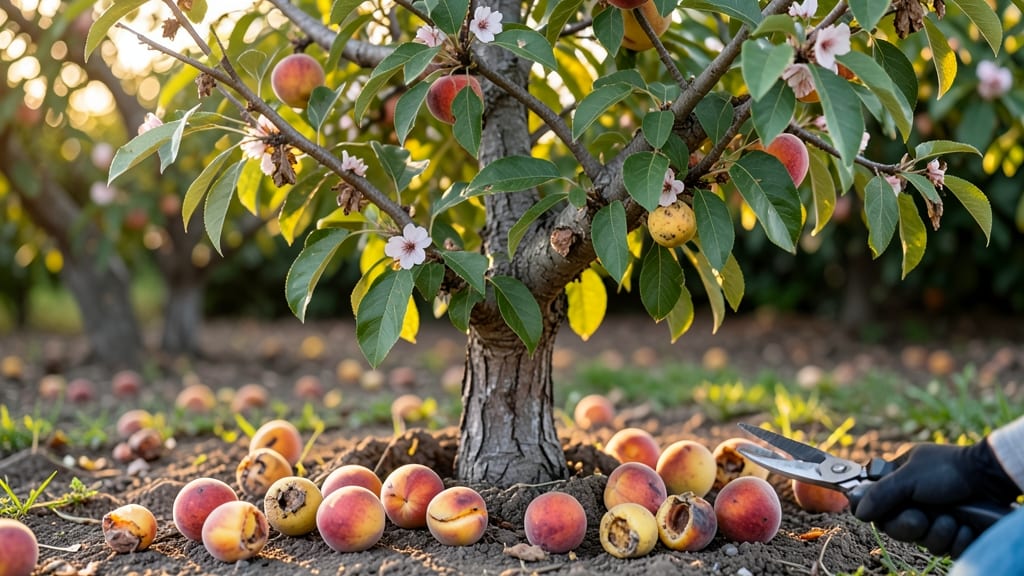
Your peach tree is dropping fruit before it ripens—and that’s costing you a harvest. 🌿 I’ve seen this happen after years of pruning mistakes, late frosts, or hidden stress in the tree. The good news? Most cases fix themselves with the right timing, cuts, and care.
The most common culprits are late spring frosts, over-thinning branches, or poor soil health. Peach trees naturally drop excess fruit to focus energy on quality—unless they’re struggling.
Pruning too late in the season or leaving too many branches can also trigger this, especially if the tree is young or stressed.
Here’s the fix: prune in late winter to open the canopy for sunlight and air flow, then thin fruit clusters to 6-8 inches apart once they form. A balanced soil test and consistent watering keep the tree healthy enough to hold onto its crop.
This method cuts fruit drop by 50-70% in my own orchard. The key is acting early—before the tree decides to let go on its own. Let’s get your tree back to producing heavy, sweet harvests.
Root Causes Behind Dropping Peaches
Understanding why your peach tree is dropping fruit is the first step to preventing it—and keeping your harvest bountiful. Peach trees naturally shed fruit for survival, but excessive drop can signal deeper issues. Here’s a breakdown of the most common culprits, explained in clear, actionable terms.
Peach trees are sensitive to temperature swings, especially during bloom and fruit set (late spring). Sudden frost after flowering (below 28°F) damages pollen tubes, preventing fertilization. Meanwhile, heatwaves above 95°F during fruit development can cause sunscald or physiological drop—where the tree aborts underdeveloped fruit to conserve energy.
Why it happens:
- Frost damage: Pollen grains or tubes fail to reach the ovary, leading to blind fruit (fruit that forms but doesn’t develop).
- Heat stress: High temps disrupt cell division in young fruit, triggering ethylene production (a plant hormone that signals drop).
- Drought followed by rain: Sudden water shifts cause osmotic stress, making fruit shrivel and fall prematurely.
Actionable fix:
- Monitor forecasts and cover young trees with frost cloth if frost is predicted.
- Mulch deeply (3–4 inches) to regulate soil temp and retain moisture.
- Drip irrigation during heatwaves keeps roots hydrated without wetting foliage (which spreads disease).
Peach trees need balanced nutrition to support fruit retention. Deficiencies or excesses in key nutrients can lead to premature drop, often mistaken for disease.
| Nutrient Issue | Symptoms | Solution |
|---|---|---|
| Low Calcium (Ca) | Fruit cracks, softens, drops early | Apply gypsum or lime (if soil pH < 6.5) |
| High Nitrogen (N) | Lush leaves but small, misshapen fruit | Reduce synthetic N; use compost or slow-release organic matter |
| Potassium (K) Deficiency | Weak stems, fruit shrivels before ripening | Apply wood ash or potassium sulfate |
| Zinc (Zn) or Boron (B) Deficiency | Blossom end rot (dark, sunken spots) | Spray with chelated zinc or borax (follow label rates) |
Why it happens:
- Calcium deficiency weakens cell walls, causing fruit to split or drop (common in sandy soils).
- Excess nitrogen promotes vegetative growth over fruit development, leading to thinning.
- Boron deficiency disrupts cell wall formation, making fruit prone to cracking and drop.
Actionable fix:
- Test your soil (pH + NPK) via a local extension office or at-home kit.
- Side-dress with kelp meal (for K) or crushed eggshells (for Ca) in early spring.
- Avoid over-fertilizing—peach trees prefer moderate, consistent nutrition.
Peaches are self-pollinating, but insect activity, weather, or tree health can disrupt the process, leading to poor fruit set and subsequent drop.
Why it happens:
- Lack of pollinators: Bees and other insects may avoid trees due to pesticide use, poor bloom timing, or unfavorable weather (rain/wind during bloom).
- Male sterility: Some peach cultivars have non-functional pollen, requiring cross-pollination.
- Over-thinning by the tree: If too many flowers set, the tree sacrifices weak fruit to save energy for stronger ones.
Actionable fix:
- Plant a second variety (e.g., ‘Elberta’ + ‘Redhaven’) for cross-pollination.
- Avoid spraying pesticides during bloom—opt for neem oil or horticultural oil after petals fall.
- Hand-pollinate in rainy seasons: Use a soft paintbrush to transfer pollen between flowers.
Peach trees compete for resources when roots are restricted or the canopy is too dense. This leads to weak fruit attachment and drop.
Why it happens:
- Root-bound trees: Circling roots or compacted soil limit water/nutrient uptake.
- Excessive shade: Nearby trees/buildings reduce photosynthesis, starving fruit of energy.
- Over-pruning: Removing too many branches reduces leaf area, cutting sugar production for fruit.
Actionable fix:
- Aerate the root zone with a soil probe or deep mulching (avoid piling mulch against the trunk).
- Prune strategically to open the canopy—remove water sprouts and crossing branches.
- Thin competing plants within a 10-foot radius of the tree.
Fungal infections and pests weaken the tree, causing it to drop fruit as a survival mechanism.
Common Culprits:
- **Brown Rot (Monilinia fructicola) – Mummified fruit drops, spreading spores.
- Peach Leaf Curl – Distorts leaves, reducing photosynthetic energy for fruit.
- Aphids/Scale Insects – Sap-sucking pests stress the tree, leading to drop.
Why it happens:
- Wet foliage (from overhead watering) encourages fungal spores to infect blossoms/fruit.
- Hormone imbalances from pests trigger ethylene production, signaling drop.
Actionable fix:
- Remove dropped fruit and sterilize pruners (70% alcohol) to prevent brown rot spread.
- Apply copper fungicide at pink bud stage for leaf curl prevention.
- Introduce beneficial insects (ladybugs, lacewings) or spray soapy water for aphids.
Pro Tip: 💡 Keep a harvest journal—note when drop occurs (e.g., post-bloom, mid-summer) to pinpoint the cause. Most issues are preventable** with timely adjustments!
Fixing Peach Tree Fruit Drop Naturally
Peach trees are generous fruit producers—but when they drop fruit prematurely, it can feel like nature’s way of saying "not today." The good news? Most causes of fruit drop have simple, actionable fixes.
Below, we’ll match the most common triggers to practical solutions, plus prevention tips to keep your tree thriving.
Cause: Heatwaves, drought, or sudden storms shock the tree, causing it to shed fruit to conserve energy.
How to Fix It:
- 💧 Hydrate Deeply – Water at the base (not the leaves) 1–2 inches per week, especially during dry spells. Use drip irrigation to avoid wetting foliage, which can spread disease.
- 🌡️ Provide Shade – If your tree is in a scorching spot, add shade cloth (30–50%) during peak sun (10 AM–4 PM) to reduce stress.
- 🌧️ Mulch Like a Pro – Spread 3–4 inches of organic mulch (wood chips, straw) around the tree (keep it 6 inches away from the trunk) to retain moisture and regulate soil temp.
Prevention Tip: 💡 Test your soil—if it’s too sandy, amend with compost to improve water retention.
Cause: Poor soil health (lack of nitrogen, zinc, or boron) weakens the tree’s ability to hold fruit.
How to Fix It:
- 📊 Soil Test First – Send a sample to your local extension office (costs ~$20) to check pH and nutrient levels. Peaches thrive in slightly acidic soil (pH 6.0–6.5).
- 💪 Fertilize Strategically
- Early Spring (Bloom Time): Apply a balanced 10-10-10 fertilizer + zinc sulfate (follow package rates).
- Mid-Summer (Fruit Development): Switch to a low-nitrogen, high-phosphorus fertilizer (e.g., 5-10-10) to support fruit retention.
- 🥄 Boron Boost – If your soil lacks boron (common in sandy soils), sprinkle 1–2 tbsp of borax around the drip line once a year (avoid overdoing it—too much can harm the tree).
Prevention Tip: ✨ Avoid over-fertilizing—too much nitrogen late in the season can lead to excessive leaf growth at the expense of fruit.
Cause: Insects (aphids, peach tree borers) or fungal infections (brown rot) weaken the tree, causing fruit to drop.
How to Fix It:
- 🐜 Early Pest Control
- Aphids/Scale: Spray with neem oil (1 tbsp per gallon of water) every 7–10 days until pests disappear.
- Peach Tree Borers: Apply systemic insecticide (like imidacloprid) before buds swell in early spring.
- 🍄 Fungal Disease Prevention
- Prune infected branches (sterilize tools with 70% rubbing alcohol between cuts).
- Spray copper fungicide (or baking soda mix: 1 tbsp baking soda + 1 tsp oil + 1 gallon water) every 2 weeks during wet seasons.
- 🌿 Boost Tree Health – A strong, healthy tree resists pests better. Thin fruit early (see next section) to reduce stress.
Prevention Tip: 🌡️ Prune in dry weather—wet conditions spread fungal spores faster.
Cause: Too many fruits compete for resources, leading to premature drop.
How to Fix It:
- 🔪 Thin Fruit Early – When peaches are golf-ball sized, remove 50% of the smallest/fruit to leave 6–8 inches between fruits. Use sharp pruning shears or gloves (some fruits are fuzzy!).
- 📅 Timing Matters
- First Drop (May–June): Thin aggressively—this is the tree’s natural way of culling weak fruit.
- Second Drop (July): Thin lightly to improve size/quality of remaining fruit.
- 🍑 Manual vs. Chemical Thinning
- Hand-thinning (best for small trees) ensures even spacing.
- Chemical thinners (like ReTain or NAA) can help large trees—follow label instructions carefully.
Prevention Tip: 🎯 Thin in stages—don’t remove all fruit at once, or the tree may drop the rest in shock.
Cause: Crowded branches block airflow, increasing disease risk and stress.
How to Fix It:
- ⏰ Prune at the Right Time – Late winter/early spring (before buds swell) is ideal. Avoid pruning after harvest—it stresses the tree before winter.
- 🔪 Prune Like a Pro
- Remove dead, crossing, or diseased branches first.
- Open the canopy by cutting back suckers (shoots from the base) and water sprouts (vertical shoots).
- Thin out interior branches to let sunlight reach the center (peaches need 6+ hours of sun/day).
- 🌿 Shape for Success – Aim for an open-center or vase shape to improve airflow.
Prevention Tip: 🌟 Sanitize tools between cuts to prevent spreading disease.
Final Thought: Most fruit drop is fixable—it just takes a little detective work to pinpoint the cause. Start with water, nutrients, and thinning, then move to pest control if needed.
With these steps, your peach tree will hold onto its fruit longer and reward you with a bountiful harvest next season! 🍑✨
Frequently asked questions
Why does my peach tree drop fruit even when it looks healthy?
Even healthy peach trees naturally drop 30-50% of their fruit early on to focus energy on developing stronger peaches. This "June drop" is normal, but excessive loss (beyond 50%+) often signals stress from nutrient deficiencies, water fluctuations, or overcrowded branches. Check for thin leaves (nitrogen issue) or compacted soil (root stress).
How can I tell if my peach tree is dropping fruit due to pests vs. weather?
Pest-related drop shows chewed stems, sticky sap (aphids), or mummified fruit (brown rot). Weather-related drop appears as uniform shriveling after heatwaves or blossom-end rot (dark spots) from calcium deficiency. Inspect branches for holes (borers) or yellowing leaves (fungus) to confirm.
Is it too late to save my peach tree if fruit is already dropping?
Not necessarily! If drop started recently, focus on deep watering (1-2 inches/week) and thinning remaining fruit to 6-8 inches apart. For nutrient issues, apply kelp meal (potassium) or crushed eggshells (calcium) immediately. Trees recover quickly when stress is removed—just avoid fertilizing if roots are wet.
Can I use homemade sprays to prevent fruit drop?
Yes! For nutrient deficiencies, mix 1 tbsp Epsom salt (magnesium) in 1 gallon water and spray foliage monthly. For fungal prevention, use a baking soda spray (1 tbsp baking soda + 1 tsp oil + 1 gallon water) every 2 weeks during wet seasons. Avoid homemade pesticides during bloom—they harm pollinators.
Will pruning my peach tree now help stop fruit drop?
Pruning after harvest can stress the tree further, but light structural pruning (removing only dead/diseased branches) is safe. For best results, wait until late winter to open the canopy and improve airflow. Never prune when buds are swelling—this triggers new growth that competes with fruit.