
Pruning
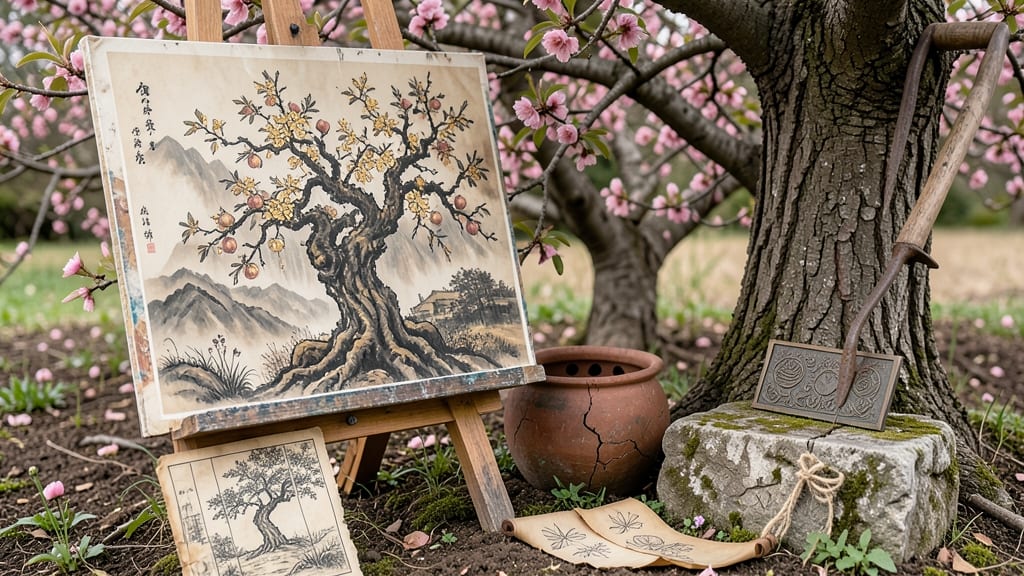
The history of peach trees spans over 4,000 years, originating in China as Prunus persica before traveling along Silk Road trade routes to Persia, Europe, and the Americas. These trees were first cultivated in imperial Chinese gardens by 1000 BCE for both fruit and ornamental purposes.
The peach tree's journey began in China's fertile Yangtze Valley, where its delicate blossoms and juicy fruit became symbols of prosperity and longevity in ancient culture. 🌸 These trees weren't just food sources—they held deep ceremonial significance, from Taoist rituals to Confucian teachings that associated peaches with immortality.
The species' scientific name, Prunus persica, actually reflects its Persian origins, as traders carried peach pits westward along the Silk Road during the Han Dynasty (206 BCE–220 CE).
What makes this history fascinating is how peaches adapted to new climates. By the 16th century, Spanish explorers brought them to the Americas, where they thrived in warmer regions like Georgia—now the U.S.'s top peach producer.
The fruit's resilience in different soils and its ability to flourish in both temperate and subtropical zones explain why peach trees remain one of the world's most widely cultivated fruit species today.
💡 In This Article
- Ancient Chinese Peach Cultivation and Symbolism
- How Peach Trees Spread Across Continents
Ancient Chinese peach cultivation and symbolism
The peach tree's botanical roots trace to China's Yangtze Valley, where wild Prunus persica thrived in the region's humid subtropical climate with 1,500-2,000mm annual rainfall. Archaeologists discovered peach pits in 7,800-year-old Neolithic sites, but systematic cultivation began by 2000 BCE during China's Xia Dynasty.
These early trees produced smaller, tart fruits compared to modern varieties, but their delicate white-pink blossoms already captivated gardeners.
Imperial gardens became the epicenter of peach cultivation, where trees were meticulously pruned into symbolic shapes like dragons or phoenixes. The Taoist tradition associated peaches with immortality—legendary peach orchards in the Kunlun Mountains were said to grow 10,000-year-old trees that fed immortals.
Confucian scholars valued peach wood for its hardness and durability, using it to craft ceremonial swords and ritual vessels. 🌸 The fruit's fuzzy skin and juicy flesh also made it a status symbol in imperial banquets, where rare varieties were served to honor guests.
Peach cultivation techniques from this era laid the foundation for modern orchard management. Chinese horticulturists developed grafting methods to propagate desirable varieties, a technique still used today.
The 1000 BCE records from the Book of Songs describe peach orchards as "gardens of the gods," highlighting their spiritual significance alongside practical value. These ancient practices ensured peaches remained central to Chinese culture for millennia.
The peach's symbolic power extended beyond food—its blossoms represented beauty and fleeting life, while the fruit embodied prosperity and harmony. During the Han Dynasty (206 BCE–220 CE), peach wood became associated with military strength, as it was believed to ward off evil spirits.
This dual role as both edible treasure and sacred object ensured peaches traveled far beyond China's borders as traders carried both the fruit and its cultural significance along the Silk Road.
One fascinating adaptation was how peach trees evolved in different Chinese regions. In the northern provinces, varieties developed with thicker skins to withstand colder winters, while southern trees produced softer, sweeter fruits suited to warmer climates.
This regional specialization created the genetic diversity that would later help peaches thrive globally. The 12th-century Qimin Yaoshu agricultural text even included detailed instructions for peach cultivation, proving its agricultural importance.
What most people don't realize is how deeply peach symbolism influenced Chinese art and literature. Poets like Li Bai wrote odes to peach blossoms, while painters depicted them in scroll paintings as symbols of transience and renewal.
The peach festival during the Qingming Festival (April 4-6) remains a tradition where families plant peach trees to honor ancestors and welcome spring. This cultural legacy explains why peaches became more than just fruit—they embodied the intersection of nature, spirituality, and human ingenuity. 🌿