
Pruning
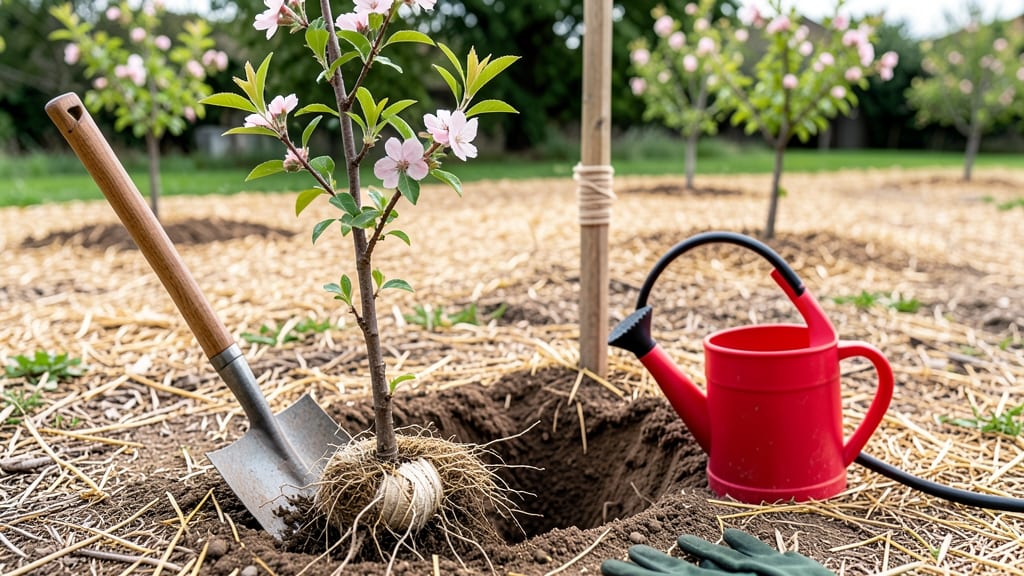
Planting a peach tree with these five critical peach tree planting tips could mean homegrown fruit for decades—if you nail them from day one. 🌞 I learned the hard way that peaches hate soggy soil and shade, and my first tree nearly died because I ignored the basics.
The right spot, soil, and timing turn a $50 investment into a shade-providing, fruit-bearing powerhouse.
Start with a location that gets at least 6-8 hours of sunlight daily—peaches demand it. Dig a hole twice as wide as the root ball but no deeper, then mix in compost or aged manure to loosen heavy clay.
Plant in late winter or early spring when the ground is workable but before buds swell, giving roots time to establish before summer heat hits. A windbreak (like a fence or shrubs) protects young trees from drying winds.
After planting, water deeply to settle the soil, then mulch with 2-3 inches of organic mulch (straw or wood chips) to retain moisture and block weeds. Keep the soil consistently moist but never soggy—peach roots rot faster than they grow.
Within 6-8 weeks, you’ll see new growth, and by year two, your tree could bear its first fruit. The secret? Patience and consistency—skimp on care now, and you’ll struggle for years.
Here’s where most gardeners go wrong: overwatering, planting too deep, or choosing the wrong variety for your climate. Peaches need cross-pollination (plant two trees if yours isn’t self-fertile), and some varieties (like Elberta) thrive in warmer zones while others (like Redhaven) prefer cooler summers.
Check your USDA zone before buying—it’s the difference between a thriving tree and a sad sapling.
📚 In This Guide
- What you need
- Instructions
- Tips and common mistakes
- Wrapping up and next steps
What you need
- ● Peach Tree Sapling: Choose a dwarf, semi-dwarf, or standard variety (1-2 years old) from a reputable nursery. Quantity: 1 per planting site.
- ● Shovel or Trench Digger: For digging holes (12–18" wide and deep).
- ● Garden Gloves: Protect your hands from thorns and rough soil.
- ● Well-Draining Soil Mix: Native soil (amended with compost or aged manure)
- ○ Optional: Peach tree-specific soil mix (if local soil is heavy clay or sandy). Quantity: 2–3 cubic feet per tree.
- ● Organic Mulch: Wood chips, straw, or pine bark (2–3 inches thick). Quantity: Enough to cover the root zone (keep mulch 3–4 inches away from the trunk).
- ● Watering Can or Hose: With a gentle spray nozzle for post-planting hydration.
- ○ Tree Stake (Optional but Recommended): 1–2 stakes (4–6 feet tall) for support if needed.
- ● Tie Straps or Soft Fabric: To secure the tree to stakes (avoid wire—it can damage bark).
- ● Sunlight: Ensure your planting spot gets 6–8+ hours of full sun daily (peaches are sun-worshippers!).
- ● Well-Draining Soil: Test your soil’s pH (ideal: 6.0–6.5). Amend if needed with sulfur (to lower pH) or lime (to raise it).
- ● Spacing: Dwarf trees: 6–8 feet apart
- ● Semi-dwarf trees: 12–15 feet apart
- ● Standard trees: 20–25 feet apart
- ● Frost-Free Zone: Plant in USDA Zones 5–9 (choose cold-hardy varieties for Zone 5).
- ● Cross-Pollination: Plant at least two compatible varieties for better fruit production (check labels!).
- ● 🌡️ Timing: Plant bare-root trees in late winter or early spring (before buds swell). Container-grown trees can go in year-round (except winter in cold climates).
- ○ ✨ Root Stimulator: Mix in a mycorrhizal fungus or rooting hormone to boost early growth (optional but helpful).
- ● 🚫 Avoid: Planting in low-lying areas (risk of frost pockets) or near large trees (competition for nutrients).
Step-by-step guide to planting a thriving peach tree
Here's how to plant a peach tree for maximum fruit production and long-term health.
🪴 Step 1: Choose the Perfect Planting Location
Peach trees demand full sun exposure—at least 6-8 hours daily. I always scout the site first, watching how sunlight moves across the yard. Avoid low spots where cold air settles in winter, as peaches are frost-sensitive. The ideal location gets morning sun and afternoon shade in hot climates to prevent sunburn on tender fruit.
Test the soil drainage by digging a 12-inch deep hole and filling it with water. If it drains in under an hour, the soil is suitable. Poor drainage leads to root rot, which kills peach trees faster than any other issue. If your soil is heavy clay, amend it with 2-3 inches of compost mixed into the top 12 inches of soil before planting.
☀️ Step 2: Plant at the Right Time and Depth
Plant your peach tree in early spring when the ground is workable but before buds swell. I've learned the hard way—planting too early risks frost damage to emerging roots, while planting too late delays fruit production. Dig a hole twice as wide as the root ball but no deeper. The top of the root ball should sit 1-2 inches above ground level.
Loosen any circling roots with your fingers before placing the tree in the hole. Backfill with native soil, tamping gently every 4 inches to eliminate air pockets. Water deeply to settle the soil, then create a 4-inch high berm around the outer edge of the hole to direct water toward the roots. This simple trick prevents runoff and ensures consistent moisture.
💧 Step 3: Water Deeply and Mulch Properly
Water the newly planted tree every other day for two weeks, then taper to once weekly during dry spells. You'll know it's enough when water drains 6-8 inches deep—stick your finger in the soil to check. Overwatering smothers roots, while underwatering stresses the tree. I always water in the morning so foliage dries quickly, reducing fungal risks.
Apply 3-4 inches of organic mulch (like wood chips or straw) in a 3-foot diameter circle around the base, keeping it 6 inches away from the trunk. Mulch conserves moisture, regulates soil temperature, and suppresses weeds. Refresh the mulch annually in late winter, but never let it pile against the trunk—this invites rot and pests.
✂️ Step 4: Prune for Structure and Airflow
Prune your peach tree immediately after planting to remove any broken or crossing branches. I cut back the main scaffold branches to 24-30 inches tall, leaving 3-5 well-spaced branches that form a natural vase shape. This open structure promotes airflow, reducing humidity-related diseases like brown rot. Always prune at a 45-degree angle just above an outward-facing bud.
Use clean, sharp pruners to make cuts—dull tools crush branches, inviting infections. Sterilize your tools with rubbing alcohol between cuts. In subsequent years, prune in late winter to remove dead wood and thin out crowded branches. Never remove more than 25% of the canopy in one season, or you'll shock the tree and delay fruiting.
🌱 Step 5: Fertilize and Monitor for First Fruits
Apply a balanced 10-10-10 fertilizer in early spring, spreading it evenly over the root zone. Water deeply to activate the granules. Peach trees are heavy feeders, so I fertilize again in late spring with a low-nitrogen, high-phosphorus formula (like 5-10-10) to encourage flowering. Avoid high-nitrogen fertilizers after summer—they promote leafy growth at the expense of fruit development.
Watch for white blossoms in spring, your first sign of success. Thin fruit when it's 1 inch in diameter, leaving 6-8 inches between peaches on the branch. This prevents overcrowding and ensures larger, higher-quality fruit. Harvest when the fruit yields slightly to gentle pressure and the skin color deepens—usually late summer to early fall, depending on your climate.
Tips & tricks for perfect peach tree planting
Here's what nobody tells you about planting a peach tree that actually bears fruit year after year.
Sunlight Strategy: That 6-8 hours of sunlight isn't just about quantity—it's about quality. I've noticed the most productive trees get morning sun (when temperatures are cooler) and afternoon shade (to prevent heat stress). If your yard gets intense afternoon sun, consider planting near a building or tall shrubs for natural shade during peak heat hours. This simple adjustment can mean the difference between fruit production and leafy growth.
Root Ball Rescue: Before planting, soak the root ball for 1-2 hours in a bucket of water. This helps rehydrate roots that may have dried out during transport or storage. After planting, I always add a handful of mycorrhizal fungi to the backfill soil—these beneficial microbes help roots absorb nutrients more efficiently. Think of it as a natural fertilizer booster right from the start.
Watering Wisdom: The two-week watering schedule is non-negotiable, but here's the secret: use a moisture meter to check soil moisture at 6-8 inches deep. If it reads dry, water again immediately. I've seen many gardeners overwater because they assume the soil is moist when it's actually just saturated at the surface. Morning watering isn't just about fungal prevention—it gives roots time to absorb moisture before evening heat causes evaporation.
Pruning Pro Tip: When shaping your tree in Step 4, look for branches that grow straight up rather than outward—they'll never bear fruit effectively. These "water sprouts" should be removed completely at the base. I also recommend marking your scaffold branches with paint or tape before planting so you can visualize the final shape. This simple step prevents awkward pruning decisions later when the tree is established.
Pro Tips for Peach Tree Planting Tips
- Here's what nobody tells you about planting a peach tree that actually bears fruit year after year.
- Sunlight Strategy: That 6-8 hours of sunlight isn't just about quantity—it's about quality.
- Root Ball Rescue: Before planting, soak the root ball for 1-2 hours in a bucket of water.
Frequently asked questions
Got questions about peach tree planting?
You’re not alone! Here are answers to some of the most common queries to help you grow a thriving tree with confidence.
When is the best time to plant a peach tree?
The ideal window is late winter or early spring (before buds swell) or fall (6-8 weeks before frost). Avoid planting in summer heat—roots need time to establish without stress. If you must plant in summer, water deeply and mulch to retain moisture.
How long does it take for a peach tree to bear fruit?
Patience is key! Dwarf varieties may produce fruit in 2-3 years, while standard trees can take 4-6 years. Factors like soil quality, sunlight, and proper pruning speed up the process. Choose a self-pollinating variety (like ‘Elberta’ or ‘Redhaven’) for easier fruiting.
Can I plant a peach tree in a container?
Yes, but it’s tricky! Use a large pot (15+ gallons) with drainage holes and well-draining soil. Containers dry out faster, so water regularly and fertilize monthly. Expect smaller fruit yields and shorter lifespan (5-10 years vs. decades in-ground). Move the pot to a sunny spot in winter if frost is a risk.
Why aren’t my peach tree leaves turning green?
Yellow or pale leaves often signal nutrient deficiencies (like nitrogen or magnesium) or pests (aphids, spider mites). Check soil pH (peaches prefer 6.0-7.0) and test for deficiencies. Apply a balanced fertilizer or organic compost. For pests, spray with neem oil or insecticidal soap.
Do peach trees need winter protection?
Young trees (3 years old) or tender varieties (like ‘Hale Haven’) benefit from winter mulch (4-6 inches of straw or leaves) and tree wraps to prevent sunscald. In extreme cold zones (below Zone 5), plant cold-hardy types like ‘Reliance’ or use a frost cloth. Avoid heavy mulch in spring—remove it once temps rise.
Wrapping up and next steps
Planting a peach tree is a rewarding journey that blends patience, care, and a little sunshine! 🌞 By choosing the right variety, preparing the soil, and giving your tree the love it deserves, you’re setting the stage for years of juicy, homegrown fruit.
Remember: consistency in watering, pruning, and protection will turn your backyard into a peach paradise.
Ready to take the next step? Start small—whether it’s digging your first hole or researching local nurseries for the perfect sapling. Your future self (and taste buds!) will thank you. Happy planting! 🌱