
Trees
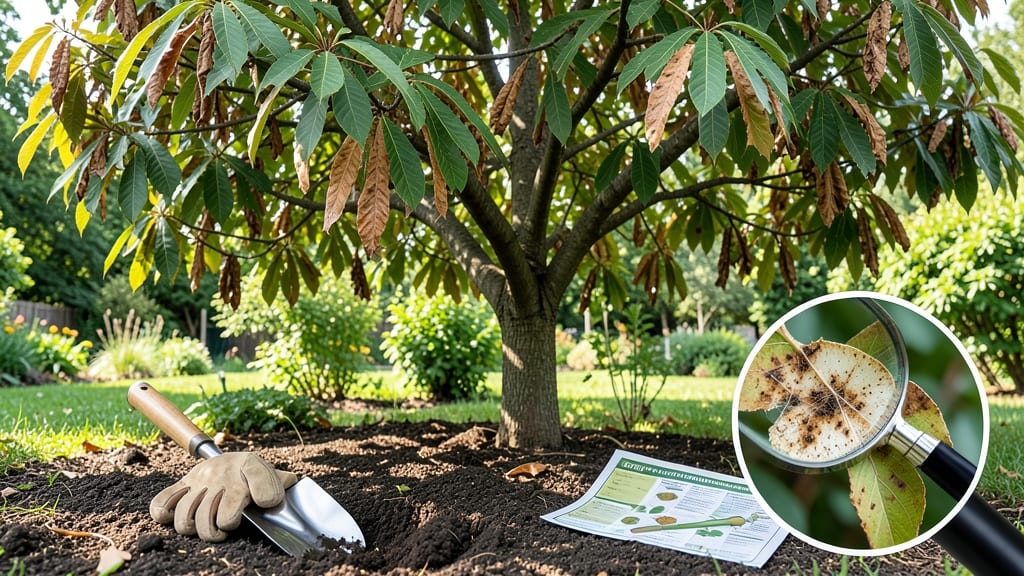
Your pecan tree’s leaves turning brown aren’t a death sentence—they’re a cry for help. 🌳 I’ve nursed back more than my share of stressed pecan trees, and the first step is figuring out whether your tree is thirsty, sick, or fighting off pests.
The good news? Most cases are fixable with the right approach, and I’ll walk you through how to diagnose the problem without losing sleep over it.
Start by checking the pattern: are the brown spots scattered or clustered? Is it just the older leaves, or is new growth wilting too? Pecan scab leaves dark brown spots with yellow halos, while bacterial leaf scorch creates jagged, crispy edges.
Environmental stress—like drought or sudden heat—often causes uniform browning, especially on the outer edges of leaves. Grab a magnifying glass and a notebook; you’ll spot clues that tell you exactly what’s wrong.
Once you’ve identified the issue, the fix is usually simpler than you’d think. For fungal diseases like pecan scab, a copper fungicide spray in early spring can stop the spread. If pests are to blame, neem oil or insecticidal soap (applied when leaves are wet) often does the trick.
And if it’s just drought stress? Deep watering once a week—about 15-20 gallons for mature trees—can bring them back to life in just a few weeks.
Prevention is where the real magic happens. Mulch around your tree’s base to keep roots cool and moist, prune for airflow in early spring, and monitor for early signs of stress.
With these steps, your pecan tree will bounce back—and next season, you’ll be harvesting nuts instead of worrying about brown leaves.
Root Causes Behind Browning Leaves
When your pecan tree’s leaves start turning brown, it’s usually a cry for help—often rooted in environmental stress, pests, or underlying health issues. Understanding the why behind the discoloration is the first step to restoring your tree’s vibrant green.
Below, we break down the most common culprits, complete with science-backed explanations and actionable insights.
Pecan trees are resilient, but prolonged heatwaves and drought can push them past their limits. When soil moisture drops below 50% of field capacity, roots struggle to absorb water, triggering physiological drought stress. This causes:
- Leaf scorch: Brown, crispy edges (especially on younger leaves) due to water loss through transpiration exceeding uptake.
- Premature leaf drop: The tree sacrifices leaves to conserve energy, leaving branches bare.
- Stunted growth: Cells in new leaves fail to expand properly, leading to small, brownish foliage.
Why it happens: Pecans thrive in well-drained soil with consistent moisture. When temperatures exceed 90°F (32°C) for weeks, even deep-rooted varieties like Shawnee or Desirable can suffer. Drought stress also weakens the tree’s defenses, making it more vulnerable to pests.
💡 Pro Tip: Test soil moisture by pushing a screwdriver into the ground—if it resists at 4–6 inches deep, water deeply (1–2 inches per week) and mulch with 3–4 inches of organic matter to retain moisture.
Fungi like Cercospora (target spot) or Phyllosticta (scab) thrive in humid conditions, causing brown spots, yellow halos, or entire leaves to turn papery and drop. These pathogens exploit stress (e.g., drought or poor air circulation) to invade leaf tissue.
- Cercospora: Small, angular brown spots with gray centers; common in wet summers.
- Anthracnose: Dark, sunken lesions that merge, leading to defoliation.
- Powdery mildew: White, dusty patches that turn brown and crispy.
Why it happens: Fungal spores spread via wind or splashing water. Pecan trees are especially susceptible if:
- Leaves stay wet for more than 12 hours (ideal for spore germination).
- Nitrogen fertilizer is overused, promoting lush growth but weakening structural defenses.
- Airflow is restricted (e.g., dense planting or nearby structures).
🔥 Action Step: Prune for airflow, avoid overhead watering, and apply copper fungicide at first signs of spots. For severe cases, consult a local arborist about systemic fungicides like propiconazole.
Pests like aphids, spider mites, or pecan nut casebearers drain nutrients and inject toxins, causing leaves to yellow, brown, and curl. Their damage is often visible as:
- Stippling: Tiny white or brown dots from mites feeding on cell sap.
- Honeydew: Sticky residue (aphid waste) that fosters sooty mold (a black fungal growth).
- Webbing: Fine silk strands between leaves (sign of mites or caterpillars).
Why it happens: Pests target stressed trees. For example:
- Aphids multiply rapidly in warm, dry conditions (ideal for pecan trees in late summer).
- Spider mites thrive when humidity drops below 40%, causing leaves to dry out faster.
- Nut casebearers lay eggs in buds, leading to premature leaf drop if larvae hatch early.
🎯 Solution: Blast pests off with a strong water spray (early morning) or use neem oil (mix 2 tbsp per gallon of water). For severe infestations, apply horticultural oil in dormant season (winter) to kill overwintering eggs.
Brown leaves can signal a lack of key nutrients, especially if they appear yellow between veins (chlorosis) before browning. Common deficiencies in pecan trees:
| Nutrient | Symptoms | Cause |
|---|---|---|
| Zinc | Brown, dead spots on young leaves ("little leaf" syndrome). | Compacted or alkaline soil (pH > 7.0) locks out zinc. |
| Magnesium | Interveinal browning starting at leaf edges (like a "V" shape). | Over-fertilization with nitrogen or potassium crowds out magnesium. |
| Potassium | Brown, scorch-like edges with curled leaves. | Drought stress or leaching in sandy soils. |
| Nitrogen | Overall pale green/yellowing before browning (if severe). | Poor soil organic matter or over-pruning. |
Why it happens: Pecans are heavy feeders, especially in sandy or clay soils. Deficiencies often arise when:
- Soil pH is unbalanced (test with a home kit or lab; pecans prefer 6.0–7.5).
- Fertilizer is applied unevenly (e.g., only nitrogen, ignoring micronutrients).
- Competition from weeds depletes nutrients.
🌡️ Fix It: Conduct a soil test and amend with:
- For zinc/magnesium: Apply Epsom salt (magnesium sulfate) or zinc sulfate in early spring.
- For potassium: Use greensand or wood ash (sparingly).
- For nitrogen: Top-dress with composted manure or a slow-release fertilizer (e.g., 10-10-10).
Mechanical stress from hail, strong winds, or aggressive pruning can cause leaves to bruise, turn brown, and die. Look for:
- Irregular brown patches (not fungal spots) on leaves.
- Torn or jagged edges from wind or hail.
- Sprouting near pruning cuts (sign of over-pruning stress).
Why it happens: Pec
Revive Your Pecan Tree Now
Seeing your pecan tree’s leaves turn brown can feel like a gut punch—especially after investing time and care into its growth. But don’t panic! Most browning issues are fixable with targeted action.
Below, we map the most common causes to step-by-step solutions, so you can diagnose fast and restore your tree’s health. Prevention tips are included to keep future stress at bay.
If your pecan tree’s leaves are yellowing or browning with crispy edges, it’s likely starving for key nutrients. Pecans are heavy feeders, and soil depletion is a common culprit.
🔥 Step 1: Test Your Soil (Know What’s Missing)
- Grab a soil test kit (available at garden centers) or send a sample to your local Cooperative Extension Service.
- Look for low levels of zinc, magnesium, or nitrogen—these are critical for pecan trees.
🍳 Step 2: Apply the Right Fertilizer
- For nitrogen deficiency (pale green/brown leaves):
- Spread 10-10-10 or 12-12-12 granular fertilizer around the dripline (not the trunk!) in early spring.
- Water deeply to activate nutrients. Pro tip: Split applications into two doses—once in spring and again in early summer to avoid overloading.
- For zinc/magnesium deficiency (brown spots or interveinal chlorosis):
- Use a chelated zinc sulfate or Epsom salt (magnesium sulfate).
- Mix 1 tbsp Epsom salt per gallon of water and spray foliage in late spring. For zinc, follow label rates for soil application.
🌡️ Step 3: Boost Organic Matter
- Pecans thrive in well-draining, slightly acidic soil (pH 6.0–7.0).
- Amend the soil with compost or aged manure (2–3 inches mixed into the top 6 inches).
- Prevention tip: Mulch with wood chips (3–4 inches deep) to retain moisture and nutrients while suppressing weeds.
Brown, crispy leaves can signal underwatering—or, surprisingly, overwatering. Pecan trees hate soggy roots but also struggle in drought.
👨🍳 Step 1: Check the Soil Moisture
- Stick your finger 4–6 inches deep into the soil. If it’s dry, it’s time to water.
- For mature trees, 1–1.5 inches of water per week (including rain) is ideal.
🥘 Step 2: Water Deeply and Infrequently
- Young trees (under 5 years): Water 2–3 times per week during dry spells, soaking the root zone (12–18 inches deep).
- Mature trees: Water once every 7–10 days with 10–15 gallons per inch of trunk diameter.
- Method matters: Use a soaker hose or drip irrigation to avoid wetting foliage (fungus risk).
⏰ Step 3: Adjust for Seasonal Needs
- Summer drought? Increase frequency but reduce runoff by watering early morning.
- Winter browning? Avoid overwatering—pecans enter dormancy and need less moisture.
If brown spots appear with yellow halos or black specks, fungal infections like anthracnose or pecan scab may be to blame. These thrive in wet, humid conditions.
🔪 Step 1: Prune Infected Branches
- Remove all diseased leaves and twigs (sterilize pruners with rubbing alcohol between cuts).
- Dispose of debris in the trash—not the compost!
🌡️ Step 2: Apply Fungicide Preventively
- Copper fungicide sprays (like Copper Sulfate) work well for scab and anthracnose.
- Timing is key: Spray before bud break in early spring, then again after rain events in summer.
- Organic option: Use neem oil (1 tbsp per gallon of water) as a preventive spray.
🎯 Step 3: Improve Airflow and Drainage
- Thin out dense foliage to reduce humidity around the tree.
- Ensure the planting site has good drainage—pecans hate “wet feet.”
Caterpillars, aphids, and spider mites can skeletonize leaves, leaving brown, chewed remnants. Act quickly to stop the damage.
💡 Step 1: Identify the Culprit
- Aphids: Sticky residue (honeydew) on leaves.
- Caterpillars: Ragged holes in leaves.
- Spider mites: Fine webbing on undersides.
🔥 Step 2: Use Targeted Controls
- For soft-bodied pests (aphids, mites):
- Spray with insecticidal soap or neem oil (repeat every 5–7 days).
- For caterpillars:
- Apply Bt (Bacillus thuringiensis)—a natural bacterial spray safe for pollinators.
- Handpick large larvae (drop them in soapy water).
✨ Step 3: Encourage Natural Predators
- Attract ladybugs and lacewings by planting dill, fennel, or marigolds nearby.
- Avoid broad-spectrum pesticides—they kill beneficial insects too!
Extreme heat, cold snaps, or salt buildup (from nearby roads) can shock pecan trees into browning leaves. Adjust the growing conditions to protect your tree.
🌞 Step 1: Protect from Heat Stress
- Mulch heavily (4–6 inches of wood chips) to insulate roots.
- Provide shade for young trees with lightweight shade cloth during heatwaves.
❄️ Step 2: Winterize for Cold Snaps
- Young trees: Wrap the trunk with burlap or tree wrap to prevent sunscald.
- Mature trees: Avoid pruning in late summer/fall—new growth is more vulnerable to cold.
🚧 Step 3: Reduce Salt Damage
- If your tree is near a road, flush the soil with water to leach out salt buildup.
- Test soil salinity and amend with gypsum if needed.
With these targeted fixes, your pecan tree’s leaves should start greening up within 2–4 weeks. Monitor progress and adjust care as needed—your tree’s resilience will surprise you! For persistent issues, consult a local arborist to rule out deeper problems like root rot or disease.
Frequently asked questions
Why are my pecan tree leaves turning brown only on the edges?
This classic leaf scorch pattern usually signals drought stress or underwatering. Pecan trees need 1-1.5 inches of water weekly (including rain) during dry spells. Check soil moisture 4-6 inches deep—if dry, water deeply using a soaker hose to reach roots. Mulch with 3-4 inches of wood chips to retain moisture and reduce evaporation.
Are brown spots with yellow halos a sign of disease?
Yes, those are classic symptoms of pecan scab or anthracnose, fungal diseases that thrive in wet conditions. Prune infected branches immediately (sterilize tools with rubbing alcohol) and apply copper fungicide before bud break in spring. Improve airflow by thinning dense foliage and avoid overhead watering to prevent spore spread.
Can I save my pecan tree if most leaves are already brown?
Don’t panic! Even heavily affected trees can recover with proper care. First, determine the cause (drought? pests? disease?) and address it immediately. For drought stress, deep water 1-2 times weekly until soil is moist. For pests, use neem oil or insecticidal soap. New growth should emerge within 4-6 weeks if roots are healthy. Monitor closely for signs of improvement.
Why do my pecan tree leaves turn brown in winter?
Winter browning is often normal for pecan trees, especially in cold climates, as they enter dormancy. However, if leaves are crispy or falling prematurely, it may indicate winter burn (from temperature swings) or overwatering. Reduce watering in winter (pecans need 25-50% less than in summer) and protect young trees with tree wrap to prevent sunscald.
How do I know if my pecan tree is dying vs. just stressed?
Check these signs: Dying trees have cracked bark, oozing sap, or dead branches that don’t produce buds in spring. Stressed trees may have brown leaves but still show green growth in protected areas. Scratch a small section of bark—if it’s moist and green underneath, the tree is alive. For persistent issues, consult a local arborist to rule out root rot or disease.