
Pruning
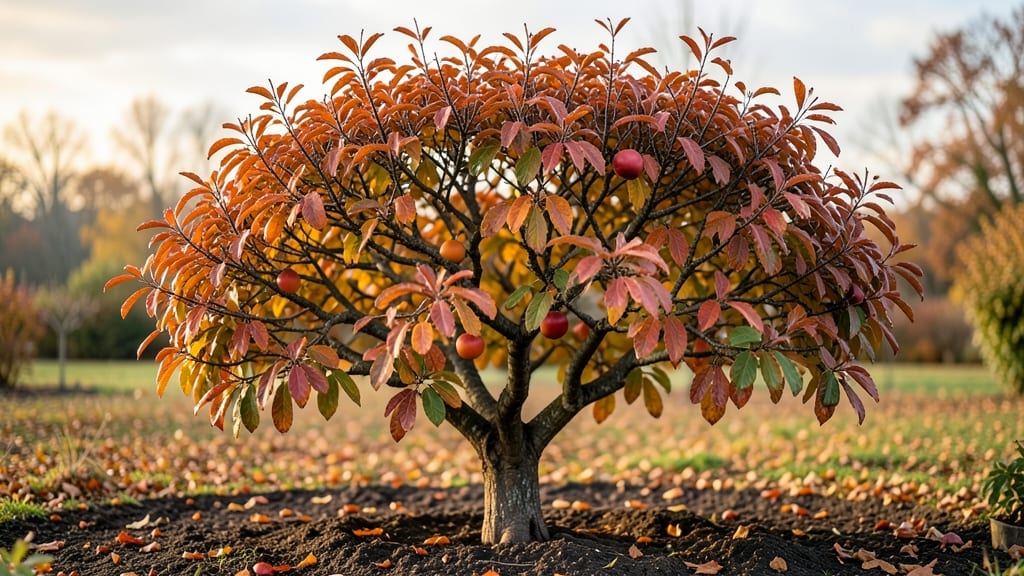
Fall pruning transforms your persimmon tree into next year's powerhouse. ✂️ The right cuts now mean bigger fruit, healthier branches, and fewer winter storms snapping weak wood—plus, you'll harvest sweeter persimmons in just 9-12 months.
I learned this the hard way after my first tree lost half its canopy in a single storm.
Timing matters most: prune after leaves drop but before hard frost, when the tree's energy shifts underground. Grab your loppers and gloves—you'll focus on three key areas: removing dead wood, thinning crowded branches, and shaping for sunlight access. Even 10 minutes of careful work now saves hours of cleanup later.
What you'll end up with is a tree that produces fruit more reliably, resists disease better, and looks stunning through winter. The branches stay strong enough to hold heavy fruit, and the open center lets sunlight reach all the way to the ground.
That orange glow of ripe persimmons in late fall? Worth every cut.
Works for both American and Asian varieties, from small backyard trees to larger landscape specimens. Here's exactly how to do it without overcomplicating things—no green thumb required.
📚 In This Guide
- What you need
- Instructions
- Tips and common mistakes
- Wrapping up and next steps
What you need
- ● Pruning shears – Sharp, bypass-style shears (4–6" blades) for clean cuts on small branches.
- ● Loppers – Bypass or anvil (10–14" handles) for medium branches (½"–1½" thick).
- ● Pruning saw – Curved-tooth saw for thick branches (1½"–3" diameter).
- ● Disinfectant – 70% isopropyl alcohol or a pruning sealant (to prevent disease spread).
- ● Gloves – Heavy-duty, cut-resistant gloves (protects from thorns and debris).
- ● Ladder – Sturdy, extension ladder (20–30 ft, if needed) with non-slip feet.
- ● Safety gear – Safety glasses and ear protection (for loud saws).
- ● Trash bags – 30–50 gallon heavy-duty bags for debris.
- ● Marking twine or tape – Colored twine (red/green) to flag branches for removal.
- ● Notebook & pen – To sketch a pruning map of your tree’s structure.
- ● Pole saw – For high branches without a ladder.
- ● Tree wound dressing – Pruning paste (controversial but useful for large cuts).
- ● Work gloves with grip – For extra comfort on rough bark.
- ● Step stool – If your tree is low to the ground.
- ● Camera – To document before/after shots of your pruning masterpiece!
Step-by-Step instructions for pruning persimmon trees in fall
Fall is the perfect time to shape your persimmon tree for next year’s fruit and health.
✂️ Step 1: Remove Dead, Diseased, or Crossing Branches
Start by inspecting the tree for branches that are dead, broken, or showing signs of disease—look for discolored bark, fungal growth, or cankers. These should be cut back to healthy wood immediately, as they drain energy from the tree. Use clean, sharp pruning shears to make cuts just outside the branch collar (the swollen area where the branch meets the trunk).
Next, remove any branches that are rubbing against each other or growing inward. Crossing branches compete for sunlight and can create wounds where pests or diseases enter. I like to step back and visualize the tree’s shape—this helps me spot branches that disrupt airflow or block light from reaching the center. Make your cuts at a 45-degree angle just above an outward-facing bud to encourage healthy growth.
✂️ Step 2: Thin the Canopy for Better Airflow and Light
Persimmon trees thrive when sunlight reaches all parts of the canopy. Focus on thinning branches to open up the center of the tree, allowing light and air to circulate. Remove about 20-30% of the smaller branches—this reduces crowding and helps the tree allocate energy to fruit production rather than dense foliage. Start from the bottom and work your way up, cutting branches that are growing straight up or inward.
Here’s the thing—don’t overdo it. You’re not trying to create a bare skeleton; aim for an open, vase-like shape with branches spaced 6-12 inches apart. If you’re unsure, compare your tree to a mature persimmon’s natural shape. Thin branches should be no thicker than your thumb, so you won’t need heavy-duty tools for most cuts.
✂️ Step 3: Prune for Shape and Structure
Now it’s time to refine the tree’s shape. Persimmon trees naturally grow with a strong central leader (the main upward-growing branch), but sometimes competing leaders emerge. Choose one dominant leader and prune the others back to a strong lateral branch. This ensures the tree grows upright and avoids a weak, multi-trunked structure that can break under fruit weight.
For side branches, aim to create a balanced, rounded canopy. Cut back branches that grow too close to the ground or those that are growing downward—these can weigh the tree down and make harvesting difficult. Watch for branches that are growing at sharp angles (less than 30 degrees from the trunk) and prune them back to encourage a more open, sturdy framework. Step back frequently to check your progress.
✂️ Step 4: Clean Up and Apply Wound Dressing (Optional)
After pruning, remove all debris from the ground beneath the tree to prevent fungal growth. While wound dressing (like pruning paste) isn’t always necessary, it can help protect larger cuts (over ½ inch in diameter) from pests and disease. Apply a thin layer to the cut surfaces if you’re concerned about your tree’s health or if your area has a history of fungal issues.
Finally, give the tree a deep watering to help it recover from the stress of pruning. I like to water slowly over 15-20 minutes to ensure the roots get hydrated deeply. Avoid pruning in the last 4-6 weeks of fall, as new growth stimulated by late pruning can be damaged by winter frosts. If you’re in a colder climate, wait until late winter or early spring for heavier pruning tasks.
Tips & tricks for perfect fall persimmon tree trimming
These practical tips will help you prune your persimmon tree like a pro—without the common mistakes that can stress your tree.
Tool Prep: Sharpen your pruning shears before you start—dull blades tear wood instead of making clean cuts. I also recommend sterilizing your tools with rubbing alcohol between cuts on diseased branches to prevent spreading pathogens. This is especially important in Step 1 when dealing with cankers or fungal growth.
Visualizing the Tree: Step back every 10-15 minutes during Steps 2 and 3 to check your progress. Hold your arms out wide to visualize the tree's shape—this helps you spot branches that disrupt airflow or create dense areas. Think of creating an open vase shape with branches spaced 6-12 inches apart. This open structure is key for persimmons to produce quality fruit.
Cutting Technique: When making cuts in Step 1 or Step 3, use a three-cut method for branches thicker than your thumb: First make an undercut, then a top cut just outside the branch collar, and finally prune the stub. This prevents tearing and creates a smooth surface that heals better. The 45-degree angle mentioned in Step 1 should be made just above an outward-facing bud to encourage new growth in the right direction.
Season Timing: The instructions mention avoiding the last 4-6 weeks of fall—this is critical because new growth stimulated by late pruning can't harden off before winter. If you're in a colder climate, wait until late winter when the tree is still dormant but before buds begin to swell. This timing gives your tree the best chance to recover before spring growth begins.
Pro Tips for Persimmon Tree In Fall
- These practical tips will help you prune your persimmon tree like a pro—without the common mistakes that can stress your tree.
- Tool Prep: Sharpen your pruning shears before you start—dull blades tear wood instead of making clean cuts.
- Visualizing the Tree: Step back every 10-15 minutes during Steps 2 and 3 to check your progress.
Frequently asked questions
Got questions about pruning your persimmon tree in fall? You’re not alone! Here are some of the most common concerns—and straightforward answers—to help you trim with confidence.
When is the exact best time to prune a persimmon tree in fall?
Prune your persimmon tree after leaf drop (late fall) but before harsh winter sets in—typically between November and early December in most U.S. zones. Avoid pruning too early, as late-season growth can’t harden off before winter. In warmer climates, wait until January to prevent disease spread.
Can I prune a persimmon tree in late fall if I missed the window?
Yes, but with caution! If you must prune later, do so before buds swell in spring (usually by February). Late pruning can stress the tree, so limit cuts to 20% of the canopy and sanitize tools to prevent fungal issues. Pro tip: Focus on removing dead wood first—it’s safer than heavy structural cuts.
Will pruning in fall reduce next year’s fruit harvest?
Not if done correctly! Pruning in fall encourages stronger growth by removing weak branches and improving airflow. However, avoid over-pruning—stick to 15–25% of the canopy to balance fruit production. Young trees (under 5 years) need minimal pruning; mature trees benefit most from structural shaping.
How do I know if my persimmon tree has pests or disease after pruning?
Watch for yellowing leaves, oozing sap, or sawdust-like frass (signs of borers). If you see black spots on leaves or fungal growth at pruning wounds, clean cuts with a 10% bleach solution and apply copper fungicide if needed. Pro tip: Remove and dispose of infected branches immediately—don’t compost them!
Are there alternatives if I don’t want to prune in fall?
You can prune in late winter/early spring (just before buds break), but fall is ideal for disease prevention and winter prep. Another option: Light maintenance pruning in summer to remove suckers or water sprouts—just avoid heavy cuts. Key rule: Never prune during active fruit set (late spring/early summer).
Wrapping up and next steps
Fall is the perfect time to give your persimmon tree the care it needs for a vibrant future!
By mastering the art of pruning—removing dead branches, shaping for sunlight, and encouraging healthy growth—you’re setting the stage for bountiful harvests and stunning autumn displays. 🌿🍂 Now that you’re armed with the right tools, techniques, and answers, there’s no better moment to roll up your sleeves and transform your tree into a thriving centerpiece.
Ready to take action? Grab your pruners, mark your calendar for late fall, and give your persimmon tree the gift of a fresh start. Your future harvest—and your garden’s beauty—will thank you!