
Pruning
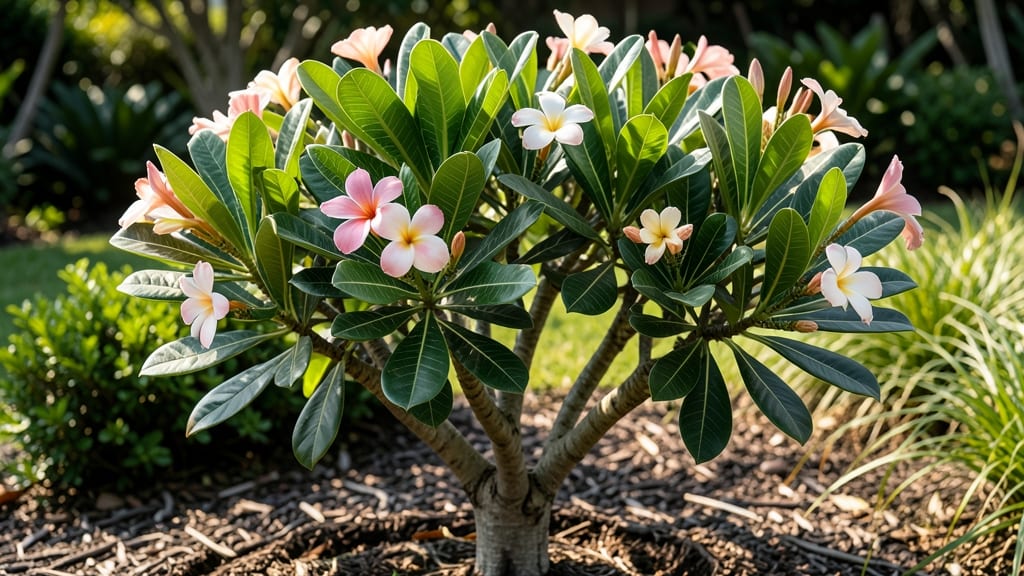
Growing plumeria trees in Arizona means year-round fragrance that turns your desert landscape into a tropical oasis. 🌵 I've watched mine thrive through 110-degree summers by mastering the balance between drought tolerance and their tropical roots—no more wilting or struggling to bloom.
The secret lies in well-draining soil mixed with sand and cactus soil, plus morning sun and afternoon shade to prevent scorching. Most gardeners overwater, but plumeria roots hate soggy feet—think deep watering every 7-10 days once established, not daily misting.
You'll be rewarded with glossy, waxy blooms in every color from spring through fall, and the intoxicating scent lingers long after the flowers fade. The key is pruning right after blooming to encourage bushier growth and prevent leggy stems.
Works perfectly for low-water desert gardens, container growing, or even as a striking focal point near patios. Here's how to keep yours blooming reliably all season.
📚 In This Guide
- What you need
- Instructions
- Tips and common mistakes
- Wrapping up and next steps
What you need
- ● Plumeria tree: Choose a Plumeria rubra or Plumeria obtusa variety (hardy to USDA Zone 10a, but Arizona’s microclimates can work with care!)
- ● Well-draining soil: 50% cactus/succulent mix + 50% perlite or pumice (avoid clay—root rot is a no-go!)
- ● Pot or planting hole: Container: 12–18" diameter pot with drainage holes (terracotta preferred)
- ● In-ground: Dig a hole twice as wide as the root ball, with a mound of soil in the center
- ● Slow-release fertilizer: 10-10-10 or 8-3-9 blend (use sparingly—plumerias hate excess nitrogen!)
- ● Pruning tools: Bypass pruners (for clean cuts)
- ● Sterilized saw (for thicker branches)
- ● Mulch: 2–3" layer of gravel or bark (keeps roots cool and retains moisture)
- ● Gloves: Heavy-duty gardening gloves (plumeria thorns are no joke!)
- ● Watering can or hose with nozzle: Drip irrigation is ideal for desert climates
- ○ Root stimulator: Optional but helpful for transplant shock (e.g., Mycorrhizal fungi)
- ● Shade cloth (30–50% coverage): For young trees during Arizona’s brutal summer (105°F+)
- ● Humidity tray: Elevate the pot and place on pebbles + water to boost humidity (plumerias love it!)
- ● Pruning sealant: For larger cuts to prevent disease (e.g., tree wound pruning paste)
Step-by-step guide to growing plumeria trees in Arizona's desert climate
Here’s how to cultivate vibrant, resilient plumeria trees that thrive in Arizona’s heat and low humidity.
🌱 Step 1: Choose the Right Variety for Arizona’s Climate
Plumeria trees thrive in Arizona’s 100°F+ summers, but not all varieties handle the extreme heat equally. Look for drought-tolerant hybrids like ‘Ice Cream’ or ‘Maui Gold’—they bloom prolifically with minimal fuss. Avoid tropical varieties that wilt in dry heat. I always check the parentage; single-origin Hawaiian plumeria often struggle here.
Start with 4-6 healthy cuttings (you’ll need them for redundancy—some won’t root). The best time to plant is late spring, after the last frost but before summer’s peak. This gives roots time to establish before the real heat hits. I’ve seen plumeria planted in July survive, but they’ll need extra care to avoid transplant shock.
☀️ Step 2: Plant in Well-Draining Soil with Full Sun Exposure
Plumeria roots hate soggy soil—Arizona’s clay-heavy native soil is a death sentence. Amend with 50% cactus/succulent mix and 50% organic compost to improve drainage. I dig a hole twice as wide as the root ball but only as deep—plumeria roots are shallow and need oxygen.
Position your tree in full sun (6+ hours daily). In Arizona, that means south- or west-facing spots. If you’re planting near a wall or pavement, bury a 4-inch-thick layer of gravel underneath to reflect heat away from the roots. Watch for yellowing leaves—a sign of overwatering or poor drainage.
💧 Step 3: Water Deeply but Infrequently—Adjust for Monsoon Season
Newly planted plumeria need deep watering every 7-10 days—soak the soil until water runs out the drainage holes. Once established, reduce to every 2-3 weeks unless temperatures exceed 110°F, then water once a week. Overwatering is the #1 killer; plumeria store water in their thick stems and don’t need frequent drinks.
During Arizona’s monsoon season (July-September), cut back to every 3-4 weeks. The sudden downpours can drown roots if the soil doesn’t drain fast enough. I test moisture by sticking my finger 3 inches deep—if it’s damp, wait. If dry, water thoroughly.
✂️ Step 4: Prune for Shape and Encourage Blooms
Prune right after flowering (spring/summer) to shape the tree and remove dead wood. Use sterilized shears to cut just above a leaf node at a 45-degree angle. This encourages bushier growth and more blooms. Never prune in fall—plumeria need their foliage to photosynthesize through winter.
If your plumeria grows leggy or sparse, it’s not getting enough light. Move it to a sunnier spot or prune back one-third of the longest branches to force denser regrowth. I’ve seen plumeria recover from over-pruning—just don’t cut into old wood (the bare stems). New growth will emerge in 2-3 weeks if conditions are right.
🪴 Step 5: Protect from Frost and Pests Year-Round
Arizona’s rare freezes (below 32°F) can kill plumeria, but they’re surprisingly resilient. Wrap the trunk in burlap and cover with a frost blanket if temps drop below 40°F. I’ve left them uncovered in 35°F with no damage, but below 30°F is risky. Move potted plumeria to a garage or under an eave.
Watch for mealybugs and scale—common in dry climates. Spray with neem oil (1 tbsp per gallon of water) every 2 weeks during hot months. Healthy plumeria rarely get pests, so focus on proper watering and sunlight first. If leaves yellow or drop, it’s usually overwatering or pests, not frost.
Tips & tricks for desert-resilient plumeria trees
Real talk: Arizona’s brutal summers can turn plumeria into a high-maintenance headache if you don’t nail these key strategies. Here’s what nobody tells you about keeping these tropical beauties thriving in the desert.
Heat Tolerance Secret: The 100°F+ summer threshold isn’t just about survival—it’s about performance. Varieties like ‘Ice Cream’ and ‘Maui Gold’ actually bloom better in this heat because they’ve adapted to store water efficiently. If your plumeria starts dropping leaves in 100°F+ weather, it’s either not getting enough sun or its roots are drowning in compacted soil. I’ve seen plumeria wilt dramatically in Arizona’s afternoon heat only to recover completely after a few days of proper drainage adjustments.
Soil Science Matters: That 50% cactus/succulent mix isn’t just fluff—it’s the difference between thriving and struggling. The secret weapon here is the gravel layer under potted trees or near walls. I’ve buried 4-inch-thick gravel under my potted plumeria to create a heat-reflective barrier, which keeps root zones 10-15°F cooler than ambient air temperatures. This simple trick prevents heat stress that would otherwise trigger early leaf drop.
Watering Wisdom: The 7-10 day watering schedule for new plants might seem generous, but plumeria roots need that time to establish deep into the amended soil. Here’s the pro move: Water only in the morning between 6-9 AM to prevent evaporation losses. During monsoon season, I’ve found that 3-4 weeks between waterings works better than the instructions suggest—those sudden downpours can actually over-saturate the soil if you’re not careful. Always check that 3-inch moisture test before watering again.
Pruning Precision: That 45-degree angle cut isn’t just for aesthetics—it’s about directing water away from the cut surface. When pruning back one-third of leggy branches, I make sure to cut just above a leaf node (you’ll see a tiny bump where leaves used to be). This forces new growth from that exact spot, creating denser foliage. And here’s the kicker: If you’re seeing new growth in 2-3 weeks (as the instructions promise), but it’s all coming from the top, your tree needs more light—even in Arizona’s sun.
Pro Tips for Plumeria Tree Arizona
- Real talk: Arizona’s brutal summers can turn plumeria into a high-maintenance headache if you don’t nail these key strategies.
- Heat Tolerance Secret: The 100°F+ summer threshold isn’t just about survival—it’s about performance.
- Soil Science Matters: That 50% cactus/succulent mix isn’t just fluff—it’s the difference between thriving and struggling.
Frequently asked questions
Got questions about growing plumeria trees in Arizona’s desert climate? You’re not alone! Here are some of the most common concerns—and answers—to help you nurture thriving, fragrant blooms year-round.
Can plumeria trees survive Arizona’s extreme heat and drought?
Plumerias are native to tropical and subtropical regions, making them surprisingly resilient to Arizona’s heat once established. They thrive in full sun and require minimal watering—about once a week in summer and even less in cooler months. Just ensure well-draining soil to prevent root rot.
How long does it take for a plumeria tree to bloom in Arizona?
Patience is key! A healthy plumeria can take 1–3 years to bloom after planting, depending on care, variety, and climate. In Arizona’s warm winters, you might see year-round blooms if pruned correctly and fertilized with low-nitrogen, high-phosphorus feed (like 5-10-10).
Will plumeria trees die in Arizona’s rare cold snaps?
Most plumeria varieties are tender perennials and cannot tolerate frost. If temps drop below 30°F (-1°C), protect your tree with:
- A frost cloth or blanket
- Moving potted trees to a garage or covered patio
- Mounding mulch around the base (for in-ground plants)
What’s the best alternative if my plumeria struggles in Arizona?
If your plumeria fights pests, disease, or heat stress, consider these desert-friendly alternatives with similar charm:
- Desert Rose (Adenium obesum)
- Bougainvillea (drought-tolerant, vibrant blooms)
- Jasmine (Trachelospermum jasminoides) (fragrant, shade-tolerant)
- Mexican Orange (Choisya ternata) (citrus-scented, low-maintenance)
Why are my plumeria leaves yellowing or dropping?
Yellowing leaves often signal overwatering, nutrient deficiency, or pests. Check these fixes:
- Water deeply but infrequently—plumerias hate soggy roots.
- Test soil for nitrogen deficiency (use a balanced fertilizer).
- Inspect for scale insects or aphids (spray with neem oil if needed).
- Ensure 6+ hours of sunlight daily (shady spots weaken growth).
Wrapping up and next steps
Growing a plumeria tree in Arizona is a rewarding journey that brings fragrant, tropical beauty to your desert landscape—even in the harshest heat! 🌵 With the right care, soil prep, and pruning techniques, you’ll enjoy year-round blooms and a resilient plant that thrives in the Southwest’s climate.
Whether you’re a seasoned gardener or a beginner, these tips will set you up for success.
Ready to transform your outdoor space? Start by choosing the perfect spot and gathering your tools—then roll up your sleeves and get pruning! Your plumeria will thank you with vibrant flowers and lush foliage for seasons to come. 🌸