
Pruning
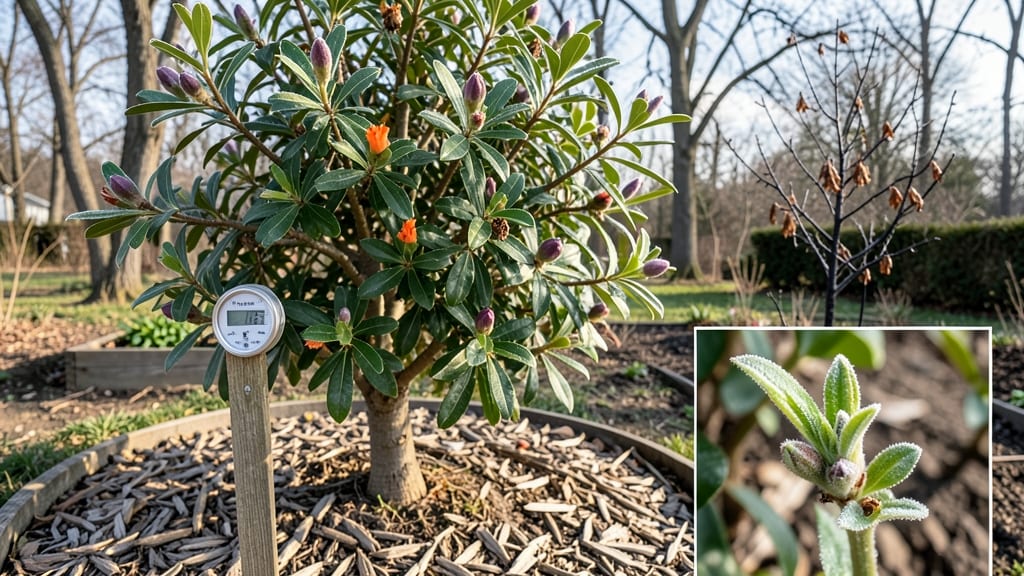
The pomegranate tree's cold tolerance varies by variety, but most thrive in USDA Zones 7-11, where they can withstand brief cold snaps down to 15°F (-9°C). However, prolonged exposure below 20°F (-7°C) risks severe damage, especially to young trees. Mature specimens often recover from light frost if properly cared for.
The pomegranate tree's cold tolerance varies by variety, with some like 'Wonderful' handling frost better than others. 🌱 The key is protecting young trees with thick mulch and frost cloth, while mature trees benefit from strategic pruning to reduce frost pockets.
I’ve seen mature trees bounce back after light freezes, but their fruit production can suffer if winter damage is severe.
For colder climates, creating microclimates—like planting near south-facing walls—can add crucial degrees of warmth. Mulching with straw or wood chips insulates roots, while wrapping the trunk with burlap shields against harsh winds. These small adjustments make all the difference between a thriving tree and a frostbitten one.
💡 In This Article
- Understanding Pomegranate Tree Cold Hardiness by Variety
- Protecting Pomegranate Trees in Freezing Climates
Understanding pomegranate tree cold hardiness by variety
The cold tolerance of pomegranate trees isn't one-size-fits-all—it varies dramatically between cultivars and maturity stages. The 'Wonderful' variety, a popular choice for its sweet, ruby-red fruit, typically handles temperatures down to 15°F (-9°C) for short periods, thanks to its thicker bark and deeper root system.
In contrast, 'Eversweet', known for its seedless fruit, is slightly more frost-sensitive, often struggling below 20°F (-7°C) unless protected.
Rootstock plays a critical role in cold hardiness. Trees grafted onto Punica granatum 'Cartagena' rootstock, a hardier variety native to colder Mediterranean regions, can survive 10°F (-12°C) brief exposures.
This is because the rootstock's genetic memory of colder climates triggers protective mechanisms like increased sugar production in cells, which acts as a natural antifreeze. 🌱 Young trees, regardless of variety, are far more vulnerable—their thinner bark and shallower roots make them susceptible to damage at 25°F (-4°C) or lower.
Another key factor is the tree's chilling requirement—most pomegranates need 200-400 hours of temperatures below 45°F (7°C) to break dormancy and produce fruit. Without adequate chilling, buds may fail to open in spring, even if the tree survives winter.
This is why gardeners in USDA Zone 7 often see better fruit set than those in Zone 8, where mild winters can disrupt this critical process.
Frost sensitivity also depends on the tree's stage of growth. Dormant trees can tolerate colder temps, but new growth in early spring or late fall is highly vulnerable to even light frost.
For example, 'Crimson Jewel', a cold-tolerant variety, may lose its blossoms if temperatures dip below 28°F (-2°C) during flowering, reducing that year's fruit yield. This is why timing matters—protecting trees during these vulnerable periods can mean the difference between a bountiful harvest and a failed crop.
Maturity makes a surprising difference. A 5-year-old pomegranate tree might survive 15°F (-9°C) with minimal damage, while a 2-year-old sapling could suffer dieback. This is because mature trees develop thicker bark and deeper roots that act as insulation.
The bark's cork cells expand and contract less dramatically with temperature changes, reducing frost cracks. Additionally, mature trees can mobilize stored carbohydrates to repair frost-damaged tissues, a process younger trees can't perform as effectively.
One often-overlooked factor is soil temperature. Pomegranate roots are sensitive to freezing ground, which can occur even if air temperatures are above freezing.
In Zone 7, where winter soil temps can drop to 20°F (-7°C), mulching with 6-8 inches of straw or wood chips can raise soil temps by 4-6°F, protecting roots. This buffer zone is crucial—root damage often leads to tree decline, even if the above-ground parts appear intact.