
Pruning
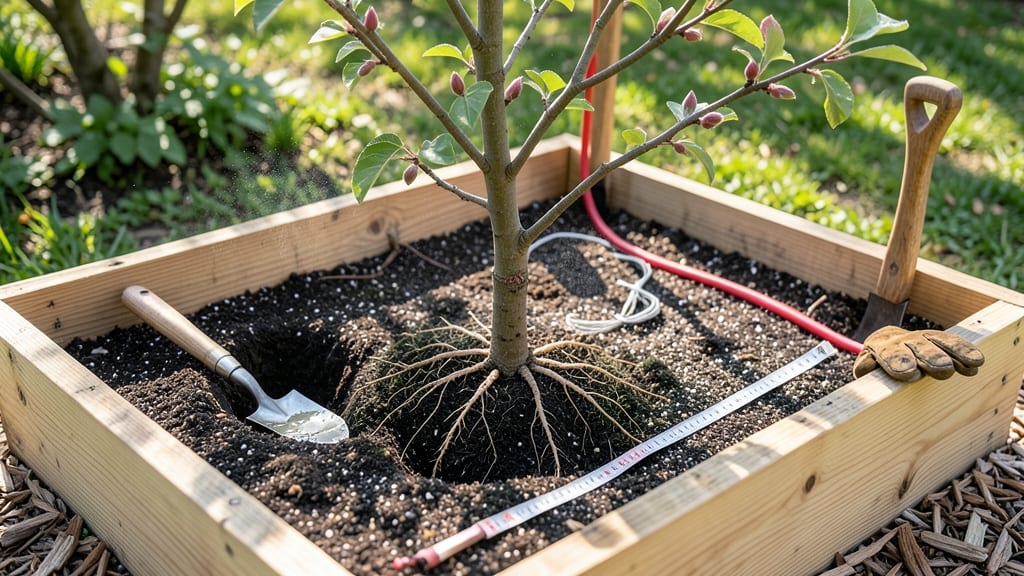
Planting trees in raised beds gives you faster growth and stronger roots without needing a full yard. 🌳 I started with a 4'x8' cedar bed and my first dwarf apple tree now produces fruit after just three years—something that would take decades in the ground.
The secret lies in soil depth, drainage, and choosing the right tree. Most raised beds need at least 18-24 inches of soil to support a mature root system, and container-grown trees establish quicker than bare-root stock. I mix in compost and perlite to keep roots aerated and moisture balanced.
You'll see vigorous new growth within weeks as roots spread through the rich soil mix. The trees stay compact, making them perfect for patios, small yards, or urban spaces where digging isn't an option. Common mistakes? Overcrowding (keep spacing to 6-8 feet for small varieties) and poor drainage.
Add a gravel layer at the bottom if your bed doesn't have drainage holes—root rot is the silent killer of container-grown trees.
📚 In This Guide
- What you need
- Instructions
- Tips and common mistakes
- Wrapping up and next steps
What you need
- ● Raised bed frame: Untreated wood (cedar or redwood preferred), composite lumber, or metal (minimum 4' x 8' for small trees, 6' x 12'+ for larger varieties). Height: 12–18" (deeper for taproot trees like fruit trees).
- ● Landscape fabric: 1 roll (to block weeds and retain moisture).
- ● Quality soil: 2–3 cubic yards of well-draining mix (50% native soil, 30% compost, 20% perlite/sand for aeration).
- ● Tree(s): Bare-root or container-grown saplings (choose dwarf varieties for raised beds, e.g., Columnar Apple or Patio Pear).
- ● Tools: Shovel or spade (for digging)
- ● Garden trowel (for precision planting)
- ● Measuring tape
- ● Wheelbarrow (for soil transport)
- ● Gloves (to protect your hands 🧤)
- ● Mulch: 2–3 bags of wood chips or straw (to conserve moisture and suppress weeds).
- ● Tree supports: 1–2 stakes + soft ties (for young, top-heavy trees).
- ● Drip irrigation kit: (to automate watering in small spaces).
- ● Soil amendments: Mycorrhizal fungi (boosts root growth) or slow-release fertilizer (e.g., Osmocote).
- ● Pest barriers: Copper tape (for slugs/snails) or mesh (for burrowing pests).
Step-by-Step instructions for raised bed tree planting
Here's how to give young trees the perfect start in a raised bed—my method ensures strong roots and rapid growth in tight spaces.
🪴 Step 1: Prepare the Raised Bed for Planting
Choose a 4-foot wide by 8-foot long raised bed for proper root spread and easy access. Remove any existing grass or weeds, then line the bottom with cardboard to suppress weeds and improve drainage. Fill the bed with a custom mix of 50% topsoil, 30% compost, and 20% perlite—this creates loose, well-aerated soil that encourages deep root growth.
Level the soil surface with a rake, pressing down lightly to eliminate air pockets. The bed should be 6-12 inches deep—enough to accommodate young tree roots while preventing soil compaction. Water the mix thoroughly until it's evenly moist but not soggy. This pre-moistening prevents transplant shock when you add your trees.
🌱 Step 2: Dig the Planting Hole and Amend the Soil
For each tree, dig a hole twice as wide as the root ball but no deeper than the container's depth. This encourages roots to spread horizontally rather than circling the base. Loosen the sides of the hole with a shovel to prevent soil compaction around the roots later.
Mix 1 cup of bone meal and 1 cup of mycorrhizal fungi into the native soil you removed. These amendments boost phosphorus for root development and establish beneficial soil microbes. Gently place the tree in the hole so the top of the root ball sits 1 inch above soil level—this prevents settling from watering.
☀️ Step 3: Position and Stabilize the Tree
Arrange the tree in the center of the hole, ensuring its main trunk faces the direction you prefer (often south to avoid shading nearby plants). Use a wooden stake to support young trees, positioning it 2-3 inches from the trunk to avoid girdling. Secure the tree with soft tree ties—never use wire or anything that can cut into the bark as it grows.
Fill the hole with the amended soil, pressing gently around the roots to eliminate air pockets. Water deeply until the soil settles 1-2 inches—this ensures the tree sits at the correct depth. Mulch the base with 2-3 inches of wood chips, keeping it 6 inches away from the trunk to prevent rot. This mulch layer retains moisture and regulates soil temperature.
💧 Step 4: Water and Monitor for Growth
Water the tree deeply every 2-3 days for the first 4 weeks, ensuring the soil remains consistently moist but not waterlogged. Use a soaker hose or drip irrigation to deliver water slowly at the base—this prevents surface evaporation and encourages deep root development. After this initial period, reduce watering to once a week, adjusting for rainfall.
Watch for new leaf growth within 2-4 weeks—this is your signal that the tree has established roots. If leaves yellow or wilt, check the soil moisture and adjust your watering schedule. Avoid fertilizing for the first 6 months, as the tree is focusing its energy on root establishment rather than foliage growth.
✂️ Step 5: Prune and Maintain for Long-Term Health
Prune any broken, crossing, or diseased branches immediately after planting. Use clean, sharp pruners to make cuts at a 45-degree angle just above a bud. Avoid heavy pruning—remove only 10-20% of the foliage to reduce stress. This encourages a strong branch structure without overburdening the young tree.
Every spring and fall, top-dress the bed with 1-2 inches of compost to replenish nutrients. Avoid piling mulch against the trunk—this creates a moist environment that invites pests and disease. With proper care, your raised bed trees will grow 2-3 times faster than in-ground plantings, thanks to the improved soil conditions and root space.
Tips & tricks for perfect raised bed tree planting
Here's what I've learned after years of helping trees thrive in raised beds—these details make all the difference.
Soil Mix Secrets: The 50-30-20 ratio of topsoil, compost, and perlite isn't just arbitrary—it's designed to balance nutrients, aeration, and moisture retention. If your local topsoil is heavy clay, increase the perlite to 30% to prevent compaction. For sandy soils, reduce perlite to 10% and add 10% coconut coir to improve water retention. The key is maintaining that loose, crumbly texture that roots love.
Root Ball Positioning: That 1-inch elevation above soil level in Step 2 isn't just a suggestion—it's critical. When you water, the soil will settle about 1-2 inches, bringing the root ball to the perfect depth. If you bury it too deep, roots will suffocate and the trunk may rot. Use a level to verify the bed's evenness before planting, and always check the root ball's position after watering.
Watering Wisdom: The "consistently moist but not soggy" guideline in Step 4 is your golden rule. Test moisture by sticking your finger 2 inches into the soil—it should feel like a damp sponge, not a wet sponge or dry sand. In hot climates, you might need to water every 2 days instead of every 2-3 days, especially during the critical first 4 weeks when roots are establishing. A moisture meter is worth the investment for precision.
Mulch Mastery: Those 2-3 inches of wood chips serve two vital purposes: moisture retention and temperature regulation. But placement matters just as much as quantity. The 6-inch clearance from the trunk prevents what I call "mulch volcanoes"—piles that trap moisture against the bark, creating perfect conditions for fungal diseases. Use shredded bark mulch rather than chunks, as it breaks down more evenly and won't smother the soil.
Pro Tips for Raised Bed Tree Planting
- Here's what I've learned after years of helping trees thrive in raised beds—these details make all the difference.
- Soil Mix Secrets: The 50-30-20 ratio of topsoil, compost, and perlite isn't just arbitrary—it's designed to balance nutrients, aeration, and moisture retention.
- Root Ball Positioning: That 1-inch elevation above soil level in Step 2 isn't just a suggestion—it's critical.
Frequently asked questions
Got questions about raised bed tree planting?
You’re not alone! Here are answers to the most common concerns—from timing to troubleshooting—to help you grow thriving trees in limited space.
What types of trees grow best in raised beds?
Dwarf or semi-dwarf fruit trees (like apples, peaches, or cherries) thrive in raised beds due to their compact root systems. Ornamental trees like Japanese maples or flowering dogwoods also adapt well. Avoid large, fast-growing species—they’ll outgrow the space quickly! Pro tip: Check the tree’s mature height and spread before planting.
When is the best time to plant trees in a raised bed?
Plant in early spring (after the last frost) or early fall (6–8 weeks before the first frost). These windows give roots time to establish before extreme temperatures. Avoid planting in summer heat or winter—stress increases transplant shock. Bonus: Mulch heavily after planting to retain moisture and regulate soil temp.
How often should I water trees in a raised bed?
Water deeply 2–3 times per week for the first year, aiming for 1–1.5 inches of water per session. Raised beds dry out faster than ground soil, so monitor moisture 2–3 inches below the surface. Drip irrigation or soaker hoses work best—avoid overhead watering to prevent fungal diseases.
Can I reuse the same raised bed for multiple tree plantings?
Yes! After harvesting, remove old mulch, replenish nutrients (compost or balanced fertilizer), and rotate crops if growing edible trees. Wait 2–3 years before replanting the same type to prevent soil depletion or disease buildup. Example: Plant apples one year, then switch to peaches or berries the next.
How do I prevent pests or diseases in a raised bed tree?
Start with sterile soil (no garden waste) and choose disease-resistant varieties. Monitor for pests like aphids or spider mites—spray with neem oil if needed. Ensure 6–8 hours of sunlight daily and prune for airflow. Red flag: Yellow leaves or sawdust-like frass? Act fast to treat infestations.
Do raised beds affect tree hardiness in cold climates?
Raised beds can increase cold sensitivity if not insulated properly. In zones 5–7, add 4–6 inches of mulch (straw or wood chips) in fall and use burlap wraps for young trunks. For extreme winters, consider low-profile raised beds (12–18 inches deep) to reduce frost penetration.
Wrapping up and next steps
Planting trees in raised beds isn’t just a clever space-saving hack—it’s a game-changer for healthier, faster-growing roots and stronger trees! 🌳 Whether you’re a seasoned gardener or a beginner, this method offers control, drainage, and customizable soil to help your trees thrive in even the smallest yards.
With the right prep and care, you’ll be rewarded with lush foliage and a greener future.
Ready to get started? Pick your favorite tree variety, gather your supplies, and dig in! Your future shade—or fruit—starts with a single shovel full of soil. 🌱