
Pruning
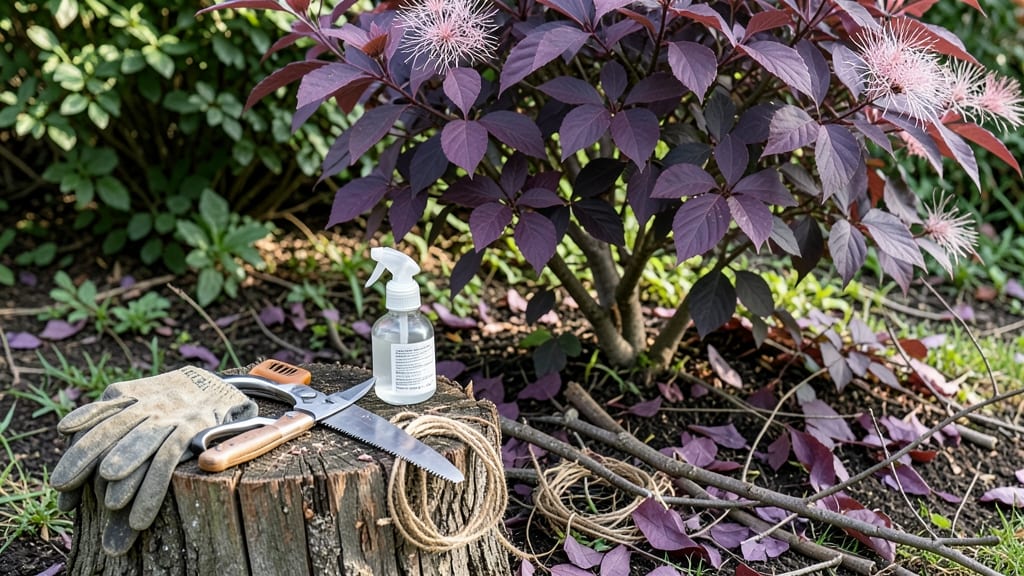
Royal purple smoke tree pruning keeps your tree looking stunning with almost no effort. ✨ The secret is timing—prune in late winter or early spring when the tree is dormant, and you’ll encourage fresh, vibrant growth that maintains its signature purple foliage all season long.
Most people overthink it, but this tree is forgiving. Grab your pruners and focus on removing dead branches first, then shape lightly by cutting just above a leaf bud or side branch. Avoid heavy pruning unless you’re rejuvenating an overgrown tree—this one thrives with minimal intervention.
By summer, you’ll see lush, velvety purple leaves and feathery plumes that turn golden in fall. The tree’s natural shape stays compact, so you’ll spend less time trimming and more time admiring its year-round color. Works for small gardens, large landscapes, or even as a striking container specimen.
Here’s how to keep it looking its best with minimal work!
📚 In This Guide
- What you need
- Instructions
- Tips and common mistakes
- Wrapping up and next steps
What you need
- ● Pruning shears: Bypass pruners (for small branches, ¼"–¾" thick)
- ● Loppers: 1 pair (for medium branches, ¾"–2" thick)
- ● Pruning saw: 1 (for thick branches, 2"+ thick)
- ● Garden gloves: 1 pair (cut-resistant, nitrile-coated for grip)
- ● Disinfectant: 70% isopropyl alcohol or rubbing alcohol (for sterilizing tools)
- ○ Pruning sealant: Optional (for sealing larger cuts, latex-based)
- ● Heavy-duty trash bags: 2–3 (for debris disposal)
- ● Step stool or ladder: Adjustable (if tree exceeds 6–8 feet)
- ● Hand pruners: Compact pair (for delicate trimming)
- ● Gardening shears: For shaping foliage
- ● Work apron: With pockets (to keep tools handy)
- ● Safety glasses: For debris protection
- ○ Marking spray: (Optional, for labeling cuts if needed)
Instructions for pruning royal purple smoke tree
This tree thrives with minimal pruning—just a few key cuts keep it vibrant year-round.
✂️ Step 1: Prune in Late Winter or Early Spring
Wait until after the last hard frost but before new growth begins—typically February to March in most climates. This timing ensures you're cutting back dormant wood while avoiding spring sap flow. You'll see bare branches with no leaves or buds, signaling it's safe to prune.
Use clean, sharp pruning shears to make cuts just above a bud or branch collar (the swollen area where the branch meets the trunk). Avoid leaving stubs—this invites disease. I like to make my cuts at a 45-degree angle about ¼ inch above the bud, which helps water run off and prevents rot.
✂️ Step 2: Remove Dead, Diseased, or Crossing Branches
Scan the tree for dead wood (branches that snap easily or have no bark) or diseased branches (mushroom-like growths, oozing sap, or unusual discoloration). These should be cut back to the main trunk immediately. For crossing branches—where two limbs grow toward each other—remove the weaker of the two to improve airflow and reduce future rubbing.
If you're unsure which branch to keep, look for the one with stronger growth or better attachment to the trunk. I always err on the side of caution and remove the smaller branch first—you can always prune more later if needed.
✂️ Step 3: Lightly Shape for Balance and Airflow
Royal Purple Smoke Trees develop naturally beautiful shapes, so pruning should be minimal and strategic. Focus on thinning out the center to improve airflow—this prevents fungal issues and keeps the foliage healthy. Aim to remove no more than 20% of the tree’s foliage in a single session to avoid stress.
Use hand pruners for smaller branches and loppers for thicker limbs (up to 2 inches in diameter). For anything larger, break out the pruning saw. Always step back after each cut to check the tree’s balance—you want an open, vase-like shape that lets light penetrate to the inner branches.
✂️ Step 4: Light Summer Pruning for Maintenance
If your tree looks overgrown by mid-summer, do a light trim to encourage new growth and maintain its shape. Focus on deadheading any spent flowers or leggy branches that detract from the tree’s form. This is also a good time to shape the canopy by trimming back any branches that grow too close together.
Water the tree deeply the day before pruning—this helps it recover faster. After trimming, give it another deep watering to reduce stress. You’ll notice new growth within a few weeks, signaling the tree is responding well to the pruning.
✂️ Step 5: Avoid Pruning in Fall or Winter
Pruning after late summer encourages new growth that won’t harden off before winter, making the tree vulnerable to cold damage. If you must prune in fall, limit it to removing only dead or diseased wood—no major shaping. The tree’s purple foliage will naturally fade as temperatures drop, so resist the urge to cut back for aesthetics.
Instead, focus on cleaning up around the base of the tree by removing fallen leaves and debris. This reduces pests and diseases that could overwinter in the mulch. Come spring, you’ll be rewarded with vibrant new growth and that signature purple hue you love.
Tips & tricks for perfect royal purple smoke tree pruning
Here's what nobody tells you about keeping your Royal Purple Smoke Tree looking its best with minimal effort.
Timing is Everything: I learned this the hard way after pruning too early in winter and seeing new growth get damaged by late frosts. Check your local frost dates—wait until you see at least 3 consecutive days above freezing after the last hard frost. This ensures your cuts heal properly without encouraging tender new growth too soon. A quick online search for your zip code's frost calendar will save you from my mistake.
The 45-Degree Angle Secret: When making cuts in Step 1, that 45-degree angle isn't just for looks—it's about water runoff. The angle directs rainwater away from the cut, preventing rot that can kill your tree. I use a small carpenter's square to check my angle before each cut, and it's made all the difference in keeping my tree healthy for years. Don't skip this detail—it's what separates healthy trees from those that decline after pruning.
Branch Selection Strategy: For crossing branches in Step 2, I've found a simple trick: look for the branch that grows more vertically. The one that angles upward usually has stronger growth potential. When in doubt, remove the branch that's growing toward the center of the tree—this opens up the canopy for better airflow and light penetration. Remember, you can always prune more later, but you can't un-cut what's already gone.
Summer Pruning Hack: That mid-summer maintenance trim in Step 4 is your chance to encourage bushier growth. Instead of just cutting back leggy branches, make your cuts just above a leaf node or bud. This signals the tree to branch out at that point, creating a fuller shape. I've seen trees go from sparse to lush just by making this simple adjustment during their summer pruning session.
Pro Tips for Royal Purple Smoke Tree Pruning
- Here's what nobody tells you about keeping your Royal Purple Smoke Tree looking its best with minimal effort.
- Timing is Everything: I learned this the hard way after pruning too early in winter and seeing new growth get damaged by late frosts.
- The 45-Degree Angle Secret: When making cuts in Step 1, that 45-degree angle isn't just for looks—it's about water runoff.
Frequently asked questions
Got questions about keeping your Royal Purple Smoke Tree looking its best with minimal effort? You’re not alone! Here are some of the most common concerns—and straightforward answers—to help you prune like a pro.
When is the best time to prune my Royal Purple Smoke Tree?
The ideal time is late winter or early spring, just before new growth begins. This ensures you remove dead or weak branches while encouraging vibrant foliage for the season. Avoid heavy pruning in fall, as it can stress the tree before winter.
How much can I trim without harming the tree?
Light to moderate pruning (removing up to 25-30% of the canopy) is safe. Focus on dead, crossing, or overcrowded branches first. For shaping, keep cuts clean and angled—never more than ¼ inch from the bud—to avoid damaging the tree’s structure.
What if my tree isn’t blooming or has sparse foliage?
Check for over-pruning or nutrient deficiencies (like iron or nitrogen). Thin out dense areas to improve airflow, and fertilize in early spring. If branches are bare, they may be sun-scalded—prune to open the canopy and protect tender spots.
Can I prune Royal Purple Smoke Trees in summer?
Yes, but lightly! Summer pruning (June–August) is best for shaping or removing suckers, but avoid heavy cuts—it can stimulate weak, water-sprout growth. Always use sterilized tools to prevent disease spread in warm, humid conditions.
Are there any pruning mistakes to avoid with this tree?
Avoid these pitfalls:
- Topping (cutting back to a stub)—it weakens the tree and ruins its natural shape.
- Pruning in wet weather (spreads fungal diseases like powdery mildew).
- Ignoring deadwood—leave it, and it can harbor pests or diseases.
- Over-trimming in fall—new growth won’t harden off before winter.
Wrapping up and next steps
Pruning your Royal Purple Smoke Tree doesn’t have to be a daunting task—just a few strategic cuts can keep it vibrant and healthy year-round! 🌿 With the right tools, timing, and techniques, you’ll enjoy its stunning purple foliage and minimal upkeep.
Whether you’re shaping it for aesthetics or encouraging new growth, confidence comes with practice.
Ready to take the next step? Grab your pruners, mark your calendar for late winter or early spring, and give your tree the care it deserves! 🌟 Your future purple masterpiece awaits!