
Pruning
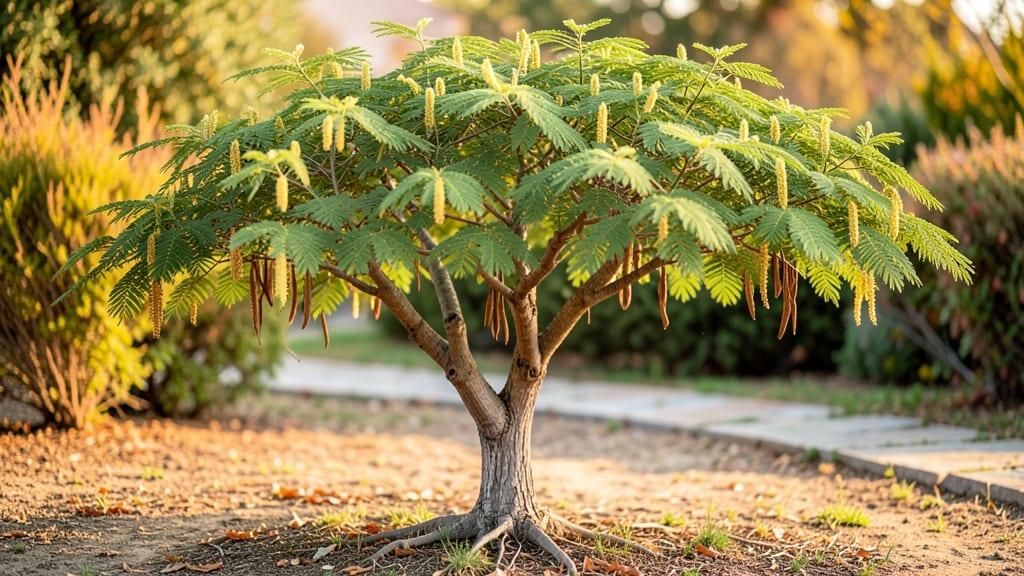
The Shami tree in English is known as the Indian Rose Chestnut or Chinar tree, scientifically classified as Schleichera oleosa. This hardy tropical tree thrives in warm climates and is prized for its medicinal bark, edible nuts, and striking ornamental foliage.
The Shami tree, also called the Chinar tree, is deeply rooted in South Asian traditions. 🌿 Its medicinal bark has been used for centuries in Ayurveda to treat skin conditions like eczema and fungal infections, while its edible nuts are often roasted as a crunchy snack.
The tree's vibrant foliage makes it a popular choice for landscaping in tropical regions, where it can grow up to 30 feet tall. What's fascinating is how its wood—durable yet lightweight—has been traditionally used for making furniture and even musical instruments.
Beyond its practical uses, the Shami tree holds cultural significance in India, particularly during festivals like Diwali, where its leaves are sometimes used in decorative arrangements. 🌟 The tree's ability to thrive in harsh conditions also makes it a symbol of resilience in many communities.
Whether you're interested in its botanical features, medicinal properties, or cultural importance, the Shami tree offers a fascinating blend of utility and tradition.
💡 In This Article
- Scientific Classification and Botanical Features of the Shami Tree
- Cultural and Medicinal Uses of Shami Tree in Traditional Practices
Scientific classification and botanical features of the Shami tree
The Shami tree belongs to the genus Schleichera, part of the Sapindaceae family—also known as the soapberry family—which includes around 140 genera and 1,500 species. Its scientific name, Schleichera oleosa, reflects its oily seed content, a key feature that distinguishes it from other trees in its family.
This genus is native to tropical regions of India, Sri Lanka, Southeast Asia, and northern Australia, where it thrives in well-drained soils and tolerates drought conditions once established.
One of its most striking botanical traits is its compound leaves, which can grow up to 12-20 inches long with 7-11 leaflets arranged in pairs along a central stem.
The leaves are a vibrant green, turning a golden-yellow hue before falling in the dry season—a seasonal transformation that adds to its ornamental appeal. The tree produces small, fragrant white or yellowish flowers in clusters, followed by hard, oval-shaped nuts encased in a spiky husk.
These nuts, when roasted, release a nutty aroma similar to chestnuts but with a slightly bitter edge.
The Shami tree's hardwood is another defining feature, known for its durability and lightweight yet strong structure. The wood has a fine grain and a pale yellow to light brown color, making it ideal for carpentry and furniture-making.
Interestingly, the tree's bark contains oleoresin, a natural substance with antimicrobial properties that has been used for centuries in traditional medicine. This resin gives the bark its characteristic yellowish-brown color and contributes to its medicinal value.
What sets the Shami tree apart botanically is its ability to grow in poor, rocky soils while still maintaining a robust structure.
Unlike many tropical trees that require rich, fertile soil, the Shami tree can thrive in arid conditions with minimal water, making it a resilient choice for landscaping in harsh climates.
Its roots also extend deep into the soil, helping to prevent erosion—a trait that has earned it a place in agroforestry systems in rural areas.
The tree's growth rate is moderate, with mature specimens reaching heights of 30-50 feet under ideal conditions. Its canopy spreads widely, providing ample shade, which is why it's often planted along roadsides and in courtyards.
The combination of its hardy nature, aesthetic appeal, and practical uses makes the Shami tree a versatile and valuable species in both natural and cultivated environments.
In terms of ecological role, the Shami tree plays a part in supporting local wildlife. Its flowers attract pollinators like bees and butterflies, while its nuts are a food source for birds and small mammals.
This dual role as both a provider of resources and a stabilizer of soil makes it an important component of tropical ecosystems.