
Pruning
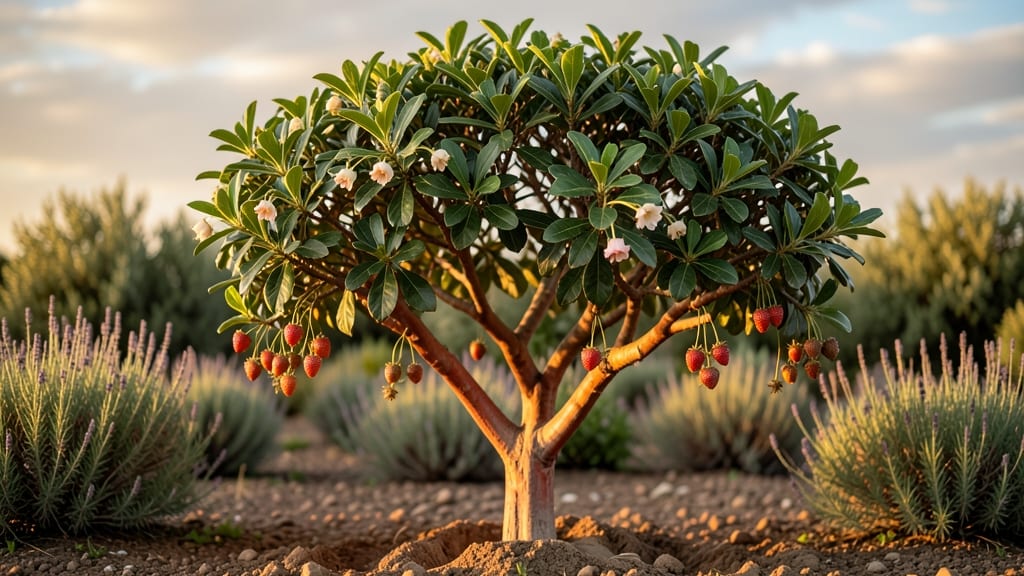
Pruning your strawberry tree trunk isn’t just about shape—it’s the secret to bigger fruit and a stronger plant. ✂️ I’ve learned the hard way that neglecting the trunk leads to weak growth, fewer berries, and even disease.
The right cuts encourage airflow, sunlight penetration, and structural support, turning a scraggly tree into a productive powerhouse.
Start with clean, sharp pruners and focus on removing dead or crossing branches at the base. Thin out crowded stems to improve airflow—this alone can double your fruit yield.
The goal is to create an open center that lets sunlight reach all parts of the tree, not just the outer branches. I prune mine in late winter or early spring, but light shaping can happen year-round to keep the tree manageable.
You’ll notice thicker, more vibrant growth within weeks, and those extra berries will make the effort worth it. The tree becomes easier to harvest, and pests have fewer hiding spots. Just avoid over-pruning—never remove more than 25% of the tree’s branches in one go, or you’ll stress the plant.
Watch for cracks or signs of disease on the trunk, especially after heavy rain. A quick seal with pruning paint can save a tree from rot.
With consistent care, your strawberry tree will reward you with years of abundant harvests and a sturdy, picturesque shape that’s the envy of the neighborhood.
📚 In This Guide
- What you need
- Instructions
- Tips and common mistakes
- Wrapping up and next steps
What you need
- ● Pruning shears: Bypass pruners (sharp, clean, and sterilized with rubbing alcohol) for cuts under ½ inch in diameter.
- ● Loppers: 1 pair (for cuts between ½ to 2 inches in diameter). Look for ergonomic handles and a bypass blade.
- ● Pruning saw: 1 (for thick branches >2 inches). Opt for a curved-tooth design to avoid tearing wood.
- ● Gloves: 1 pair of cut-resistant gardening gloves (size medium or large, depending on hand size).
- ● Disinfectant: 70% isopropyl alcohol or a commercial pruning sealant (like Tanglefoot Pruning Seal).
- ● Rag or paper towels: 2-3 (for cleaning tools and wiping sap).
- ● Ladder or step stool: 1 (if your tree is over 6 feet tall). Ensure it’s stable and non-slip.
- ● Twine or zip ties: 1 roll (for temporary support if removing large branches).
- ● Pruning paint: 1 small bottle (to seal large cuts >1 inch in diameter).
- ● Hand sanitizer: 1 bottle (for before/after tool handling).
- ● Notebook & pen: 1 (to track pruning dates and notes on branch health).
- ● Tree wound dressing: 1 tube (like Tree Seal—use sparingly, as modern research suggests it’s often unnecessary).
- ● Safety glasses: 1 pair (if working near your face or eyes).
- ● Know your tree’s variety (e.g., Arbutus unedo or Arbutus xandrachne)—pruning needs vary slightly!
- ● Check the best time to prune based on your climate (e.g., late winter/early spring for most strawberry trees).
- ● Have a clear plan: Sketch or mentally map out branches to remove for shape, light, or fruit access.
- ● Ensure the tree is healthy—prune only if no signs of disease (e.g., mold, oozing sap) or pest infestation.
How to prune a strawberry tree trunk for better shape and fruit
Here's the simple routine I use to keep my strawberry tree looking great and producing bountiful fruit year-round.
✂️ Step 1: Understand the Best Time for Pruning
Prune your strawberry tree in late winter or early spring—right after the last frost but before new growth starts. This timing gives the tree time to heal before summer heat stress. You can also do light pruning after harvest in mid-summer to shape and encourage new growth, but avoid heavy cuts then.
Watch for the first signs of bud swell—those plump, slightly green swellings along the branches. That's your cue that the tree is waking up from dormancy and ready for pruning. Never prune in fall, as winter wounds won't heal properly and invite disease.
✂️ Step 2: Remove Dead, Diseased, or Weak Branches
Start by cutting out any dead, diseased, or crossing branches using clean, sharp pruning shears. Look for branches that are brown inside when you cut them open, or those with black spots, mold, or oozing sap. These are clear candidates for removal—they drain energy from healthy growth.
Also remove any branches that cross or rub against each other. These will eventually create wounds that invite pests and disease. Cut back to the branch collar (the swollen area where the branch meets the trunk) rather than leaving a stub. This ensures proper healing and prevents water from pooling at the cut.
✂️ Step 3: Thin Out Overcrowded Branches
Next, thin out branches that are growing too close together. Aim for good air circulation—space branches about 6-12 inches apart depending on the tree's size. This prevents fungal diseases like powdery mildew and encourages stronger fruit production.
Focus on removing branches that grow inward or downward. These often produce poor-quality fruit and create shade that weakens the tree. Cut back to a healthy outward-facing bud or branch collar. You'll know you're doing it right when you can see light filtering through the canopy.
✂️ Step 4: Shape the Tree for Better Fruit Production
Now it's time to shape the tree. Strawberry trees benefit from an open, vase-like shape that allows sunlight to reach the center. Start by identifying the main scaffold branches—these are the largest, sturdiest branches that form the tree's structure.
Prune back any branches that grow too close to the trunk or compete with the main scaffold. Cut just above a leaf bud that faces outward. This encourages new growth in the right direction. Avoid heavy pruning—never remove more than one-third of the tree's foliage in a single season.
🌿 Step 5: Maintain Year-Round with Light Pruning
After the main pruning in spring, keep an eye on your tree throughout the year. In mid-summer, do a light pruning to remove any suckers (shoots growing from the base) or water sprouts (fast-growing, vertical shoots). These compete with the main branches for nutrients.
After harvest, give the tree a final check. Remove any spent fruit clusters and any branches that look weak or diseased. This keeps the tree tidy and sets it up for next year's growth. A well-maintained strawberry tree will reward you with better fruit quality and quantity for years to come.
Tips & tricks for perfect strawberry tree trunk pruning
Took me years to figure out these key tricks that transform a neglected strawberry tree into a fruit-bearing beauty. Here's what nobody tells you—
Timing Secret: The late winter/early spring window is critical because that's when your tree's natural healing processes kick into high gear. I always check for bud swell—those little green bumps along the branches—before I even pick up my pruners. If you miss this timing, you risk stressing the tree when it's still dormant, which can lead to poor fruit production later. And remember, never prune in fall—winter wounds won't heal properly and invite disease.
Tool Technique: Your pruning shears are more important than you think. I use bypass pruners for clean cuts that don't crush the branch. For larger branches, I upgrade to loppers—but always make sure they're sharp. Dull tools tear wood fibers, creating larger wounds that take longer to heal. After each cut, I wipe the blades with rubbing alcohol to prevent spreading disease between cuts. This simple step can double your tree's health over a season.
Shape Strategy: When shaping in Step 4, think of your tree as an open vase rather than a dense bush. The goal is sunlight penetration to the center. I like to visualize light streaming through the branches—if you can't see light filtering through, you're not done yet. For mature trees, I never remove more than one-third of the foliage in a single season. This rule keeps the tree from becoming stressed and ensures it has enough leaves for photosynthesis during the growing season.
Year-Round Maintenance: The light pruning you do in mid-summer and after harvest makes all the difference. I treat these as quick maintenance sessions rather than major pruning events. In summer, I focus on suckers and water sprouts—those fast-growing vertical shoots that steal energy from fruit production. After harvest, I do a final cleanup of spent fruit clusters and any branches showing signs of disease. This keeps your tree tidy and sets it up for next year's growth.
Pro Tips for Strawberry Tree Trunk
- Took me years to figure out these key tricks that transform a neglected strawberry tree into a fruit-bearing beauty.
- Timing Secret: The late winter/early spring window is critical because that's when your tree's natural healing processes kick into high gear.
- Tool Technique: Your pruning shears are more important than you think.
Frequently asked questions
Got questions about pruning your strawberry tree trunk? You’re not alone! Here are some of the most common concerns—and their answers—to help you keep your tree healthy, productive, and looking its best.
When is the best time to prune a strawberry tree trunk?
The ideal time to prune your strawberry tree trunk is late winter or early spring, just before new growth begins. This timing minimizes stress on the tree and allows it to heal before summer heat. Avoid pruning in fall, as it can stimulate new growth that won’t harden off before winter.
How much of the strawberry tree trunk can I safely trim?
Never remove more than 25-30% of the tree’s canopy in one session. For the trunk itself, focus on dead, diseased, or crossing branches—never cut into live wood unless absolutely necessary. Over-pruning can weaken the tree and reduce fruit production.
What should I do if my strawberry tree trunk starts oozing sap after pruning?
A small amount of sap is normal, but if you see excessive oozing, discoloration, or foul-smelling liquid, your tree may be infected. Clean cuts with pruning shears (use rubbing alcohol) and apply pruning sealant to larger wounds. Monitor for pests or fungal signs and treat accordingly.
Can I prune a strawberry tree trunk in summer for better airflow?
While summer pruning can improve airflow, it’s not recommended for strawberry trees. Heavy summer cuts stress the tree and reduce energy for fruit production. If you must prune, do so lightly and gradually—focus on removing only diseased or overcrowded branches.
Are there alternatives to pruning if my strawberry tree trunk looks messy?
If pruning feels overwhelming, try selective thinning instead: Remove only the most problematic branches (e.g., those rubbing against the trunk or growing inward). You can also train new growth by guiding branches outward with stakes or pruning ties to create a natural shape.
How do I tell the difference between a healthy cut and a bad one?
A healthy cut is smooth, angled slightly away from the trunk, and about ¼-inch above a bud or branch collar. A bad cut is jagged, too close to the trunk, or leaves a stub. Always use sharp tools and make clean cuts to prevent damage.
Wrapping up and next steps
Pruning your strawberry tree trunk isn’t just about aesthetics—it’s a year-round ritual that boosts fruit production, improves air circulation, and keeps your tree thriving for decades. Whether you’re trimming in spring, summer, or winter, the key is patience and precision, paired with the right tools and techniques.
With each careful cut, you’re investing in a healthier, more bountiful harvest.
Ready to take the next step? Start small—pick just one pruning session to practice, then gradually expand your skills. Grab your tools, step outside, and give your strawberry tree the care it deserves. Your future harvests will thank you! 🌱✂️