
Trees
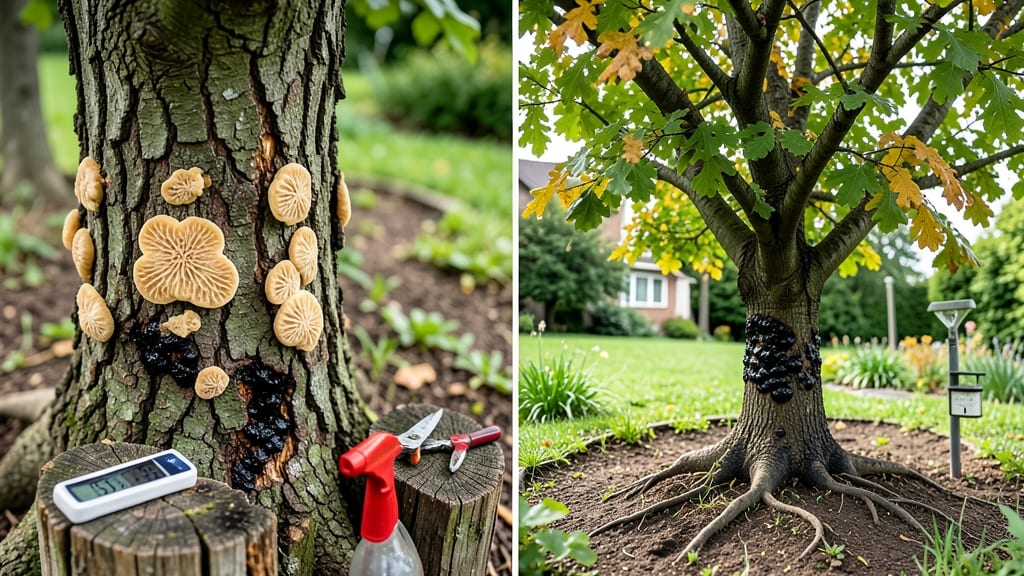
Fungal infections can turn a healthy tree into a sickly shadow in weeks—unless you catch the tree infection fungus early. 🌳 I’ve watched powdery mildew turn my neighbor’s oak into a ghostly white skeleton, and anthracnose turn my own maple’s leaves to crispy brown in just two months.
The key to saving your trees isn’t waiting for the rot to spread—it’s spotting these 5 early signs before they become irreversible.
Start by checking for unusual leaf spots—small, dark, or powdery patches that don’t brush off easily. Then look for stunted growth or thin, weak branches that snap under their own weight.
Fungal infections often leave sawdust-like spores near cracks in the bark or at the base of the trunk, and the smell of wet rot is a dead giveaway. These signs might seem subtle, but acting fast—within 2-4 weeks—can mean the difference between a saved tree and a stump.
Once you spot the problem, you can stop the spread with simple fixes: prune infected branches 6 inches below the damage, apply copper fungicide in early spring, and improve airflow around the tree.
For severe cases, soil drenches with neem oil or baking soda spray (for powdery mildew) work wonders. The goal isn’t just to treat the fungus—it’s to strengthen the tree’s defenses so it fights back.
If the infection’s deep-rooted or the tree is already struggling, don’t hesitate to call an arborist—some cases need professional intervention to save the tree. But in most situations, early action is all it takes to turn a dying tree back into a thriving one.
The best time to act is now, before the fungus gets a foothold.
How Fungal Pathogens Invade Trees
Fungal infections in trees don’t happen by accident—they’re the result of a perfect storm of environmental, biological, and human factors. Understanding why these pathogens take hold is the first step to preventing them. Below, we break down the key causes, from natural vulnerabilities to avoidable mistakes that leave trees defenseless.
Trees, like animals, have immune systems—but theirs are far less flexible. When a tree’s natural defenses are compromised, fungal spores find an easy entry point. Common triggers include:
- Nutrient deficiencies: Trees low in nitrogen, phosphorus, or potassium struggle to produce antifungal compounds. Example: Yellowing leaves (chlorosis) often signal nitrogen deficiency, making the tree more susceptible to Armillaria root rot.
- Water stress: Both drought and overwatering disrupt a tree’s ability to fight infections. Fusarium fungus, for instance, thrives in waterlogged roots, while Ceratocystis spreads rapidly in drought-stressed oaks.
- Physical damage: Cuts, cracks, or broken branches create open wounds where spores can colonize. Pro tip: Prune trees in late winter or early spring (when fungi are dormant) to minimize infection risks.
💡 Actionable fix: Conduct a soil test every 2–3 years and fertilize based on results. Mulch properly (2–4 inches deep) to retain moisture without suffocating roots.
Fungal spores are everywhere—airborne, soil-borne, or even hiding in mulch. But not all spores lead to infection. The difference? Spore concentration and environmental triggers.
- High humidity + warm temps: Most tree fungi (like Phytophthora) require 90%+ humidity for 24+ hours to germinate. Example: Southern blight thrives in summer’s muggy nights.
- Contaminated tools/soil: Pruners, shovels, or even bird droppings can carry spores from infected trees to healthy ones. Ophiostoma (Dutch elm disease vector) spreads this way.
- Monoculture planting: Planting the same tree species too closely (e.g., pine forests) creates a fungal buffet. Why? Fungi specialize in specific hosts—Cronartium (white pine blister rust) targets only pines.
🔥 Prevention tip: Sterilize tools with 70% isopropyl alcohol between uses. Space trees 15–25 feet apart for airflow, and avoid planting clones of the same species.
Extreme weather, pollution, and poor soil structure don’t directly cause fungal infections—but they weaken trees’ resilience, making them prime targets. Key culprits:
| Stressor | Fungal Risk | Example |
|---|---|---|
| Drought | Root rot (Pythium, Phytophthora) | Elm trees in prolonged dry spells succumb to Ophiostoma novo-ulmi faster. |
| Flooding | Basal stem rot (Armillaria) | Maples in waterlogged urban areas show honey-colored shelf fungi at the base. |
| Air pollution (ozone, sulfur dioxide) | Foliar diseases (Septoria, Cercospora) | Red oaks near highways develop tar spots (Rhytisma) more aggressively. |
| Compacted soil | Root girdling (Rosellinia) | Lawnmower traffic around fruit trees increases Rosellinia necatrix spread. |
✨ Pro move: Improve soil aeration with core aeration (for lawns) or deep mulching (for ornamental trees). Drip irrigation reduces fungal splash from overhead watering.
Sometimes, the biggest threat isn’t nature—it’s us. Common human errors that invite fungal infections:
- Improper pruning: Cutting too close to the trunk (within 1 inch) or leaving jagged wounds creates perfect fungal entry points. Example: Nectria canker exploits pruning cuts on dogwoods.
- Over-fertilizing: Excess nitrogen promotes lush, soft growth that fungi love to feast on. Anthracnose (a common leaf spot) explodes in over-fertilized shade trees.
- Ignoring deadwood: Snags and fallen branches harbor fungal spores for years. Example: Heterobasidion (annosum root rot) survives in stumps for decades.
- Poor drainage: Grading soil downward toward tree roots or using impermeable mulch traps moisture, inviting Phytophthora.
🎯 Quick fix: Seal pruning cuts with tree wound paint (for wounds > ½ inch wide) and remove all debris within a 10-foot radius of infected trees.
Key takeaway: Fungal infections exploit weakness. By addressing stress factors—nutritional, environmental, or human-caused—you can drastically reduce your trees’ risk. Next, we’ll cover the 5 early warning signs that your tree is under siege.
Quick Fixes for Tree Fungus
Fungal infections can turn your healthy trees into sad, weakened shadows—but don’t panic! With the right approach, you can stop the spread, restore your trees, and prevent future outbreaks.
Below, we’ve mapped common causes to actionable solutions, from DIY fixes to professional interventions. Plus, we’ll share prevention tips to keep your trees thriving long-term.
Cause: Leaf spot fungi (e.g., anthracnose, powdery mildew) thrive in damp, shaded conditions, causing yellow/brown spots on leaves.
Fix It:
- 🔪 Remove infected leaves – Collect and dispose of (don’t compost!) fallen leaves. Use sterilized pruners to trim branches with severe spots.
- 🌬️ Improve airflow – Thin out dense foliage or nearby bushes to reduce humidity around the tree.
- 💦 Water wisely – Water early in the day so leaves dry quickly. Avoid overhead sprinklers.
- 🛡️ Apply fungicide – Use a copper-based or neem oil spray (follow label instructions) for mild cases. For severe infections, try myclobutanil (e.g., Immunox).
💡 Pro Tip: Test your soil pH—fungi love acidic conditions (aim for 6.0–7.0).
Cause: Armillaria (honey fungus) or Phytophthora attack roots in waterlogged or compacted soil, causing wilting, mushrooms at the base, or oozing sap.
Fix It:
- ⏰ Stop watering immediately – Let the soil dry out. If your tree is in a low spot, consider drainage trenches or a French drain.
- 🪓 Remove infected roots/mulch – Use sterilized tools to cut away blackened or mushy roots. Replace mulch with wood chips (not fresh wood, which can harbor spores).
- 🌱 Boost root health – Apply mycorrhizal fungi (beneficial soil microbes) or a phosphorus-rich fertilizer (like bone meal) to strengthen roots.
- 🚨 Call a pro – If the tree is large or valuable, consult an arborist—they may recommend root pruning or soil solarization (covering soil with plastic to kill fungi).
⚠️ Warning: Root rot can kill trees in months—don’t wait!
Cause: Canker fungi (e.g., Nectria, Cytospora) create sunken, oozing wounds on branches, blocking nutrient flow.
Fix It:
- 🔪 Prune infected branches – Cut 6 inches below the canker (use sterilized tools to avoid spreading spores). Burn or bag the cuttings.
- 🧴 Seal the wound – Apply pruning sealant (like Tanglefoot Tree Wound Pruning Seal) to prevent entry for pests.
- 🌿 Strengthen the tree – Fertilize with balanced NPK (10-10-10) and mulch properly (3–4 inches deep, keep away from the trunk).
- 🌡️ Monitor temperature – Cankers worsen in wet, cool springs. If possible, reduce shade to dry the area faster.
💡 Pro Tip: Avoid heavy pruning in late summer—it stresses trees when fungi are most active.
Stop fungal infections before they start with these low-effort habits:
| Problem | Solution | How Often |
|---|---|---|
| Poor airflow | Thin dense branches, space trees 8–10 ft apart | Once a year (spring) |
| Overwatering | Water deeply but infrequently; check soil moisture | As needed (avoid weekends) |
| Fresh wood mulch | Use aged compost or wood chips (not fresh bark) | Refresh annually |
| Weakened trees | Fertilize in early spring (avoid fall) | Once a year |
| Pests (e.g., borers) | Apply beneficial nematodes or kaolin clay | Seasonally (spring/fall) |
✨ Bonus: Plant resistant species like oaks, maples, or pines—they’re tougher against fungi!
Final Note: If your tree is already dying (e.g., large branches dead, mushrooms at the base), removal may be the kindest option—fungi can spread to nearby plants. When in doubt, consult a certified arborist!
Frequently asked questions
What are the most common types of tree fungus infections?
Common fungal infections include powdery mildew (white, powdery patches on leaves), anthracnose (dark, sunken leaf spots), root rot (mushrooms at the base or blackened roots), and canker diseases (oozing, sunken wounds on branches). Each targets different parts of the tree, from leaves to roots.
How do I know if my tree has a fungal infection versus pest damage?
Fungal infections often show powdery growths, dark spots, or mushrooms at the base, while pest damage usually includes chewed leaves, sawdust-like frass, or small holes. Check for oozing sap or discolored bark—these are red flags for fungal issues.
Can I save a tree already showing severe fungal symptoms?
It depends! For early-stage infections, pruning infected branches, improving airflow, and applying fungicide can help. But if you see large mushrooms at the base, extensive cankers, or widespread leaf drop, the tree may be beyond saving. Consult an arborist for professional advice.
Are there organic ways to treat tree fungus?
Yes! Try a neem oil spray (1 tablespoon per gallon of water) for mild cases, or a baking soda solution (1 teaspoon baking soda + 1 teaspoon oil + 1 quart water) for powdery mildew. Copper fungicides (like copper sulfate) are also effective and organic-approved.
How often should I inspect my trees for fungal infections?
Check your trees every 4-6 weeks during growing seasons (spring and summer). Look for unusual spots, mushrooms, or wilting branches—early detection is key! In fall/winter, do a quick once-over to remove any dead branches that could harbor spores.