
Pruning
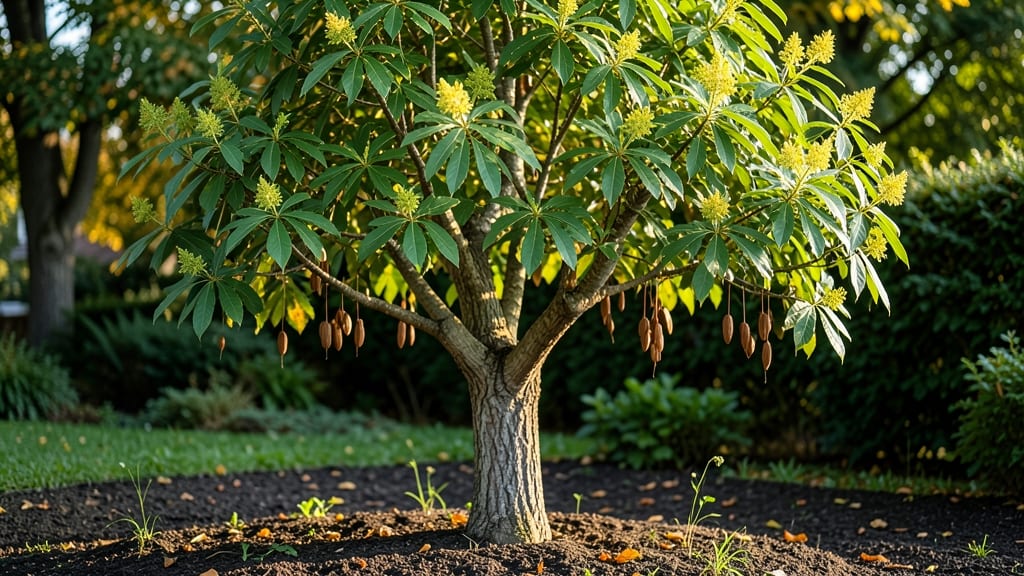
Tree of Heaven fruit is not edible and poses serious toxicity risks, causing nausea, vomiting, and allergic reactions in humans and animals. The seeds and bark contain compounds like ailanthone that can harm kidneys and liver. Avoid consumption entirely and remove the plant from gardens to prevent accidental ingestion by pets or wildlife.
You might assume this invasive tree's fruit could be a wild food source, but its compounds—like the potent ailanthone found in seeds—can trigger severe reactions. 🌿 Even small amounts may cause skin irritation or digestive distress, with livestock and pets being particularly vulnerable.
The plant's rapid growth and aggressive root system also make it a landscaping hazard, spreading toxins into soil where other plants grow.
If you've spotted Tree of Heaven in your yard, act quickly before it produces fruit. The best time to remove it is late fall or early spring when the tree's defenses are weakest. Never compost the branches—burning is safest, but check local regulations first.
Consider replacing it with native species like serviceberry or hawthorn, which support local ecosystems without health risks.
💡 In This Article
- Toxic Compounds in Tree of Heaven Fruit and Their Health Risks
- Safe Removal and Disposal of Tree of Heaven to Prevent Toxicity
Toxic compounds in Tree of Heaven fruit and their health risks
The Tree of Heaven (Ailanthus altissima) produces fruit packed with dangerous compounds that trigger a cascade of toxic reactions in the body. The most concerning is ailanthone, a sesquiterpene found primarily in the seeds and bark, which acts as a potent cytotoxic agent.
This means it can damage cellular structures, particularly in organs like the liver and kidneys. Studies show ailanthone disrupts mitochondrial function, leading to oxidative stress—similar to how certain chemotherapy drugs work, but without medical oversight.
Beyond ailanthone, the fruit contains high levels of flavonoids (quercetin, kaempferol) and tannins, which contribute to gastrointestinal distress. These compounds cause inflammation in the digestive tract, explaining why ingestion leads to symptoms like nausea, vomiting, and diarrhea within hours.
The toxicity level varies by plant part: seeds are most dangerous (containing 0.5-1% ailanthone by weight), while the pulp is less concentrated but still harmful. For comparison, Japanese knotweed (Fallopia japonica) contains oxalates that cause kidney stones, but Tree of Heaven's compounds directly attack organ function.
Allergic reactions are another major risk, often manifesting as skin rashes, swelling, or respiratory distress—especially in sensitive individuals. The plant's sap contains urushiol-like compounds (similar to poison ivy), which can trigger contact dermatitis.
Pets are particularly vulnerable: dogs and cats that chew the bark or fruit may experience liver failure or neurological symptoms, with recovery requiring veterinary intervention. The toxicity isn't limited to consumption; even touching the plant while it's fruiting can lead to secondary poisoning if residues are ingested.
Long-term exposure to Tree of Heaven's toxins poses even greater dangers. Chronic ingestion—whether accidental or through contaminated soil—has been linked to hepatotoxicity (liver damage) and nephrotoxicity (kidney damage) in livestock studies. The plant also releases allelochemicals into the soil, suppressing other plants while accumulating in groundwater.
This makes it a double threat: direct toxicity from consumption and indirect harm through environmental contamination. Unlike edible invasive plants (e.g., dandelions), Tree of Heaven offers no nutritional benefits and zero safe consumption scenarios.
To put this in perspective, the LD50 (lethal dose for 50% of test subjects) of ailanthone in lab rats is approximately 50 mg/kg—meaning a 150 lb (68 kg) human could experience severe symptoms from just 3.4 grams of seed extract.
While this seems like a large amount, children or pets might ingest smaller quantities that still trigger reactions. The margin for error is nonexistent, making Tree of Heaven fruit one of the most hazardous "wild edibles" in North America.
What makes this particularly insidious is how the plant's fruit—small, samara-like structures—resembles edible seeds at first glance. Their greenish-brown color and papery texture might fool foragers into thinking they're safe, but the moment they're crushed (releasing a bitter, acrid aroma), the danger becomes apparent.
This visual deception is why wildlife biologists warn against letting animals graze near mature Tree of Heaven trees during fruiting season (late summer to fall).