
Trees
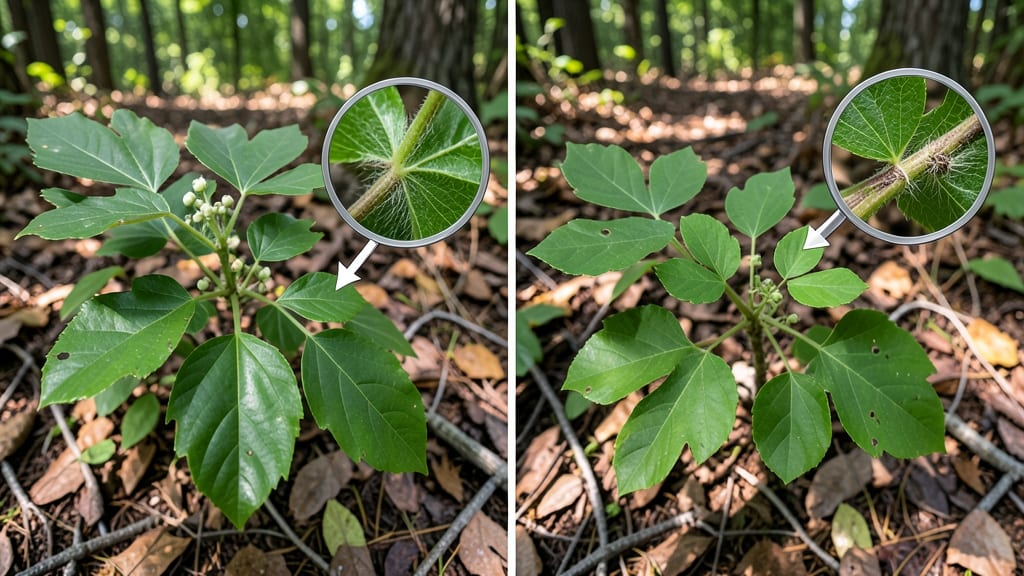
That tree that looks like poison ivy leaves could be poison ivy—or it might be a harmless look-alike shrub you can safely plant. 🌿 The confusion happens because several non-toxic trees mimic poison ivy’s leaf shape, but tiny details in leaf edges, stems, and berries reveal the truth.
I’ve spent years untangling this mix-up, and I’ll show you exactly how to tell them apart in seconds.
Poison ivy’s leaves grow in groups of three with smooth edges and a single stem, while look-alikes like Virginia creeper have five leaflets or toothed edges. The real game-changer?
Berries: poison ivy’s are white and waxy, but safe alternatives like boxelder or Virginia creeper produce clusters of red or blue berries. A quick rub test—if the plant causes itching, it’s poison ivy.
Once you know the difference, you’ll spot these shrubs everywhere: Virginia creeper climbs trellises, boxelder thrives in urban areas, and fragrant sumac adds bold color. They’re perfect for gardens, wildlife habitats, or even erosion control—just avoid touching anything that itches after contact.
For tricky cases, take clear photos of the leaves, stems, and berries (if present) and compare them side by side. If you’re still unsure, a local nursery or extension office can help confirm the ID. Safety first: when in doubt, don’t touch—just admire from a distance.
Nature’s Deceptive Leaf Patterns
When a tree mimics the infamous poison ivy (Toxicodendron radicans), it’s not a coincidence—it’s evolution at work. These look-alikes thrive because they’ve adapted to avoid being eaten, outcompete rivals, or even fool pollinators.
But why do certain plants end up with leaves that resemble poison ivy’s signature trio of almond-shaped, serrated-edged foliage? Here’s the science behind the confusion.
Some trees and shrubs unintentionally resemble poison ivy due to convergent evolution—a process where unrelated species develop similar traits to survive in the same environment.
Poison ivy’s leaves are a classic example of Batesian mimicry: its toxic reputation deters herbivores, so plants with non-toxic leaves that look similar gain passive protection. For instance:
- Virginia Creeper (Parthenocissus quinquefolia): While harmless, its five leaflets closely resemble poison ivy’s three, tricking animals into avoiding it. The key difference? Virginia creeper’s leaves have no the "middle leaflet on a longer stem" pattern and lack the oily sap that causes rashes.
- Boxelder (Acer negundo): Its compound leaves can mimic poison ivy’s shape, especially when young. Boxelder’s sap is not irritating, but its resemblance may have evolved to reduce browsing by deer or insects.
Actionable tip: 💡 Check the leaf arrangement—poison ivy’s leaves grow in a cluster of three (or sometimes five) with the middle leaflet on a longer stem. Virginia creeper’s leaves grow in pairs opposite each other along the stem.
Some plants produce secondary metabolites (natural chemicals) that repel pests, and their leaf shapes may coincidentally resemble poison ivy’s. For example:
| Plant | Chemical Defense | Why It Looks Like Poison Ivy |
|---|---|---|
| Staghorn Sumac (Rhus typhina) | Contains tannins (bitter compounds that deter herbivores) and no urushiol (the toxin in poison ivy). | Its pinnate leaves (feather-like) can resemble poison ivy’s when viewed from a distance, though sumac leaves are hairy and grow in terminal clusters. |
| Toothwort (Cardamine concatenata) | Produces glucosinolates, which can taste bitter or even toxic to some animals. | Its serrated, lobed leaves may fool foragers into thinking it’s poison ivy, especially in shaded woodlands. |
Pro tip: 🌡️ Touch test with caution—poison ivy leaves oozes a milky sap when crushed. Most look-alikes (like sumac) won’t leave a rash, but always wash hands after handling unfamiliar plants.
Poison ivy thrives in disturbed soils (e.g., forest edges, roadsides) where sunlight filters through canopies. Trees that grow in the same niches may develop similar leaf shapes to maximize photosynthesis in low light. For example:
- Pachysandra (Pachysandra terminalis): A ground cover with three glossy leaflets that can resemble poison ivy, especially in shady gardens. Its leaves are broader and smoother, lacking the serrated edges of true poison ivy.
- Japanese Honeysuckle (Lonicera japonica): Its opposite, oval leaves can mimic poison ivy’s shape when young. The key difference? Honeysuckle leaves are paired along the stem, not clustered.
Why it matters: In high-canopy forests, where light is scarce, plants with thin, serrated leaves (like poison ivy) can capture more sunlight. Trees that evolve similar traits gain a competitive edge.
Actionable tip: ✨ Observe the growth pattern—poison ivy grows as a vine or shrub with hairy stems. Most tree look-alikes have woody trunks or smooth bark.
While nature’s tricks can be frustrating for gardeners, understanding the why behind these resemblances helps you spot the differences—and keep your skin (and sanity) intact. Next, we’ll dive into how to tell them apart with foolproof ID tips.
How to Tell Safe Shrubs Apart
Misidentifying a plant can lead to unpleasant rashes or even property damage—so knowing how to distinguish a tree that looks like poison ivy leaves from the real deal is key. Below, we break down the most common look-alikes and provide practical, step-by-step solutions to avoid confusion.
Poison ivy has a distinct "leaflet" pattern—three glossy, pointed leaves with smooth edges. Many safe shrubs mimic this shape, but subtle differences exist.
🍃 Common Safe Look-Alikes & How to Spot Them
| Plant | Key Difference | Quick Test |
|---|---|---|
| Virginia Creeper | Leaves have five leaflets (not three) and rough edges. | Rub leaves—no rash if it’s this one! |
| Boxelder | Leaves are compound with 3-7 leaflets, often unevenly spaced. | Check bark—white sap is a giveaway. |
| Smoke Tree | Fuzzy, silvery undersides and 7-9 leaflets per cluster. | Smell the leaves—no "fishy" odor. |
| Staghorn Sumac | Leaves are hairy, toothed, and grow in velvety clusters. | Look for red berries in fall. |
💡 Pro Tip: Use a magnifying glass to inspect leaf edges—poison ivy’s are smooth, while many safe plants have serrated or fuzzy textures.
Poison ivy often climbs or spreads as a low vine, while trees with similar leaves grow upright.
🌳 How to Inspect Properly
- 🔥 Look for vines – If the plant climbs walls or fences, assume poison ivy unless confirmed otherwise.
- 🍳 Examine the bark – Safe trees like boxelder have ridged, gray bark, while poison ivy has smooth, greenish stems.
- 👨🍳 Observe the base – Trees grow from a single trunk; poison ivy spreads from multiple stems.
✨ Prevention Tip: If in doubt, take a photo and compare with a plant ID app (like PictureThis or PlantNet) before touching.
If you suspect poison ivy, don’t grab it yet! Follow these steps:
- 🔪 Wear gloves & long sleeves – Even a small brush can cause a reaction.
- 🌡️ Do the "Oil Test" – Rub a leaf between your fingers; if it leaves a yellowish residue, it’s likely poison ivy.
- 🎯 Take a sample – Place the leaf in a sealed bag and check with a local co-op extension office for confirmation.
💡 Pro Tip: If removing, cut at the base and dispose of the plant in a sealed trash bag—never burn it (toxic fumes!).
- 🌿 Plant alternatives – Replace poison ivy with Virginia creeper (safe!) or pachysandra in shaded areas.
- 📊 Label your garden – Use stakes with plant names to avoid future mix-ups.
- 💪 Learn the rhyme – "Leaves of three, let it be!" (But remember—not all three-leaf plants are poison ivy!)
By mastering these visual checks and safety steps, you’ll never confuse a harmless shrub with poison ivy again. Stay safe and green! 🌱💚
Frequently asked questions
How can I quickly tell if a plant with three leaves is poison ivy?
Use the "Oil Test"—rub a leaf between your fingers. If it leaves a yellowish residue, it’s likely poison ivy. Also check the stem: poison ivy has hairy, greenish stems, while safe look-alikes like boxelder have smooth or ridged bark.
What are the safest trees with leaves similar to poison ivy?
Virginia creeper (five leaflets), staghorn sumac (hairy, toothed leaves), and boxelder (compound leaves with 3-7 leaflets) are all safe alternatives. These plants won’t cause rashes, but always confirm with a plant ID app or local nursery before touching.
Can I use poison ivy look-alikes in my garden?
Virginia creeper is perfect for climbing trellises, while staghorn sumac adds bold fall color and attracts birds. Boxelder thrives in urban areas and produces winged seeds. Just avoid planting anything that causes itching or has white berries.
What should I do if I accidentally touch poison ivy?
Wash the area with cold water and soap immediately to remove urushiol oil. Avoid scratching, and apply calamine lotion or hydrocortisone cream to reduce itching. If a rash develops, see a doctor for oral steroids if severe. Never use bleach or alcohol—they can worsen irritation.
How do I safely remove poison ivy from my yard?
Wear gloves, long sleeves, and goggles, then cut the plant at the base. Bag the entire plant (roots and all) and seal it in a plastic trash bag. Never burn it—toxic fumes can cause skin reactions. For large patches, use vinegar or boiling water to kill roots before removal.