
Watering
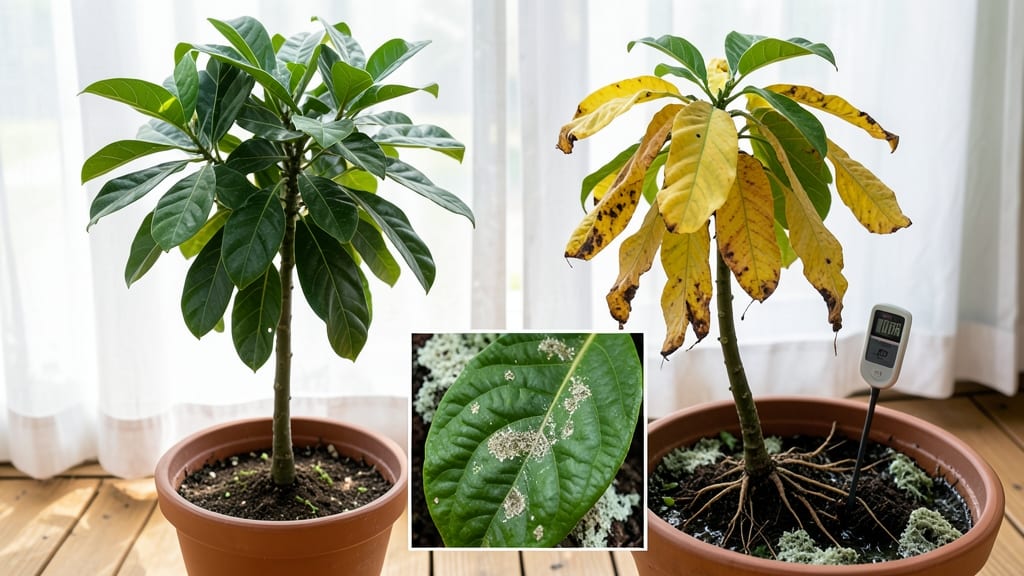
What does an overwatered avocado tree look like? Your drooping leaves and squishy roots scream "too much water" — and I've seen this exact scene play out more times than I'd like to admit. 🌱 The first clue?
Bright yellow leaves that start at the bottom and creep upward like a slow-motion warning sign. Then comes the real giveaway: roots that feel mushy when you gently squeeze them, often smelling sour or rotten.
Here's the thing — avocados hate soggy feet. Their roots need air almost as much as they need moisture, and overwatering suffocates them.
I've fixed this problem by letting the top 2-3 inches of soil dry out completely between waterings, and within weeks, the leaves perked up and new growth appeared. The key is checking with your finger before reaching for the hose.
What you'll end up with is a tree that drinks when it's thirsty, not when you remember to water. The leaves stay dark green, the trunk stays firm, and you'll never again mistake "plenty of water" for "healthy plant."
Plus, you'll spot the early signs of root rot before it becomes a full-blown crisis.
This works for both backyard trees and container-grown avocados. The only difference is container plants dry out faster, so you'll need to check them every 3-4 days during summer heat. Trust the soil, not the schedule — that's the secret weapon.
Root Causes of Overwatering
Overwatering an avocado tree isn’t just a matter of giving it too much love—it’s a complex interplay of soil science, plant physiology, and environmental factors. Understanding why this happens helps you avoid turning your lush green tree into a soggy, struggling mess.
Here’s a breakdown of the key culprits, backed by science and actionable insights.
Avocado trees (Persea americana) are native to tropical and subtropical regions where rainfall is seasonal, not constant. Their roots thrive in well-draining soil that mimics their natural habitat—think sandy loam or volcanic soil with large particles that allow excess water to flow away quickly.
When planted in clay-heavy, compacted, or poorly amended soil, water pools around the roots instead of draining. This creates an anaerobic (oxygen-deprived) zone, where roots suffocate.
- Why it happens: Clay particles bind tightly, reducing pore space for air and water movement. Even "fertile" garden soil can become waterlogged if it lacks organic matter or sand.
- Science in action: Roots need oxygen for cellular respiration—without it, they release ethylene gas, a stress hormone that triggers leaf yellowing (chlorosis) and root rot.
- Pro tip: Test your soil’s drainage by digging a 12-inch hole, filling it with water, and timing how long it takes to drain. If it’s slower than 4 hours, amend with perlite, coarse sand, or coconut coir.
Avocado trees are drought-tolerant once established, but many growers assume "more water = better growth." Unfortunately, this leads to a vicious cycle: soggy soil → root stress → wilting → more watering. The problem worsens in containers, where water evaporates slowly and roots have no escape.
- Why it happens:
- Automatic irrigation (like timers or drip systems) runs on schedules, not soil conditions. If set too frequently, it drowns roots.
- Emotional watering—giving extra water after repotting, pruning, or when leaves droop (a sign of underwatering, not overwatering).
- Container confusion: Potted avocados dry out faster in summer but retain moisture in winter. Many growers don’t adjust frequency.
- Science in action: Excess water displaces oxygen in soil pores, forcing roots to switch to fermentation for energy—producing toxic alcohols and acids that kill cells.
- Pro tip: Stick your finger 2–3 inches into the soil. If it’s damp, wait. If it’s bone-dry, water deeply until it runs out the drainage holes. Never water on a schedule.
Even with perfect watering habits, external conditions can turn your soil into a swamp. Humidity, rainfall, and temperature all influence how quickly water evaporates or lingers.
| Factor | How It Causes Overwatering | Solution |
|---|---|---|
| 🌧️ Heavy Rainfall | Natural rainfall can saturate soil faster than roots can absorb it, especially in tropical climates (avocado’s native range). | Plant in raised beds or slopes to improve drainage; use mulch to reduce runoff. |
| 🌡️ Low Temperatures | Cooler weather slows evaporation and root activity. Soil stays wet longer, increasing rot risk. | Reduce watering by 30–50% in winter; move potted trees to sheltered spots. |
| 💨 High Humidity | Moist air reduces evaporation, keeping soil damp. Common in greenhouses or coastal areas. | Ensure pots have drainage holes; avoid plastic liners that trap moisture. |
Science in action: Avocado roots are sensitive to waterlogging stress, which triggers the production of abscisic acid—a hormone that signals leaves to drop or yellow as a survival mechanism.
Not all soil mixes are created equal. Cheap, peat-heavy potting soil compacts over time, trapping water like a sponge. Even "avocado-friendly" mixes can fail if they lack the right texture or aeration.
- Why it happens:
- Peat moss holds water tightly and breaks down into a dense mat.
- Lack of perlite/pumice reduces air pockets, suffocating roots.
- Over-fertilizing encourages rapid growth, which demands more water—but roots can’t keep up.
- Science in action: Compacted soil increases anaerobic bacteria that produce hydrogen sulfide, a gas toxic to roots.
- Pro tip: Use a chunky mix of 40% coco coir, 30% perlite, 20% compost, and 10% worm castings. Repot every 2–3 years to refresh drainage.
Now that you know the why, the next step is spotting the signs—like yellowing leaves, mushy roots, or fungal growth. But the good news? Once you address these causes, your avocado tree can bounce back with the right care. 🌿
Revive Your Avocado Tree Now
Overwatering can turn your thriving avocado tree into a sad, soggy mess—but don’t panic! With the right steps, you can nurse it back to health. Below, we’ll match common overwatering symptoms to actionable fixes, plus pro tips to keep your tree happy long-term.
If your avocado tree’s leaves are turning yellow, wilting, or falling off, root rot is likely the culprit. Here’s how to tackle it:
🔥 Step 1: Stop Watering Immediately
- Pause all watering for at least 5–7 days to let the soil dry out.
- If the pot feels heavy or smells sour, wait longer—roots need air too!
🍳 Step 2: Check the Roots
- Gently remove the tree from its pot (if potted) or dig around the base (if in-ground).
- Healthy roots are firm and light tan. Rotten roots are mushy, black, or smell foul.
- Trim away any mushy or discolored roots with sterilized scissors (wipe with rubbing alcohol).
👨🍳 Step 3: Repot in Fresh, Well-Draining Soil
- If the tree is potted, repot it in a container with drainage holes (or add holes if missing).
- Use a fast-draining mix:
- 50% cactus/succulent soil (or regular potting soil)
- 30% perlite or pumice (for aeration)
- 20% coarse sand or orchid bark (to prevent compaction)
- Pro tip: 💡 Add a handful of hydroponic clay pebbles at the bottom for extra drainage.
🥘 Step 4: Adjust Your Watering Routine
- Water only when the top 2–3 inches of soil are bone-dry (stick your finger in to test).
- Water deeply but infrequently—avocado trees hate soggy feet!
- Avoid overhead watering (use a drip irrigation system or water at the base).
If you spot black, slimy roots or a musty odor, your tree is in advanced root rot. Time to revive it aggressively:
⏰ Step 1: Emergency Root Pruning
- Severely affected? Cut back all rotted roots—yes, even if it looks drastic. The tree can regrow healthy roots!
- For in-ground trees, dig a trench around the base to expose roots, then trim the bad ones.
🔪 Step 2: Fungicide Treatment (Optional but Helpful)
- Mix 1 tsp hydrogen peroxide (3%) per gallon of water and soak the roots for 10 minutes to kill fungus.
- Alternative: Use a fungicide like Mycorrhizal fungi or copper-based spray (follow label instructions).
🌡️ Step 3: Move to a Dryer Spot
- Avocado trees hate humidity and poor airflow. Move the pot to a bright, sunny spot with good ventilation.
- If in-ground, prune nearby plants to improve airflow.
🎯 Step 4: Monitor & Rebuild
- Wait 2 weeks before watering again—let the roots recover.
- Fertilize lightly with a balanced, slow-release fertilizer (like 10-10-10) only after new growth appears.
Once your tree is back on track, avoid future overwatering disasters with these habits:
- 🌡️ Test Your Soil: Use a moisture meter or the finger test—if it’s damp below 2 inches, wait to water. - ✨ Choose the Right Pot: Terracotta pots (which dry faster) are ideal for avocados.
Avoid plastic if you tend to overwater. - 🔥 Mulch Smartly: Add 2–3 inches of organic mulch (like wood chips) around the base to retain moisture without suffocating roots. - 💪 Prune Wisely: Trim yellow or damaged leaves to redirect energy to healthy growth. - 🥗 Avoid Heavy Clay Soil: If planting in-ground, amend the soil with sand or compost to improve drainage.
Remember: Avocado trees are drought-tolerant once established—underwatering is easier to fix than overwatering! With these steps, your tree should bounce back in 4–8 weeks, and you’ll be enjoying lush, green leaves (and maybe even fruit!) in no time. 🌿🍈
Frequently asked questions
How can I tell if my avocado tree’s yellow leaves mean overwatering or something else?
Overwatered avocados show yellow leaves that start at the bottom and move upward, often paired with mushy roots and a sour smell. If leaves yellow evenly or curl, it might be nutrient deficiency. Check soil moisture first—if it's damp below 2 inches, overwatering’s likely the issue.
Can I save an avocado tree with black, slimy roots?
Yes, but act fast! Trim all mushy/black roots with sterilized scissors, repot in fast-draining mix (50% cactus soil + 30% perlite), and stop watering for 5-7 days. For severe cases, soak roots in 1 tsp hydrogen peroxide per gallon of water for 10 minutes before repotting.
Why does my potted avocado tree need less water than my in-ground one?
Container plants dry out 30-50% faster than in-ground trees because pots have limited soil volume. Check potted soil daily in summer—if the top 1 inch is dry, it’s time to water. In-ground trees have deeper roots that access moisture from lower soil layers.
Will my avocado tree recover if I’ve been overwatering it for months?
Recovery is possible but may take 3-6 months of proper care. Start by letting soil dry completely between waterings and repotting in fresh, well-aerated mix. Prune all yellow leaves to reduce stress, and avoid fertilizing until new growth appears—roots need to heal first.
How often should I water an avocado tree in winter?
Cut back to every 2-3 weeks in winter when growth slows. Cold weather reduces evaporation, so soil stays damp longer. Always check moisture—if the top 3 inches feel dry, water lightly. Never let containers sit in saucers with standing water.