
Pruning
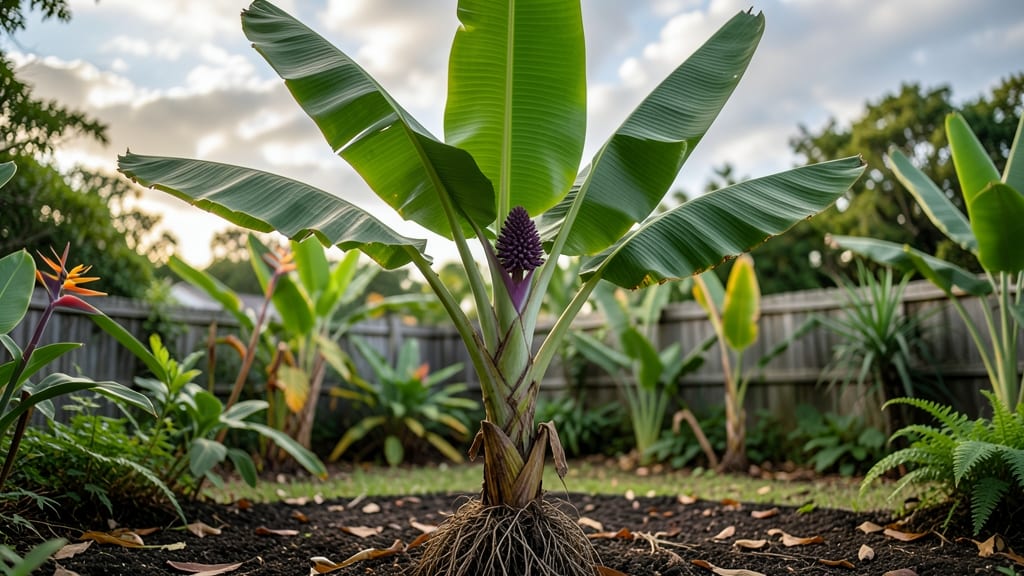
A banana tree is scientifically called a Musa plant, part of the genus Musa in the banana family (Musaceae), despite being a giant herbaceous plant—not a true tree—with a pseudostem instead of wood.
A banana tree's scientific name comes from the genus Musa, which includes over 70 species, with the most common being Musa acuminata and Musa balbisiana. 🌱 The term "pseudostem" refers to the layered leaf bases that form what looks like a trunk but is actually made of tightly packed sheaths.
This structure allows the plant to grow tall—some varieties reach 20 feet—while remaining flexible enough to sway in tropical winds without snapping.
What many people don’t realize is that the plant’s "stem" is actually a tightly packed bundle of leaves that eventually produce the familiar banana flower.
This unique growth pattern is why botanists classify it as an herb rather than a tree, even though it can tower over most trees in a garden. The confusion often arises because of its size and tropical appearance, but the lack of true woody tissue sets it apart.
💡 In This Article
- Scientific Classification of Banana Plants
- Common Names for Banana Trees by Region and Use
Scientific classification of banana plants
The genus Musa falls under the Musaceae family, which contains only about 70 species, with just a handful producing edible fruit. The two primary species used for commercial bananas are Musa acuminata (the "A" genome) and Musa balbisiana (the "B" genome), both native to Southeast Asia.
These species hybridize naturally, creating the diverse varieties we see today. For example, the common dessert banana (Musa acuminata 'Cavendish') has 11 chromosomes, while plantains (often hybrids of both species) can have up to 33 chromosomes, giving them a starchy texture and different culinary uses.
The pseudostem—what most people mistake for the trunk—forms from overlapping leaf sheaths that grow tightly around a central core of vascular tissue. This structure can reach heights of 15-25 feet and diameters up to 2 feet, providing structural support without true wood.
The leaves themselves can span 8-10 feet long, with a waxy coating that helps reduce water loss in tropical climates. What's fascinating is that this entire pseudostem is actually a modified stem, and when it flowers, the plant dies—only the underground rhizome (called a corm) survives to produce new shoots.
Botanists classify Musa plants as monocots, placing them in the same group as lilies and palms, despite their tree-like appearance. This classification matters because it explains why banana plants don't produce traditional wood or bark.
Instead, their "trunks" are made of compressed, fibrous leaf bases that provide rigidity through sheer density. Ornamental varieties, like the Musa velutina (black banana), showcase this structure beautifully with their striking purple-black leaves and minimal fruit production, proving that not all Musa plants are grown for edible yield.
Here's what sets edible varieties apart from ornamental ones: Edible bananas prioritize fruit production, often sacrificing leaf aesthetics for higher yields.
For instance, the Musa acuminata 'Gros Michel' (the original "Big Mike" banana) produces larger fruit clusters but with less decorative foliage compared to the Musa basjoo, which is grown purely for its striking appearance and cold tolerance.
The key difference lies in their genetic focus—edible varieties optimize fruit development, while ornamental types emphasize visual impact and hardiness.
Understanding this classification helps explain why banana plants have such specific growing requirements. They thrive in USDA hardiness zones 10-12, where temperatures stay above 50°F, and need consistent moisture to maintain their pseudostem's integrity.
The pseudostem's unique structure also makes it vulnerable to wind damage, which is why many commercial plantations use windbreaks or dwarf varieties that stay under 12 feet tall. This botanical quirk means that while they look like trees, they grow more like giant, leafy herbs with a tropical flair.
The scientific name Musa itself comes from the Arabic word "muz," which was adopted into Latin during the Middle Ages. This linguistic connection highlights how these plants have traveled and adapted across continents, from their Southeast Asian origins to becoming a global staple.
What's particularly interesting is how the term "banana" itself evolved—it likely originated from the Arabic "banan," meaning "finger," referencing the fruit's shape. This linguistic journey mirrors the plant's own adaptability, growing in diverse climates while maintaining its core botanical identity.