
Pruning
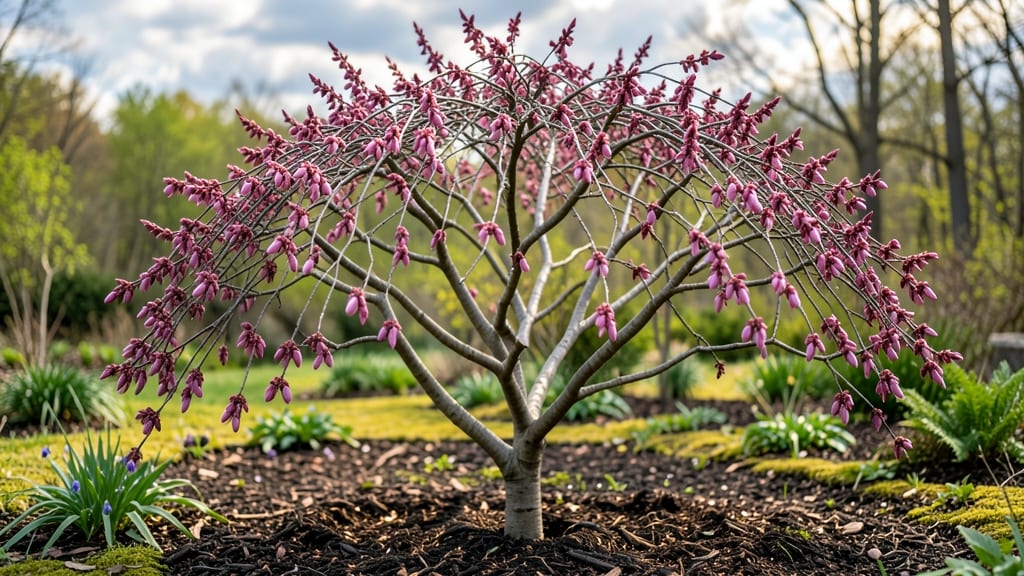
The tree that has red buds in spring is primarily the Eastern redbud (Cercis canadensis), known for its bright magenta blossoms that bloom before leaves emerge. Other varieties like Western redbud (Cercis occidentalis) and Japanese redbud (Cercis chinensis) also feature striking red flowers annually.
The Eastern redbud is the most iconic, with its delicate pink-purple flowers creating a breathtaking display that lasts 1-2 weeks in early spring. 🌸 What makes these trees special is their ability to bloom even when other plants are still dormant, making them a standout feature in landscapes.
The Western redbud thrives in drier climates, while the Japanese redbud offers darker purple flowers and a slightly larger size, perfect for urban gardens.
These trees aren't just beautiful—they're hardy too. Most redbuds grow 20-30 feet tall, adapt to various soil types, and require minimal maintenance once established. Their early spring blooms also provide crucial nectar for pollinators when food sources are scarce.
For gardeners looking to extend the blooming season, some varieties even produce secondary flowers in late summer.
💡 In This Article
- How Redbud Trees Bloom: Biology Behind Spring’s Stunning Red Flowers
- Top 5 Redbud Varieties for Gardens: Growing Tips and Landscaping Uses
How redbud trees bloom: biology behind spring’s stunning red flowers
The Eastern redbud's breathtaking magenta blooms appear through a fascinating botanical process called proleptic flowering. Unlike many trees that bloom after leaves emerge, redbuds produce flowers on bare branches in late winter or early spring.
This happens because their flower buds form during the previous summer's growth cycle, remaining dormant through winter until temperatures rise to 40-50°F for several weeks. The buds contain all the necessary structures—petals, stamens, and pistils—ready to burst open when conditions are right.
What makes this timing so remarkable is the tree's ability to trigger blooming before leaves appear. The buds develop on one-year-old wood (the previous season's branches), while new growth emerges later. This strategy ensures the flowers get maximum sunlight exposure early in the season when pollinators are most active.
The vibrant red color isn't just for show—it acts as a visual beacon for bees and hummingbirds, which are critical for pollination. In fact, a single Eastern redbud can attract hundreds of pollinators daily during peak bloom.
The blooming cycle varies by species and climate. Eastern redbuds typically flower for 1-2 weeks in March-April, while Western redbuds bloom slightly later (April-May) due to their adaptation to drier, cooler climates. Japanese redbuds often produce a second, smaller bloom in late summer.
Temperature fluctuations can delay or advance blooming—warmer winters may trigger earlier flowering, while cold snaps can cause buds to drop. This sensitivity makes redbuds excellent climate indicators for gardeners tracking seasonal changes.
Here's what's happening at the cellular level: The flower buds contain specialized cells that remain in a state of endodormancy (a deep dormancy phase) until chilling requirements are met. Once satisfied, the buds enter ecodormancy, where they respond to warmer temperatures by rapidly expanding.
The petals unfurl in a synchronized fashion, creating that iconic cascading effect you see in spring landscapes. This precise timing ensures the flowers open when pollinators are most active, maximizing reproductive success.
For gardeners, understanding this process helps with pruning strategies. Since flowers develop on old wood, pruning should occur after blooming to avoid removing next year's flowers.
The tree's ability to rebloom on new growth makes it remarkably resilient—even if you accidentally prune too late, you'll still get flowers the following year. This adaptability is one reason redbuds thrive in urban environments where space and conditions can be challenging.
The redbud's early spring display isn't just about beauty—it's an evolutionary adaptation. By blooming when few other trees are in flower, redbuds secure their place as a primary food source for early-season pollinators.
This ecological role makes them invaluable in supporting biodiversity, especially in areas where native plant populations are declining. 🌿 The tree's bright flowers also help regulate its internal temperature, with darker petals absorbing more sunlight and warming the reproductive structures—a clever survival strategy in cooler climates.