
Trees
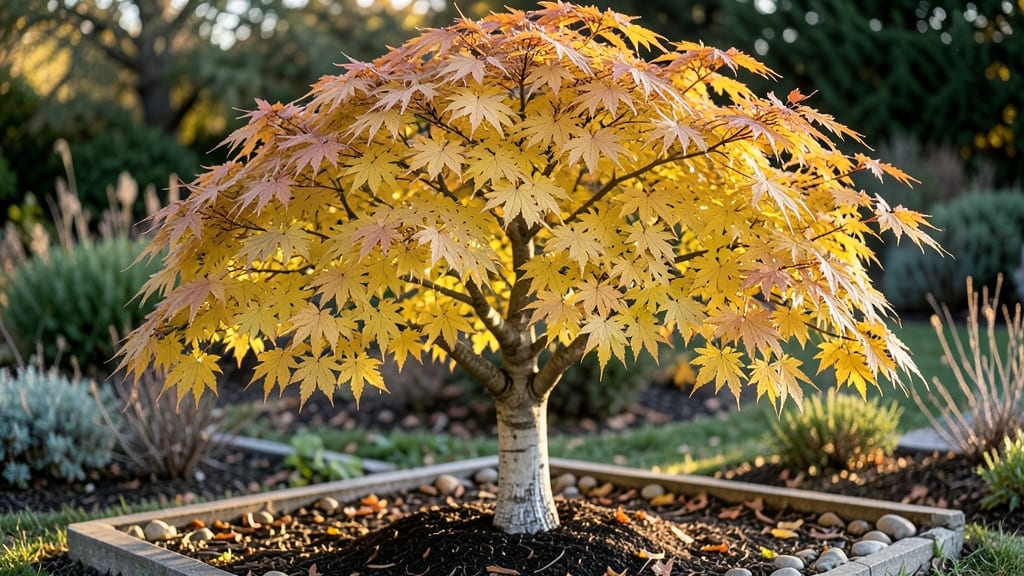
What tree has yellow leaves in fall?
The answer is a stunning display you’ll love—those golden hues aren’t just beautiful, they’re a bold statement in your yard. 🌿 The Ginkgo tree steals the show with its golden foliage that turns vibrant by October, while Sweetgums add fiery reds to their golden-yellow palette.
These trees aren’t just eye-catching; they’re low-maintenance stars that bring seasonal drama without the fuss.
Most of these trees thrive in full sun and well-drained soil, making them perfect for almost any landscape. The Golden Rain Tree (Lagerstroemia) delivers cascading yellow blooms in summer followed by brilliant fall color, while Hornbeams offer a mix of gold and copper.
Plant them near patios or walkways to enjoy the show up close.
Pair them with evergreens like Arborvitae or Boxwood to create year-round contrast. The golden hues will pop against dark green foliage, and their seasonal change keeps your garden exciting from spring through winter. With the right placement, these trees become the centerpiece of your outdoor space.
Bonus: Many of these trees handle urban conditions well, so they’re great for city gardens too. Just give them space to grow—their fall display is worth the investment of a few square feet in your yard.
The Science Behind Autumn’s Golden Glow
As the air grows crisp and the days shorten, trees transform into living canvases of fiery reds, golden yellows, and fiery oranges. But why do some trees turn a stunning yellow in the fall?
The answer lies in a fascinating mix of chemistry, biology, and seasonal cues. Let’s break down the key reasons behind this seasonal spectacle.
The star of the show is chlorophyll, the green pigment that gives leaves their vibrant summer hue. Chlorophyll’s job is to capture sunlight for photosynthesis—the process that fuels a tree’s growth. But as daylight shortens and temperatures drop, trees start breaking down chlorophyll.
Without it, other pigments hidden in the leaves—like carotenoids (yellow and orange) and xanthophylls (bright yellow)—finally get their moment in the spotlight. These pigments were always there but were overshadowed by chlorophyll’s dominance.
💡 Pro Tip: Trees like hickories, birches, and aspens are famous for their yellow fall foliage because their leaves contain high levels of carotenoids and xanthophylls. If you want a golden display, these species are your best bet!
Before leaves fall, trees reabsorb nutrients—like nitrogen and phosphorus—from the leaves back into their roots and stems. This process leaves behind sugars and starches that can’t be stored efficiently.
Some of these compounds break down into anthocyanins (the pigments responsible for red and purple hues), but others contribute to warm yellow and orange tones.
🌡️ Fun Fact: Cooler nights and sunny days in fall actually boost anthocyanin production, which can deepen yellow tones in some trees. That’s why early frosts can sometimes mute the color intensity!
Fall foliage isn’t just about the tree—it’s also about the weather. Dry, sunny days followed by cool (but not freezing) nights create the perfect conditions for vibrant yellow leaves. Here’s how:
- Sunlight: Bright, sunny days help trees produce sugars through photosynthesis, which enhances pigment production.
- Cool Temperatures: Chilly air slows chlorophyll production, allowing other pigments to shine. However, early frosts or extreme cold can shock leaves into dropping too soon, cutting the show short.
- Rainfall: Too much rain can wash away sugars and nutrients, dulling colors. Conversely, drought stress can also reduce vibrancy.
🎯 Actionable Tip: If you’re planting trees for fall color, choose species native to your region—they’re already adapted to your local weather patterns! For example, sweetgums thrive in humid climates, while maples prefer cooler, drier conditions.
Not all trees turn yellow—it’s all in their DNA! Some species are genetically programmed to produce more carotenoids and less chlorophyll in the fall. Here’s a quick breakdown of why certain trees stand out:
| Tree Type | Why It Turns Yellow | Best Examples |
|---|---|---|
| Deciduous Hardwoods | High levels of carotenoids and xanthophylls remain after chlorophyll breaks down. | Yellow birch, quaking aspen, hickory, tulip poplar |
| Evergreens (Partial Color Change) | Some evergreens, like yellowwood, produce golden foliage year-round or in fall due to unique pigmentation. | Golden rain tree, golden privet, some pine varieties |
| Hybrids and Cultivars | Selective breeding can enhance yellow pigments for ornamental purposes. | ‘Autumn Blaze’ maple, ‘Sun Valley’ ginkgo |
✨ Bonus Insight: Some trees, like the goldenrain tree (Koelreuteria paniculata), actually produce golden-yellow flowers alongside their foliage, doubling the visual impact!
So next time you’re admiring a tree ablaze with yellow, remember: it’s not just about the leaves—it’s about science, timing, and a little help from Mother Nature!
Revitalize Your Fall Foliage
If your trees aren’t putting on the dazzling yellow fall show you hoped for, don’t worry—there are practical ways to encourage vibrant autumn colors and keep your landscape stunning. Whether your trees are struggling due to poor soil, disease, or neglect, these solutions will help you turn things around.
Let’s dive into the fixes, organized by the most common causes of lackluster fall foliage.
Yellow leaves in fall can signal nutrient deficiencies, especially if the soil lacks the right balance of nitrogen, phosphorus, and potassium. Trees need these nutrients to produce vibrant pigments like carotenoids (which create yellows and oranges).
🔥 Step 1: Test Your Soil
Before adding amendments, conduct a soil test to identify deficiencies. You can purchase a DIY test kit or send a sample to a local agricultural extension office for a detailed analysis.
🍳 Step 2: Amend the Soil
Based on your test results, add organic matter like compost, leaf mold, or well-rotted manure to improve soil structure and fertility. For a quick boost, use a balanced, slow-release fertilizer (like a 10-10-10 or 5-10-5 formula) in early fall.
👨🍳 Step 3: Mulch Properly
Apply a 2-4 inch layer of mulch around the tree’s base (but keep it away from the trunk) to retain moisture and regulate soil temperature. Use wood chips or shredded leaves for the best results.
⏰ Prevention Tip:
💡 Test soil every 2-3 years and amend it in early fall (6-8 weeks before peak color) to give roots time to absorb nutrients.
Trees under stress—whether from too much water or too little—often produce dull, yellowing leaves instead of bright fall colors. Proper hydration is key to unlocking those showstopping hues.
🔥 Step 1: Check Moisture Levels
Stick your finger 2-3 inches into the soil. If it’s dry, your tree needs water. If it’s soggy, reduce irrigation to prevent root rot.
🍳 Step 2: Water Deeply and Infrequently
Water trees slowly and deeply (about 1-1.5 inches per week) rather than frequent shallow watering. Use a soaker hose or drip irrigation to deliver moisture directly to the roots.
👨🍳 Step 3: Improve Drainage
If your soil is clay-heavy or compacted, mix in sand or perlite to improve drainage. For container-grown trees, ensure pots have drainage holes and use a well-draining potting mix.
⏰ Prevention Tip:
💡 Install a rain gauge near your trees to monitor natural rainfall and adjust watering accordingly. Mulch helps retain moisture, reducing the need for frequent watering.
Pests like spider mites, aphids, or borers, as well as diseases like powdery mildew or anthracnose, can weaken trees and dull their fall colors. Early intervention is crucial.
🔥 Step 1: Inspect Leaves and Bark
Look for yellowing, curling, or spotted leaves, as well as sawdust-like frass (insect droppings) or webbing. Check the bark for holes, oozing sap, or fungal growth.
🍳 Step 2: Apply Organic or Chemical Controls
| Issue | Solution |
|---|---|
| Aphids/Spider Mites | Spray with neem oil or insecticidal soap (repeat every 7-10 days). Introduce ladybugs or lacewings as natural predators. |
| Fungal Diseases (e.g., Powdery Mildew) | Apply baking soda spray (1 tsp baking soda + 1 quart water + a drop of dish soap) or a copper fungicide. Prune infected branches immediately. |
| Borers or Beetles | Use beneficial nematodes or apply borer-specific insecticide (like bifenthrin) in early summer. |
👨🍳 Step 3: Prune for Better Airflow
Remove dead, diseased, or crowded branches to improve airflow and reduce humidity (which fuels fungal growth). Prune in late winter or early spring for best results.
⏰ Prevention Tip:
💡 Prevent pests by keeping your yard clean (remove fallen leaves and debris) and avoiding over-fertilizing with nitrogen, which attracts soft-bodied insects.
Poor pruning habits—like cutting too late in the season or removing too many leaves—can rob trees of the energy they need to produce vibrant fall colors. Strategic pruning ensures trees photosynthesize efficiently.
🔥 Step 1: Prune at the Right Time
Do most pruning in late winter or early spring to avoid removing leaves that could contribute to fall color. Only lightly thin the canopy in early summer if needed.
🍳 Step 2: Focus on the Crown
Remove suckers, water sprouts, and crossing branches to open up the canopy. Aim for an open, vase-like shape to allow sunlight to penetrate lower branches.
👨🍳 Step 3: Avoid Over-Pruning
Never remove more than 25% of the tree’s foliage in one season. Over-pruning stresses the tree and reduces its ability to produce pigments.
⏰ Prevention Tip:
💡 Use sterilized pruning tools to prevent spreading disease. Seal cuts larger than ½ inch with pruning paint to protect against infection.
If your current trees consistently underperform in fall, it might be time to plant species better suited to your region’s climate and soil. Some trees naturally produce brighter yellows and are more resilient.
🔥 Step 1: Research Native Species
Native trees are hardier and require less maintenance. For bold yellows, consider:
- Sugar Maple (Acer saccharum) – Classic bright yellow (and orange) fall colors.
- Tulip Tree (Liriodendron tulipifera) – Golden-yellow leaves with a unique shape.
- Goldenrain Tree (Koelreuteria paniculata) – Vibrant yellow foliage and seed pods.
- Serviceberry (Amelanchier spp.) – Yellow-orange leaves with edible berries.
🍳 Step 2: Plant in the Right Location
Ensure new trees get full sun to partial shade (depending on the species) and are planted in well-draining soil. Avoid low
Frequently asked questions
Which trees turn the brightest yellow in fall?
The Ginkgo tree is the showstopper with its golden-yellow foliage that stays vibrant until frost. For native options, try quaking aspen or yellow birch—both offer stunning golden hues. The sweetgum also delivers bright yellows mixed with fiery reds for extra drama.
Can I grow yellow-leafed trees in containers?
Yes! Smaller varieties like dwarf Japanese maples or golden privet thrive in containers. Use well-draining potting mix and a pot at least 18 inches wide. Place them in full sun and water when the top 1-2 inches of soil feel dry. Just remember—container trees need more frequent watering than ground-planted ones.
Why did my tree's leaves turn yellow but not red or orange?
Pure yellow fall color means your tree has high levels of carotenoids (like in aspens or hickories). If you expected reds/oranges, check the soil—low nitrogen or phosphorus can limit anthocyanin production. Also, some trees (like Ginkgo) are genetically programmed for golden hues only.
How do I make my existing trees' fall color more vibrant?
Start with balanced fertilization (10-10-10 ratio) in early fall. Mulch with 2-3 inches of wood chips and ensure proper watering (1-1.5 inches per week). Prune lightly in summer to maintain canopy health, and avoid overwatering—dry spells actually intensify fall colors in many species.
Are there any yellow-leafed trees that stay green in winter?
Most yellow-leafed trees are deciduous, but some evergreens like golden privet or yellowwood retain golden tones year-round. For partial color, consider golden rain tree—its foliage turns golden in fall and stays attractive through winter. Just note that true evergreens won't match the intensity of fall color changes.