
Plants
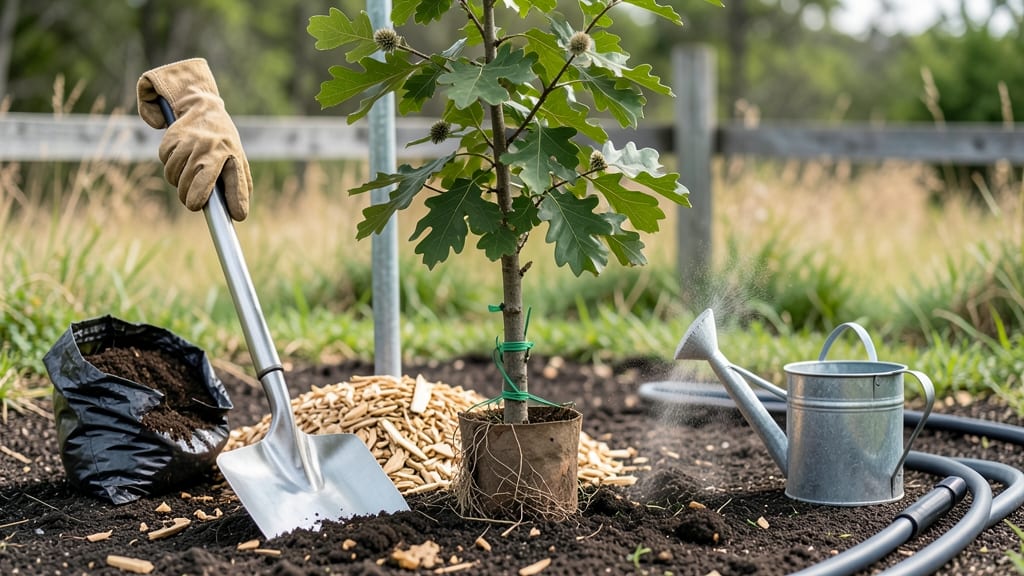
The best time to plant a tree in Iowa is during late winter to early spring or fall, when soil is workable but not frozen or waterlogged.
Planting a tree in Iowa isn’t just about timing—it’s about giving your new sapling the best chance to establish deep roots before Iowa’s brutal winters. Get the exact planting windows for 12+ native and popular species, plus pro tips to avoid common mistakes that kill young trees.
Fall planting in September or October lets roots grow before winter dormancy, while spring planting in March or April ensures trees wake up with moisture in the soil. Iowa’s 5a-6b climate means choosing the right window can mean the difference between a thriving tree and one struggling to survive.
From bare-root oaks to container-grown maples, this guide covers the science-backed timing, soil prep, and species-specific advice you need to plant with confidence—so your tree grows strong for decades.
Iowa tree planting calendar: exact months by species for optimal root growth
Timing your tree planting in Iowa is everything—miss the window, and your sapling may struggle through harsh winters or scorching summers. The best time to plant a tree in Iowa depends on the species, your USDA Zone (5a-6b), and whether you’re using bare-root or container-grown trees.
Fall planting (September-October) is ideal for most species, but early spring (March-April) works for bare-root trees.
Iowa’s microclimates matter too: Northern regions (like Dubuque) have shorter growing seasons, while Southern areas (like Des Moines) can extend fall planting into early November. Always check your last frost date (April 15) and first frost date (October 15) to plan accordingly.
Soil prep is just as critical—amend clay-heavy soils with compost to improve drainage.
Bare-root trees must be planted while dormant (November-April), but container-grown trees offer flexibility year-round. However, avoid planting during Iowa’s extreme heat (July-August) or freezing ground (December-February). Below is your species-specific planting calendar to maximize root growth before winter.
For bare-root trees, soak roots in water for 1-2 hours before planting to rehydrate them. Dig a hole twice as wide as the root ball but only as deep as the roots—planting too deep suffocates the tree.
Backfill with native soil (no amendments) to avoid disturbing roots. Water immediately after planting to eliminate air pockets.
In Southern Iowa, you can push fall planting into early November, but Northern regions should stop by late October.
5 Critical mistakes Iowa gardeners make when planting trees (and how to avoid them)
Iowa’s clay-heavy soil and freezing winters create unique challenges for tree planting. Many gardeners unknowingly sabotage their new trees with common mistakes that stunt growth or kill saplings entirely. The good news? These errors are easily avoidable with the right knowledge and preparation.
One of the biggest mistakes is planting at the wrong time. While fall is ideal for most species, rushing in early spring can leave roots vulnerable to late frosts.
Meanwhile, planting in summer heat stresses young trees before they’ve had a chance to establish. Let’s break down the top 5 pitfalls and how to fix them.
Never plant trees when soil is frozen or waterlogged (common in spring thaw or fall rains). Iowa’s clay soil compacts easily, suffocating roots. Test soil moisture by squeezing a handful—if it holds shape like a brick, wait 2-3 weeks.
Rural tip: Deer browsing is a silent killer. Use tree guards or deer-resistant species (like hackberry) if you’re in open farmland.
Mistake #1: Planting too deep is a silent killer. Many gardeners bury the root flare (where roots meet trunk) below soil level, which suffocates the tree. Always plant so the root flare sits at ground level.
Dig a hole twice as wide as the root ball but no deeper—this prevents root girdling and improves drainage in Iowa’s heavy clay.
Mistake #2: Ignoring soil pH leads to nutrient deficiencies. Iowa’s native soils often test acidic (pH 5.5-6.5), but many trees (like oaks and pines) thrive in slightly acidic to neutral soil (pH 6.0-7.0).
Test your soil with a $20 kit from Iowa State Extension. Amend with lime (to raise pH) or sulfur (to lower pH) before planting.
Mistake #3: Skipping root pruning for container-grown trees. Many nursery trees develop circular root systems from pot confinement. Before planting, prune 1/3 of the roots with clean shears to encourage outward growth. This helps trees adapt faster to Iowa’s windy conditions and compacted clay.
Mistake #4: Choosing the wrong location based on mature size. A 100-foot oak planted too close to your house will need constant pruning or worse—root damage to foundations.
Check your tree’s mature height/width and plant at least 15-20 feet from structures. For small yards, opt for dwarf varieties like columnar honeylocust.
Mistake #5: Neglecting mulch and water after planting. New trees need 1-2 inches of mulch (wood chips or straw) to retain moisture and regulate soil temperature. Water deeply 2-3 times per week the first year, especially during Iowa’s hot, dry summers.
Use a soaker hose to avoid wetting foliage (which causes fungal diseases).