
Pests and Diseases
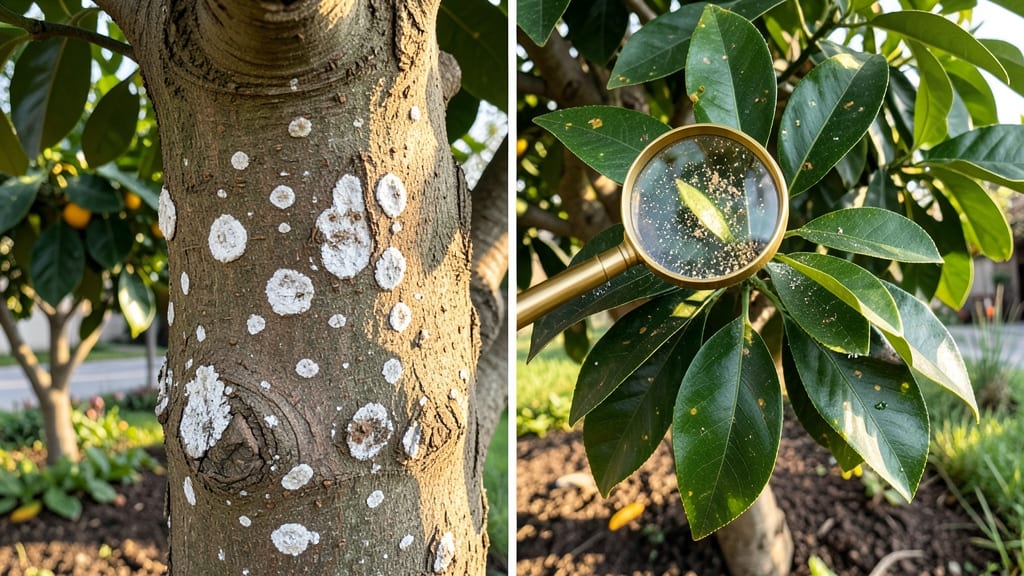
White spots on your orange tree trunk could mean scale insects or fungal spots—and the fix depends on what's causing them. 🌿 I've seen both ruin trees when ignored, but the good news is you can tackle them quickly with the right approach.
The first step is figuring out whether those spots are waxy (scale) or powdery (fungus), because that determines your treatment.
Scale insects leave behind sticky, waxy bumps that often look like white or gray spots, while fungal spots appear fluffy or crusty, especially in damp conditions.
Check for other clues: scale insects might have a honeydew residue (sticky stuff on leaves), while fungal spots often spread faster in humid weather. My citrus trees get both, so I inspect them every few weeks during growing season.
For scale, neem oil or horticultural oil works best—spray it on a calm day, and repeat every 7-10 days until the spots disappear. Fungal spots need copper fungicide or baking soda spray (1 tablespoon baking soda + 1 quart water + a drop of dish soap).
Prune any heavily infected branches and sterilize your tools between cuts to stop the spread.
Prevention is easier than treatment: keep the trunk dry, mulch to reduce humidity near the base, and wipe down the trunk occasionally with a damp cloth. Regular checks save you from bigger problems later—and your orange tree will thank you with healthier leaves and sweeter fruit next season.
Root Causes of Trunk Discoloration
Understanding why your orange tree trunk develops white spots is the first step to treating the issue effectively. These spots rarely appear without cause, and identifying the trigger helps you take precise action.
Below, we break down the most common reasons—from biological invaders to environmental stressors—along with the science behind each.
Fungal infections are a leading cause of white or powdery spots on tree trunks, particularly in humid or damp conditions. Two common culprits are powdery mildew and white mold (Oidium spp.), which thrive when moisture lingers on bark.
- How it happens: Fungal spores land on the bark and germinate when humidity exceeds 70% for prolonged periods.
The fungus feeds on organic matter, creating a white, powdery or fuzzy growth. - Key signs: Spots may appear chalky, spread rapidly, and worsen in shaded or poorly ventilated areas. - Why it’s dangerous: Severe infections weaken the tree’s bark, making it vulnerable to pests and disease entry points.
💡 Pro Tip: Avoid overhead watering and prune nearby branches to improve airflow. Fungicides containing neem oil or sulfur can help suppress growth.
Scale insects (e.g., armored scale, soft scale) may not always cause white spots directly, but their waste products—honeydew—create an ideal environment for sooty mold, which appears as dark or white streaks.
- How it happens: Scale insects attach to the bark, sucking sap and excreting sticky honeydew.
Fungi like Capnodium then colonize the honeydew, forming white or grayish-black spots. - Key signs: Look for sticky residue, tiny bumps (scale bodies), or ants (which farm the insects). - Why it’s dangerous: Honeydew attracts wasps and ants while weakening the tree’s health over time.
🔥 Quick Fix: Blast off scales with water pressure or apply horticultural oil to suffocate them. Prune heavily infested branches.
Lichen and algae are non-parasitic but still problematic. They don’t harm the tree directly but indicate poor growing conditions and can smother bark over time.
- How it happens: Lichen (a fungus-algae symbiotic organism) and algae thrive in moist, shaded environments, where they absorb nutrients from the bark’s surface.
- Key signs: White, gray, or greenish patches that feel slightly rough or slimy.
- Why it’s dangerous: While harmless, excessive growth can block sunlight and trap moisture, promoting fungal infections.
✨ Easy Removal: Scrub gently with a soft brush and soapy water, or hose them off during dry weather.
In some cases, white spots aren’t biological at all—they’re mineral deposits from hard water, lime, or even pesticide residue.
- How it happens: When water evaporates on the bark, dissolved minerals (like calcium carbonate) crystallize, leaving chalky white streaks.
- Key signs: Spots are powdery to touch, often concentrated where water drips (e.g., irrigation splashes).
- Why it’s dangerous: Doesn’t harm the tree but can make it look unsightly and may indicate poor water quality.
🌡️ Solution: Use rainwater or filtered water for irrigation, and rinse the trunk occasionally with a hose.
Stress from sun scorch, frost, or mechanical injury can cause bark to peel or develop white patches as the tree tries to heal.
- How it happens: Sudden temperature swings (e.g., frost followed by sun) or abrasions (e.g., from tools or wildlife) expose inner bark, which may appear white or discolored.
- Key signs: Irregular patches, peeling bark, or areas that feel rougher than the rest.
- Why it’s dangerous: Open wounds invite pests and diseases, so prompt care is key.
🎯 Prevention: Apply tree wound paint (if minor) or mulch to protect against temperature extremes. Avoid pruning in winter.
Improper use of herbicides, fungicides, or over-application of fertilizer can cause white, necrotic (dead) spots on the trunk.
- How it happens: Chemicals like glyphosate drift or excessive nitrogen disrupt bark cells, leading to bleached or dead patches.
- Key signs: Spots are sharp-edged, often paired with yellowing leaves or stunted growth.
- Why it’s dangerous: Chemical damage weakens the tree’s defenses, making it susceptible to further stress.
🚫 Avoidance: Always follow label instructions for spacing and dilution. Test soil before fertilizing to avoid overapplication.
Quick Fixes for Tree Trunk Issues
White spots on your orange tree trunk might seem alarming, but with the right approach, you can restore your tree’s health and prevent future problems.
Below are practical, step-by-step solutions tailored to the most common causes—fungal infections, scale insects, or environmental stress—along with prevention tips to keep your tree thriving.
If the white spots are powdery, fuzzy, or spreading, they’re likely fungal in nature (like peach leaf curl, sooty mold, or citrus scab). Here’s how to tackle them:
🔥 Step 1: Prune Infected Areas
- 👨🍳 Use sterilized pruners (wipe with rubbing alcohol between cuts).
- ✂️ Remove severely affected branches, especially near the trunk and between limbs where moisture lingers.
- 🗑️ Dispose of pruned material in a sealed trash bag—do not compost to prevent reinfection.
🧼 Step 2: Apply Fungicide
- 💡 Best options: Copper-based fungicides (like Bordeaux mixture) or neem oil spray (1% solution).
- 🌧️ Apply in the early morning or evening (avoid direct sunlight) for best absorption.
- ⏰ Reapply every 2–4 weeks or after heavy rain, as fungi thrive in damp conditions.
🌡️ Step 3: Improve Airflow and Drainage
- 🌬️ Thin out dense foliage to allow sunlight and air to circulate.
- 💧 Water at the base (avoid overhead spraying) and ensure the soil drains well—fungi love soggy bark!
- 🪓 Remove mulch from the trunk (keep it 6+ inches away) to prevent moisture buildup.
✨ Prevention Tips for Fungal Spots
- 🌱 Plant in well-draining soil and avoid overwatering.
- 🍊 Choose disease-resistant citrus varieties (like ‘Valencia’ or ‘Navel’ oranges).
- 🔄 Clean up fallen leaves/debris regularly—fungi hitchhike on organic matter!
If the white spots are sticky, crusty, or resemble tiny shells, you’re dealing with scale insects—sap-sucking pests that weaken trees. Here’s how to evict them:
🔪 Step 1: Physically Remove Scale
- 🧼 Scrub the trunk and branches with a soft brush dipped in soapy water (1 tbsp mild dish soap per gallon of water).
- 💡 Focus on crevices, under bark, and leaf axils—these are their favorite hiding spots.
- 🚫 Avoid harsh chemicals if the tree is young or you have pets/kids nearby.
🍳 Step 2: Apply Horticultural Oil or Insecticide
- 🌿 Best options:
- Horticultural oil (like Neem oil or dormant oil)—smothers scale without harming the tree.
- Systemic insecticide (e.g., Imidacloprid) for severe infestations (follow label instructions).
- 🌧️ Apply when temperatures are above 50°F (oil can damage trees in cold weather).
- ⏰ Repeat every 7–14 days until new scale stops appearing.
🐝 Step 3: Attract Natural Predators
- 🐞 Encourage ladybugs, lacewings, and parasitic wasps—they love eating scale insects!
- 🍯 Place a shallow dish of water with a drop of honey near the tree to attract beneficial bugs.
🎯 Prevention Tips for Scale Infestations
- 🌿 Inspect new plants before bringing them home—scale can spread quickly.
- 🪓 Remove old mulch and debris where scale overwinters.
- 🍊 Keep trees healthy—stressed trees attract more pests (water deeply but infrequently).
If the white spots appear patchy, dry, or sun-scorched, your tree may be stressed from environmental factors. Here’s how to nurse it back to health:
💧 Step 1: Adjust Watering Practices
- 🌧️ Water deeply but infrequently—orange trees hate soggy roots but also wilting stress.
- 🕒 Best time to water: Early morning (6–9 AM) to reduce evaporation and fungal risk.
- 📊 Check soil moisture: Stick your finger 2–3 inches deep—water if it’s dry.
☀️ Step 2: Protect from Sunburn
- 🪴 Young or newly planted trees need afternoon shade (use shade cloth if full sun is harsh).
- 🎨 Apply a thin layer of white latex paint (diluted with water) to the trunk—it reflects sunlight and prevents scalding.
🌱 Step 3: Fertilize Properly
- 💪 Use a balanced citrus fertilizer (6-6-6 or 8-3-9 ratio) in early spring and summer.
- 🚫 Avoid over-fertilizing—too much nitrogen causes soft, susceptible growth that pests love.
- 🌿 Add compost or well-rotted manure to improve soil health over time.
🌡️ Prevention Tips for Stress-Related Damage
- 🌿 Plant in the right spot—orange trees need 6+ hours of sun but protection from harsh winds.
- 🍊 Mulch correctly—use 2–4 inches of organic mulch (wood chips, straw) but keep it away from the trunk.
- 🔄 Monitor for pests/diseases—stressed trees are easier targets for invaders.
💡 Pro Tip: If you’re unsure whether the issue is fungal or insect-related, take a close-up photo and compare it to online guides (like the University of California’s citrus pest/disease database). Early action is key—don’t wait until the spots spread!
Frequently asked questions
Are white spots on my orange tree trunk always harmful?
Not always! While spots from fungal infections or scale insects need treatment, others like lichen or mineral deposits are usually harmless. Lichen grows harmlessly on bark, while chalky white streaks from hard water won’t hurt your tree—just scrub them off occasionally. Focus on treating only spots that spread quickly or leave sticky residue.
How do I tell if white spots are from scale insects vs. fungus?
Check the texture and location: Scale insects leave sticky, waxy bumps (often with honeydew residue) while fungus appears powdery or fuzzy. Scrape a small spot—if it leaves a crusty shell, it’s likely scale. If it’s fluffy and spreads easily, it’s probably fungus. Look for ants too (they farm scale insects).
Can I use household items to treat white spots on my tree?
Yes! For fungus, mix 1 tablespoon baking soda + 1 quart water + a drop of dish soap and spray weekly. For scale insects, use rubbing alcohol (70% isopropyl) or neem oil (1 tbsp per quart of water). Test any solution on a small area first, and reapply every 7-10 days until the spots disappear.
Will removing white spots hurt my orange tree?
Only if you’re too aggressive! For lichen or mineral deposits, gently scrub with a soft brush and soapy water. For fungus or scale, prune only the most affected branches (use sterilized tools) and avoid peeling bark. The tree may look rough temporarily, but proper treatment prevents long-term damage and helps it heal faster.
How often should I inspect my orange tree for white spots?
Check your tree every 2-4 weeks during growing season (spring-fall), and monthly in winter. Focus on the trunk, branches, and leaf undersides—these are hotspots for pests and fungal growth. Early detection makes treatment easier, so keep an eye out for new spots, sticky residue, or unusual textures.