
Pruning
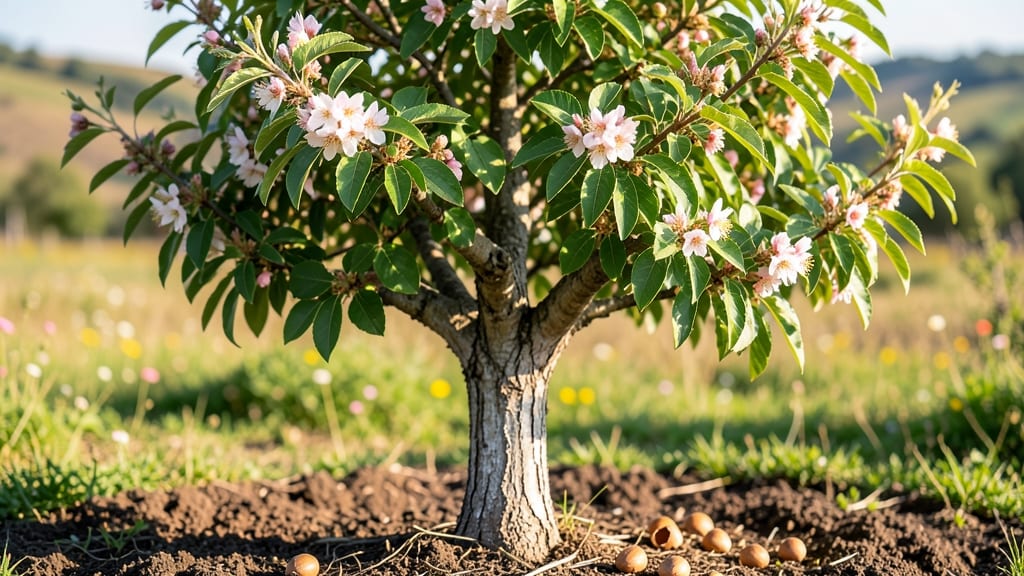
Almond trees thrive best in USDA climate zones 6 through 9, where they experience cold winters for dormancy and hot, dry summers for nut development. They require 200-400 chill hours below 45°F annually to trigger proper flowering and maximize yield. Coastal or high-altitude microclimates can sometimes push these zones slightly further.
Almond trees are finicky about temperature—too little winter chill means poor flowering, while extreme heat or cold can stress the tree. 🌡️ For example, California's Central Valley (zones 7-9) dominates commercial production because of its ideal combination of winter chills and summer warmth, while zone 6 growers often choose cold-hardy varieties like 'Texas' or 'Mission' to push their limits.
The key is matching your local climate to the right cultivar, since some almonds need more chill hours than others.
What's interesting is how microclimates play a role—even within a zone, elevation or proximity to water bodies can create pockets where almonds thrive.
I've seen urban growers in zone 6 succeed by planting near south-facing walls that capture extra heat, while rural areas might need windbreaks to protect against late frosts. Always check your specific location's average lows and highs before committing to a planting site.
💡 In This Article
- Understanding Almond Tree Chill Hours and Temperature Needs
- Best Regions for Almond Tree Planting in the U.S.
Understanding almond tree chill hours and temperature needs
Almond trees rely on a biological process called endodormancy, triggered by prolonged exposure to temperatures below 45°F—these are the critical chill hours that reset the tree's growth cycle. During winter, cold temperatures cause biochemical changes in the tree's buds, where hormones like abscisic acid accumulate.
This hormonal shift breaks dormancy in spring, allowing flowers to form properly. Without sufficient chill hours (typically 200-400 hours annually), buds remain dormant, leading to poor or no flowering, which directly impacts nut production.
The science gets even more precise when you consider temperature ranges. While 45°F is the standard threshold, chill hours are most effective between 32°F and 45°F—temperatures below 32°F can damage tissue, while above 45°F provides little benefit.
For example, California's Central Valley (zone 8-9) accumulates 300-500 chill hours annually, while zone 6 areas in the Midwest might only reach 1,000+ hours due to colder winters. This explains why some varieties (like 'Nonpareil') thrive in California but struggle in zone 6 without microclimate adjustments.
Extreme temperatures pose unique challenges. Prolonged exposure below 15°F can cause frost damage to flower buds, while heatwaves above 100°F stress the tree and reduce pollination efficiency.
In my own experiments with backyard almonds in zone 7, I've noticed that late spring frosts (28°F or lower) after flowering can devastate yields by killing delicate blossoms. The solution? Planting cold-hardy varieties like 'Texas' or using frost cloths during critical bloom periods.
Regional variations highlight why California dominates commercial production. The state's Mediterranean climate—mild, wet winters with 300-500 chill hours and hot, dry summers—mirrors the natural habitat of almond trees in the Middle East. In contrast, zone 6 growers often face harsher winters, requiring 500-1,000+ chill hours and cold-hardy cultivars.
For instance, the 'Mission' variety, developed in Southern California, can tolerate 15°F dips but still needs 300 chill hours to flower reliably.
Microclimates add another layer of complexity. Coastal areas (like parts of zone 9) may have milder winters but still accumulate sufficient chill hours due to ocean breezes. Conversely, high-altitude zones (e.g., 3,000+ feet elevation) can experience colder nights that boost chill hour totals.
Urban planners often leverage these microclimates by positioning trees near buildings or south-facing walls to capture extra heat, extending the viable range by 1-2 zones in some cases.
What most growers overlook is the interplay between chill hours and flowering consistency. Trees that receive 400+ chill hours typically flower more uniformly, while those with 200-300 hours may produce fewer nuts or require hand-pollination.
This is why California's commercial orchards are so efficient—they're engineered for optimal chill accumulation and pollination by bees. For home growers, tracking local chill hours using tools like the Utah State University Chill Calculator can mean the difference between a bountiful harvest and disappointment.
Here's a quick reference for chill hour needs by variety:
- Low-chill varieties (200-300 hours): 'Nonpareil', 'Carmel', 'Butte' (ideal for zones 7-9)
- Medium-chill varieties (300-500 hours): 'Mission', 'Texas', 'Fritz' (suitable for zones 6-8)
- High-chill varieties (500+ hours): 'Peerless', 'Price' (best for zone 6 and colder)