
Pruning
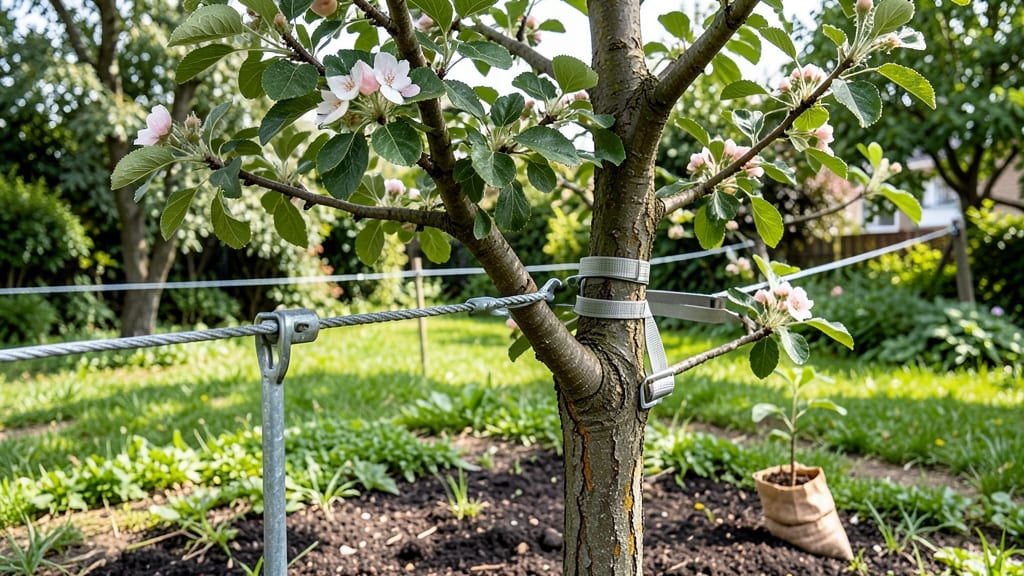
Apple tree branches need support to handle fruit weight and wind without snapping—my first tree nearly split in half before I learned these tricks. 🌳 The difference between a sturdy tree and a broken one often comes down to proper support installed at the right time.
Heavy fruit loads and summer storms put immense stress on young branches, so preventing damage early saves years of frustration. You’ll need basic materials: 5/16-inch tree ties, 4-foot wooden stakes, and zip ties for adjustments.
The key is positioning stakes at a 45-degree angle from the trunk to create a natural support triangle. For larger branches, consider spreader bars to distribute weight evenly and prevent splitting. Once installed, your tree will grow stronger with each season—branches thicken naturally, and the structure becomes self-supporting.
You’ll see fewer broken limbs, better fruit distribution, and a tree that stands tall even in storms. Maintenance is simple: check ties annually and replace any that dig into the bark. This method works for young trees, newly grafted branches, and even mature limbs that need reinforcement.
The upfront effort pays off with a longer-lived tree and fewer headaches during harvest season.
📚 In This Guide
- What you need
- Instructions
- Tips and common mistakes
- Wrapping up and next steps
What you need
- ● Support Stakes: 2–4 wooden or metal stakes (1–2 inches in diameter, 6–8 feet tall). Opt for untreated cedar or galvanized metal to prevent rot.
- ● Tree Ties: 3–5 soft, flexible ties (e.g., Tree Tuff or Tree Guard brands). Avoid wire or plastic that can girdle the bark.
- ● Bracing Materials (for split branches): Wooden splints (1–2 inches wide, cut to branch length)
- ● Orthopedic wire (20–22 gauge, for securing splints)
- ● Pruning Tools: Bypass pruners (for small branches)
- ● Loppers (for thicker branches, 1–2 inches in diameter)
- ● Mulch: 2–3 inches of organic mulch (wood chips or straw) to retain moisture and protect roots.
- ● Anti-transpirant spray (to reduce water loss during stress)
- ● Hose with a gentle spray nozzle (for post-support hydration)
- ● Knee pads or gloves (for comfort during pruning)
- ● Measuring tape (to ensure proper stake placement)
How to install apple tree branch supports for lifelong stability
Strong branches mean fewer storms knocking your harvest to the ground. Here’s how I reinforce apple trees so they stand tall for decades.
🪴 Step 1: Assess Branches for Support Needs
Start by examining the tree’s structure. Look for branches that bend more than 30 degrees from vertical or weigh down under fruit. These are prime candidates for support. I check for cracks, splits, or weak crotches—these spots need immediate attention to prevent future breaks.
Use your hands to gently press downward on medium-sized branches. If they flex more than 1 inch, they’ll need bracing. For larger limbs, watch how they sway in wind—any noticeable droop signals a need for reinforcement. Mark these branches with a soft garden flag so you remember which need support.
☀️ Step 2: Choose the Right Support Materials
For small branches (under 1 inch thick), I use tree ties or soft rubber straps—they’re gentle enough not to girdle the bark as the branch grows. Larger branches (1-3 inches) need wooden stakes or metal rods paired with zip ties or nylon straps for adjustable tension.
For heavy fruit-laden limbs, I install A-frame supports made from 2×4 lumber or metal tree cradles. These distribute weight evenly and prevent the branch from snapping at the crotch. Avoid wire or anything that can cut into the bark—it’ll strangle the branch over time.
✂️ Step 3: Install Supports at the Right Angle
Position supports just below the branch crotch where it meets the trunk. For stakes, drive them 6-12 inches into the ground at a 45-degree angle away from the tree. This creates a triangle of support that stabilizes the branch without restricting growth.
Use three-point contact for heavy limbs: one stake on each side of the branch and one at the base. Adjust the tension so the branch sits upright but not compressed. You’ll know it’s right when the limb holds its position without wobbling—no give when you press down firmly.
🌿 Step 4: Secure Supports Without Damaging Bark
Wrap straps or ties around the branch no tighter than a handshake—you should be able to slide a finger between the support and bark. For wooden stakes, pad the contact points with rubber tubing or felt to prevent abrasion.
Check the fit after one month and again at fruit harvest time. Branches swell with water and fruit weight, so supports may need loosening. If you see indentations in the bark, remove the support immediately and adjust—this is a sign of girdling, which can kill the branch.
💧 Step 5: Maintain Supports Seasonally
Inspect all supports twice a year: once in early spring before buds swell and again in late fall after harvest. Remove any supports that now feel loose or show wear. Replace frayed straps or rusted hardware before winter storms hit.
Prune any weak, crossing branches that create leverage points for wind damage. The goal is to reduce weight and improve airflow—this keeps the tree healthy and less reliant on artificial support. With proper care, your apple tree’s branches will stay strong for 20+ years.
Tips & tricks for reinforcing apple tree branches
These practical insights will help you avoid common mistakes and ensure your apple tree stays sturdy for decades.
Assessment Accuracy: When evaluating branches in Step 1, focus on the 30-degree angle rule as your primary indicator. I've found that branches bending beyond this threshold are often the ones that will break under fruit weight or wind. Use a small carpenter's square or even a protractor app on your phone to measure angles precisely—this takes the guesswork out of identifying weak spots. The 1-inch flex test is equally important, but remember: this applies to medium-sized branches only. Larger limbs may flex more without needing support.
Material Selection: In Step 2, I can't stress enough how critical it is to match the right material to the branch size. For those under 1-inch thick branches, I've had the best luck with tree-specific straps made from recycled plastics—they're flexible enough to accommodate growth without cutting into the bark. For larger branches, I recommend galvanized metal rods over wooden stakes because they resist rot and last longer. The key is avoiding anything that can girdle the branch as it grows.
Angle and Placement: The 45-degree angle for stakes in Step 3 creates that crucial triangle of support, but getting the placement right is equally important. I've learned the hard way that positioning supports too high up the branch (above the crotch) creates leverage points that actually increase stress during storms. Always install them just below where the branch meets the trunk—this is where the structural weakness typically occurs. For heavy limbs, that three-point contact system really works wonders, but make sure all three points are equidistant from the branch's base.
Seasonal Maintenance: The twice-yearly inspection schedule in Step 5 is non-negotiable, but here's what I've discovered about timing: In early spring, focus on removing any supports that feel too tight—the bark expands as the tree comes out of dormancy. At harvest time, you'll need to check for looseness as the branches bear fruit weight. I've also found that fall is the best time to replace frayed straps or rusted hardware—you'll have plenty of time to source replacements before winter storms arrive. Pro tip: Keep a small toolkit with extra straps and a few stakes on hand during your inspections.
Pro Tips for Apple Tree Branch Support
- These practical insights will help you avoid common mistakes and ensure your apple tree stays sturdy for decades.
- Assessment Accuracy: When evaluating branches in Step 1, focus on the 30-degree angle rule as your primary indicator....
- Material Selection: In Step 2, I can't stress enough how critical it is to match the right material to the branch siz...
Frequently asked questions
Got questions about keeping your apple tree branches sturdy and healthy? Here are some of the most common concerns—and clear answers to help you support your tree like a pro!
When is the best time to add branch supports to an apple tree?
The ideal time is late winter or early spring (before buds swell) or summer after harvest. Avoid installing supports in fall or winter when the tree is dormant, as cold weather can stress the wood. For young trees, start supporting branches as soon as they reach 6–12 inches long to prevent bending.
What materials work best for apple tree branch support?
Use tree ties (soft fabric or rubber) for young branches, bamboo stakes or wooden posts for heavier limbs, or spreaders (metal or wooden) to angle branches outward. Avoid wire or anything that can cut into the bark—gentle support is key!
How do I know if my tree’s branches need extra support?
Watch for sagging limbs, cracks in the bark, or branches growing at sharp angles (over 45°). Heavy fruit loads or weak crotches (where branches meet the trunk) also signal a need for reinforcement. If a branch sways excessively in wind, it’s time to act!
Can I use alternatives like stakes or cages instead of traditional supports?
Yes! Tree cages (made of plastic or metal) work well for young trees, while stakes and twine can guide growth. However, for mature trees with heavy branches, custom supports (like A-frame structures) are more effective. Just ensure any method allows flexibility—rigid supports can cause stress over time.
What should I do if a supported branch starts to rot or die?
First, check for pests or disease (like cankers or borers). If the branch is beyond saving, prune it back to healthy wood using clean tools. Remove the support and apply pruning sealant to prevent further damage. For persistent issues, consult a local arborist to diagnose the root cause.
Wrapping up and next steps
Supporting your apple tree’s branches isn’t just about aesthetics—it’s a game-changer for fruit production and tree longevity. 🌳 By using techniques like cabling, bracing, or proper pruning, you’ll ensure your tree thrives even in windy conditions.
Now that you’re armed with the right tools and knowledge, it’s time to roll up your sleeves and give your apple tree the care it deserves!
Ready to take action? Start by inspecting your tree this weekend—identify weak branches and apply the support methods that fit your tree’s needs. Happy gardening!