
Size
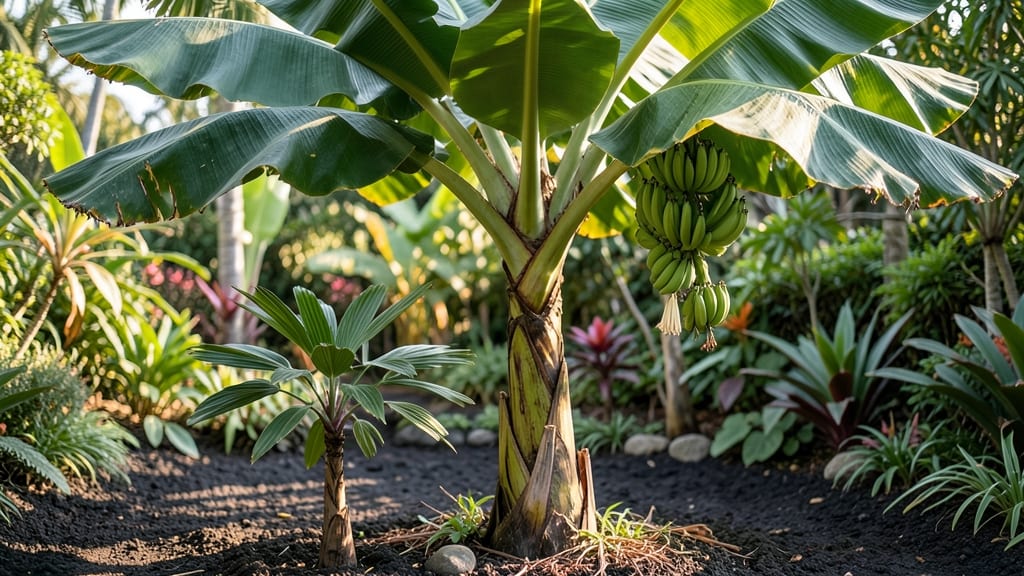
A banana tree’s size can range from a compact 8-foot patio plant to a towering 30-foot tropical giant—and the difference depends entirely on the variety you choose.
Did you know some banana trees can grow taller than a three-story building—yet others stay small enough for a patio? Understanding banana tree size is key to choosing the right variety for your space and climate.
If you’ve ever dreamed of harvesting your own bananas but worried about limited yard space, don’t stress. Dwarf varieties like the Dwarf Cavendish thrive in containers, while standard types need room to spread their roots and reach their full 20-foot height.
In this guide, I’ll break down the height ranges by variety, spacing needs, and how to control growth—whether you’re growing a 🍌 banana tree in a pot or a backyard oasis in USDA Zones 10-12.

Banana tree height by variety: from dwarf to giant sizes
Choosing the right banana variety depends entirely on your space and climate. Some dwarf banana trees stay under 10 feet, perfect for patios, while others like the Gros Michel can tower over 30 feet, needing full yards.
The key difference lies in their genetic growth habits and ideal climates—tropical varieties grow fastest, while subtropical types may stay smaller.
Tall banana trees need deep soil and strong windscreens to support their weight, while dwarf varieties thrive in containers or small gardens. Understanding these differences helps you avoid common mistakes like planting giants in tiny yards or struggling with wind damage in exposed areas.
Popular dwarf varieties like the Dwarf Cavendish (10-15 ft) are perfect for home gardens, producing smaller but abundant fruit bunches. This variety thrives in USDA Zones 10-12 and handles container growing beautifully, making it ideal for urban gardeners.
The Lady Finger banana (12-18 ft) is another great choice for medium spaces. It grows slightly taller but still fits in backyard gardens with proper spacing. Its long, slender fruits are prized for cooking and fresh eating, and it tolerates partial shade better than giant types.
Giant varieties like the Gros Michel (20-30 ft) dominate tropical landscapes but require deep soil and wind protection. These trees need 25+ feet of space and full sun to reach their full potential. Planting them in windbreaks or near fences prevents stem breakage during storms.
For subtropical climates, consider the Red Dacca (15-20 ft), which produces red-skinned bananas and handles cooler nights better than tropical types. Its moderate height makes it versatile for both ground planting and large containers.
If you're growing bananas in containers, stick to dwarf or small varieties like the Apple Banana (8-12 ft). These stay manageable in 50-gallon pots and produce sweet, creamy fruit. Just ensure your container has drainage holes and use a lightweight potting mix.
Tall banana trees need well-draining soil with organic matter to support their weight. Amend heavy clay with compost or sand to prevent root rot. For giant varieties, consider mulching with straw to retain moisture and regulate soil temperature.
Remember, banana trees grow fastest in warm, humid climates. In cooler areas, growth slows significantly, and fruit production may decline. If you're pushing the limits of your climate, choose subtropical varieties like Bluggoe (15-20 ft), which handles USDA Zone 9 with some winter protection.
Whether you dream of a patio-sized banana tree or a tropical giant, picking the right variety ensures success. Start with your space constraints and climate zone, then match it to the perfect banana type for your garden dreams! 🌱
Proper spacing and sunlight needs for different banana tree sizes
Banana trees thrive when given the right amount of space and sunlight, but their needs vary dramatically based on their mature size. A dwarf Cavendish might fit comfortably in a patio container, while a Gros Michel requires a full backyard. Understanding these differences helps prevent overcrowding and ensures healthy growth.
Spacing is critical because banana trees have extensive root systems that need room to spread. Tall varieties like Musa acuminata need at least 20-25 feet between plants, while dwarf varieties can thrive with just 3-5 feet of space. Overcrowding leads to competition for nutrients and increases disease risk.
Sunlight requirements also shift with size. Most banana trees need 6-8 hours of direct sunlight daily, but tall varieties in hot climates may benefit from afternoon shade to prevent leaf scorch. Dwarf varieties can tolerate partial shade, making them ideal for urban gardens or shaded patios.
- Dwarf Varieties (3-8 ft): 3-5 ft spacing, 4-6 hours sun (tolerates partial shade)
- Semi-Dwarf (8-12 ft): 6-8 ft spacing, 6-8 hours sun (morning sun preferred)
- Standard (12-20 ft): 10-15 ft spacing, full sun (6+ hours), wind protection needed
- Giant (20-30+ ft): 20-25 ft spacing, full sun with afternoon shade, deep soil required
For tall banana trees, proper spacing isn't just about aesthetics—it's about root health. Their extensive root systems need deep, well-draining soil to prevent waterlogging. Amend the soil with compost or organic matter to a depth of at least 2-3 feet to support their massive growth.
Wind exposure is another critical factor, especially for tall varieties. Their large leaves act like sails, making them vulnerable to wind damage. Plant them near a windbreak or fence, or stake young trees to prevent toppling.
Dwarf varieties are more resilient but still benefit from slight protection in exposed areas.
If you're growing banana trees in containers, choose pots at least 18-24 inches wide and deep for dwarf varieties, and 36+ inches for standard or tall types. Ensure the container has drainage holes to prevent root rot, and use a lightweight potting mix to avoid overloading the plant.
Remember, banana trees are heavy feeders. Fertilize regularly during the growing season to support their rapid growth, but avoid over-fertilizing, which can burn roots. Mulch around the base to retain moisture and regulate soil temperature—especially important for tall varieties with deep root systems.