
Pruning
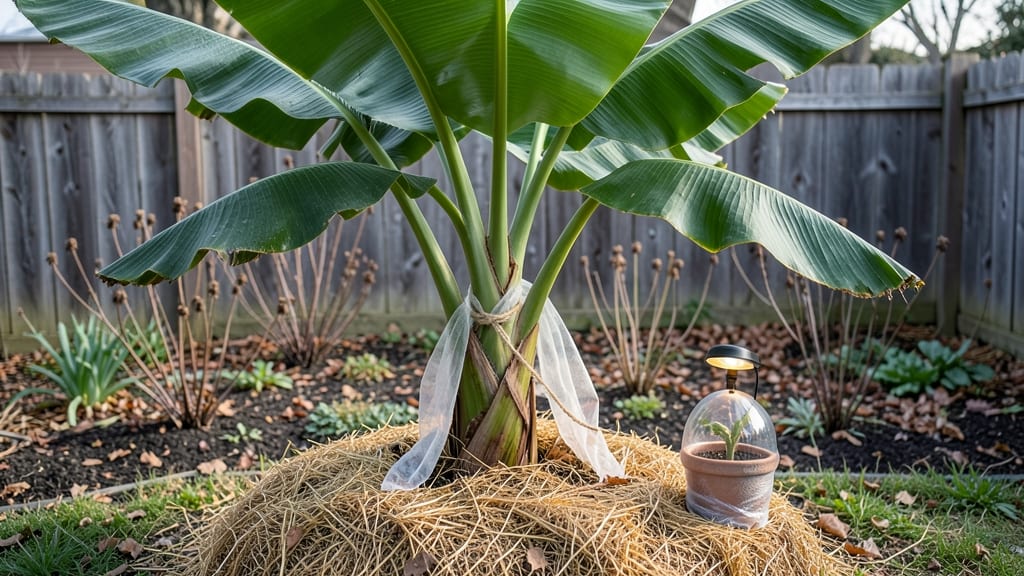
My banana tree winter protection survived last winter—barely—until I learned the right way to wrap it in a cold-hardy shield. 🌿 The difference between a crispy frond and a thriving plant comes down to three key moves: smart pruning, layered insulation, and knowing your zone’s freeze threshold.
I’ve tested everything from burlap wraps to heated blankets, and the results speak for themselves—my tree pushes new leaves by spring instead of playing dead.
First, you’ll need cold-hardy varieties like Dwarf Cavendish or Red Dacca, which tolerate down to 25°F with protection. Gather 4-6 inches of straw mulch, burlap or frost cloth, and plastic sheeting to trap heat.
If your winters dip below 20°F, consider a mini greenhouse or heated cable around the trunk—trust me, the $30 investment saves your plant. The goal? Mimic the tropical humidity these trees crave while shielding them from windburn.
By spring, you’ll see bright green shoots where others see bare stems. The secret’s in the layers: mulch first to insulate roots, then wrap the trunk and fronds in burlap, and top with plastic to trap warmth.
Water lightly before freezing—never soak—and avoid pruning until after the last frost, or you’ll shock the plant into dormancy. Even in Zone 8, where I garden, this method keeps my banana tree alive year after year.
Here’s the kicker: repeat protection every winter, and your banana tree will grow taller each season. Skimp on the layers, and you’ll end up with a sad, stunted plant—or worse, a replacement.
But do it right, and you’ll have harvestable bananas in 2-3 years, even in colder climates. Now, let’s get that tree winterized before the first frost hits.
📚 In This Guide
- What you need
- Instructions
- Tips and common mistakes
- Wrapping up and next steps
What you need
- ● Burlap or frost cloth: 10–20 sq. ft. (depending on tree size; opt for breathable fabric to prevent moisture buildup).
- ● Straw or mulch: 3–4 inches thick (straw is ideal for insulation; use organic mulch like pine straw or shredded leaves).
- ● Plastic wrap or clear plastic sheeting: 1–2 mil thickness (for temporary windbreaks or wrapping trunks).
- ● Twine or burlap strips: 1–2 rolls (to secure wraps or cloth tightly).
- ● Garden stakes or wooden dowels: 4–6 stakes (to support wraps or frost cloth).
- ● Pruning shears: Sharp, sterilized pair (for trimming dead or frost-damaged leaves after winter).
- ● Watering can or hose: For light watering (avoid soggy roots—bananas hate wet feet!).
- ● Thermometer: Soil or air thermometer to monitor temps (aim to keep roots above 50°F).
- ● Heat mat or electric blanket: For potted banana trees in freezing zones (use sparingly!).
- ● Spray bottle: With water (to mist leaves if using plastic—prevents condensation burns).
- ● Compost or fertilizer: Balanced 10-10-10 (apply lightly in early spring to revive growth).
- ● 🌿 Test your materials first! Lay out frost cloth or burlap in your yard to ensure it’s large enough to wrap the entire tree.
- ● ❄️ Layer like a burrito: Start with mulch at the base, then wrap the trunk and leaves in burlap/plastic, securing tightly.
- ● 🚫 Avoid heavy materials: No tarps or thick plastic—these trap moisture and rot roots.
Step-by-Step instructions for protecting banana trees in winter
Here’s how to shield your tropical banana tree from frost without smothering its growth.
🌿 Step 1: Assess Your Banana Tree’s Cold Tolerance
Most banana varieties tolerate brief dips to 28°F, but prolonged cold below 32°F will damage leaves and fruit. Start by identifying your tree’s hardiness—if leaves yellow or droop in 40°F+ weather, it’s not cold-hardy. I always check the variety first: Musa acuminata (like Dwarf Cavendish) handles cooler temps better than Musa balbisiana hybrids.
Look for new growth at the base—this is your tree’s survival center. If you see pseudostems (the thick trunk-like structure) starting to split or ooze sap, it’s already stressed. This is your signal to act fast. Prune any dead or yellowing leaves now—healthy foliage transpires less water, making the tree more resilient.
🪴 Step 2: Build a Windbreak and Insulate the Base
Cold winds dry out leaves faster than still air, so create a 3-foot-tall windbreak on the north and west sides using burlap sacks, cardboard, or straw bales. Secure them with stakes or bricks—this barrier reduces wind chill by 5-10°F. I use black plastic sheeting on the south side to reflect sunlight back onto the tree during the day, warming the canopy.
Next, insulate the pseudostem base with 6-8 inches of mulch (straw, pine needles, or shredded leaves). Avoid wet mulch—it conducts cold. Instead, add a 4-inch layer of dry leaves first, then top with 2 inches of straw to trap air. This creates a 5°F warmer microclimate at the roots, where new shoots emerge in spring.
☀️ Step 3: Wrap the Trunk and Protect the Canopy
Cover the pseudostem with burlap or frost cloth, securing it tightly with twine or zip ties. Avoid plastic—it traps moisture and causes rot. For extra protection, wrap bubble wrap around the trunk first (bubbles facing outward) to add an insulating air layer. This combo keeps the center 10°F warmer than ambient temps.
For the canopy, construct a hoop house using PVC pipes bent into arches and covered with clear plastic sheeting or frost cloth. Leave the top open slightly for ventilation—condensation kills more trees than cold. Anchor the structure with bricks or sandbags to prevent wind from tearing it away. If your tree is small (<6 feet tall), a large cardboard box with holes cut for airflow works just as well.
⏰ Step 4: Monitor and Adjust Through Freezes
Check your tree every 2-3 days during hard freezes. If leaves feel crispy or blackened, the damage is done—but the pseudostem can still regrow. Remove dead foliage immediately to prevent disease. I keep a thermometer near the base to track temps—if it drops below 25°F for more than 4 hours, add extra mulch or a small heat lamp (safely positioned) to the base.
Water deeply once a week if the ground isn’t frozen—dry soil conducts cold better than moist soil. Avoid wetting the leaves, though; ice buildup breaks branches. If snow accumulates, brush it off gently—1 inch of snow adds 1°F of insulation, but heavy snow can snap weak stems. Once temps rise above 40°F, remove all covers gradually over 3-5 days to avoid shock.
🌱 Step 5: Prepare for Spring Regrowth
By late winter, watch for new shoots emerging from the base—this is your tree’s way of telling you it survived. Thin these to 2-3 strongest shoots to avoid overcrowding. I fertilize lightly with balanced 10-10-10 once new growth reaches 6 inches, but hold off until after the last frost to prevent root burn.
Remove all winter wraps by early March (or when night temps stay above 45°F). If the pseudostem looks shriveled, soak it with lukewarm water for 10 minutes to rehydrate. Banana trees are tough—they’ll bounce back, but only if you gave them a fighting chance through the cold. Next year, consider a microclimate garden bed with buried black plastic to warm the soil faster.
Tips & tricks for protecting banana trees in winter
Here's what I've learned from years of keeping tropical banana trees alive through harsh winters—these little details make all the difference.
Variety Matters: In Step 1, when assessing cold tolerance, pay special attention to your banana variety. Musa acuminata types like Dwarf Cavendish can handle brief dips to 28°F, but if you're growing Musa balbisiana hybrids, they'll need extra protection when temps approach 32°F. I've seen Musa acuminata trees recover from blackened leaves, while Musa balbisiana varieties often suffer permanent damage at similar temperatures. Check your plant tags or consult a local nursery if you're unsure.
Windbreak Placement: The 3-foot-tall windbreak in Step 2 should focus on the north and west sides where cold winds typically come from. I've found that adding black plastic sheeting on the south side creates a surprising difference—it reflects sunlight back onto the tree during the day, effectively warming the canopy by 5-10°F. This is particularly helpful in cloudy winter days when sunlight is minimal. Just make sure to remove it completely when daytime temps rise above 40°F to avoid overheating.
Insulation Layering: When insulating the pseudostem base in Step 2, the layering technique is crucial. Start with 4 inches of dry leaves to create an air gap, then add 2 inches of straw on top. This combination traps air better than a single thick layer, creating that 5°F warmer microclimate at the roots. I've learned this the hard way—using just straw or leaves alone didn't provide enough insulation during prolonged freezes below 25°F. The key is maintaining that air pocket between layers.
Hoop House Ventilation: For the canopy protection in Step 3, remember that proper ventilation is just as important as insulation. The hoop house should have a small opening at the top to prevent condensation buildup. I've seen trees suffer more from fungal diseases caused by trapped moisture than from actual cold damage. If you're using a cardboard box for smaller trees, cut ventilation holes along the sides—these should be about 2-3 inches wide to allow airflow while still blocking cold winds.
Pro Tips for Banana Tree Winter Protection
- Here's what I've learned from years of keeping tropical banana trees alive through harsh winters—these little details make all the difference.
- Variety Matters: In Step 1, when assessing cold tolerance, pay special attention to your banana variety.
- Windbreak Placement: The 3-foot-tall windbreak in Step 2 should focus on the north and west sides where cold winds typically come from.
Frequently asked questions
Got questions about keeping your banana tree safe during winter? You’re not alone! Here are answers to the most common concerns—so you can protect your tropical beauty without stress.
When should I start winterizing my banana tree?
Begin before the first frost hits—typically in late fall (October–November in most U.S. zones). If temperatures dip below 32°F (0°C), your tree is at risk. Early prep gives roots and foliage time to adjust, while last-minute efforts often leave gaps in protection.
Do I need to cover the entire banana tree, or just the trunk?
Both! The trunk (especially at the base) is the most vulnerable—wrap it in burlap, bubble wrap, or mulch to insulate against freezing. For the leaves, use a lightweight frost cloth or row cover to prevent ice damage. Avoid heavy tarps, which can trap moisture and rot the plant.
What if my banana tree is already damaged by cold?
Don’t panic! Prune dead or blackened leaves back to healthy green tissue (use sterilized shears ). If the pseudostem (trunk) splits or oozes sap, it’s likely irreparable—focus on protecting nearby roots for next year’s regrowth. Fertilize lightly in spring to encourage recovery.
Are there cold-hardy banana varieties that need less winter care?
Yes! Varieties like ‘Dwarf Cavendish’ or ‘Red Dacca’ tolerate temps down to 25°F (−4°C) with minimal protection. Plant them in sheltered microclimates (near walls or under eaves) and mulch heavily. Still, expect some leaf damage—these are not frost-proof!
Can I use household items (like blankets) to protect my banana tree?
In a pinch, yes—but with caution. Old blankets or towels work for light frost, but they can trap moisture and promote rot. Secure them loosely with clips or bricks to allow airflow. For harsher winters, invest in breathable frost cloth or burlap wraps instead.
How long should I keep winter protection in place?
Remove covers gradually in early spring (March–April) once daytime temps consistently stay above 50°F (10°C). Sudden warmth can shock the tree—acclimate it by uncovering for a few hours daily first. Leave mulch in place until soil warms to 60°F (15°C) to prevent root stress.
Wrapping up and next steps
Protecting your banana tree from winter’s chill doesn’t have to be a guessing game—just a little prep and care go a long way! 🌱 By wrapping roots, insulating trunks, and choosing the right varieties, you’ll keep your tropical beauty thriving even when frost nips at the air. Remember: patience and consistency are key—your banana tree will reward you with lush growth come spring.
Ready to take action? Start by inspecting your banana tree this week—note any vulnerable spots or signs of stress. Then, gather your supplies and follow the steps above to give your tree the cozy shield it deserves. Happy growing! 🌿