
Pests and Diseases
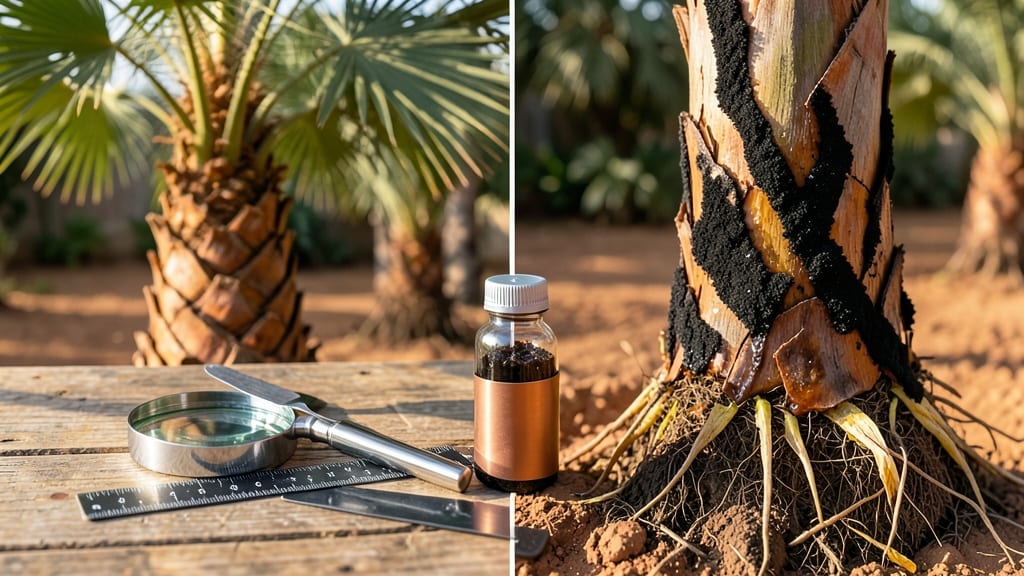
That creeping black fungus on your palm trunk isn’t just unsightly—it’s silently weakening your tree. 🌿 I’ve seen it turn a healthy palm into a hollow shell within months if ignored, and the good news is you can stop it before it spreads.
The key is acting fast with the right mix of pruning, fungicides, and environmental fixes that actually work.
Most cases start with poor drainage or high humidity trapping moisture against the trunk, creating the perfect breeding ground for fungal spores. My neighbor’s Canary Island date palm went from vibrant to struggling in two weeks after a summer downpour—until we fixed the drainage and applied copper fungicide.
The fungus thrives in tight spaces, so pruning out dead fronds and improving airflow makes a huge difference.
You’ll see results within 2-4 weeks of consistent treatment, with new growth pushing through the blackened areas. For severe cases, a professional arborist can inject systemic fungicides deep into the trunk, but most homeowners can handle it with basic tools and persistence.
The worst part? Waiting too long turns a simple fix into a tree replacement.
Works for all common palms—from your backyard Mexican fan palm to tropical varieties like the Majesty palm. Here’s the step-by-step plan to save your tree before it’s too late.
Root Causes of Fungal Growth
Black fungus on palm tree trunks isn’t just an unsightly problem—it’s often a sign of deeper issues at play. Understanding the why behind this fungal invasion is the first step to stopping it before it weakens or kills your palm.
Below, we break down the most common triggers, from environmental factors to palm health, with actionable insights to help you address them.
Fungi thrive in damp, humid conditions, and palm trees are particularly vulnerable when their trunks retain too much moisture. Here’s how it happens:
- Overwatering or Irrigation Mistakes:
Palms need well-drained soil—if water pools around the base or the trunk stays soggy, fungal spores (like those from Phytophthora or Thielaviopsis) latch on and multiply. Even overhead sprinklers can create a moist microclimate on the trunk, inviting fungal growth.
- Compacted or Clay Soil:
Soil that doesn’t breathe traps water near the roots, which then travels up the trunk via capillary action. Clay-heavy soils are notorious for this, creating a perfect fungal buffet.
- Lack of Airflow:
Dense foliage or nearby structures (like fences or other plants) can block airflow, keeping the trunk in a permanently humid state. Fungi like Botryosphaeria (a common palm trunk pathogen) exploit this to spread.
💡 Pro Tip: Test your soil’s drainage by digging a 12-inch hole near the palm and filling it with water. If it drains in less than 2 hours, you’re golden. If it takes days, amend the soil with organic matter (compost, perlite, or sand) to improve airflow and drainage.
Fungi don’t just need moisture—they also love warm, muggy conditions. Palm trees in tropical or subtropical climates are especially at risk during:
- Monsoon Seasons or Heavy Rains:
Sudden downpours can saturate the trunk, while high humidity (above 70%) creates an ideal environment for spores to germinate. Pestalotia and Colletotrichum fungi often exploit these conditions.
- Poor Air Circulation in Greenhouses:
If your palm is indoors or in a greenhouse, stagnant air with high humidity (like 80%+) can trigger fungal outbreaks. Even outdoor palms in shaded or enclosed spaces (like courtyards) face this risk.
- Nighttime Dew Buildup:
Dew clinging to the trunk for hours can mimic a fungal spa. Palms with thick, fibrous trunks (like coconut palms) are more prone to trapping moisture this way.
🌡️ Action Step: Use a hygrometer to monitor humidity near your palm. Keep levels below 60% during warm months. For outdoor palms, prune lower fronds to improve airflow and reduce dew accumulation.
A healthy palm can resist fungal attacks, but stress or physical damage opens the door for pathogens. Here’s what makes palms susceptible:
- Nutrient Deficiencies:
Lack of potassium, magnesium, or nitrogen weakens the trunk’s natural defenses. Fungi like Ganoderma (a wood-rotting fungus) target stressed palms first.
- Physical Injuries:
Cuts from pruning tools, animal scratches, or storm damage create entry points for spores. Even sunburn scars (from sudden exposure) can become fungal hotspots.
- Root Rot or Pest Damage:
If grubs, palm weevils, or root rot compromise the tree’s health, the trunk becomes an easy target. Fungi like Fusarium move in to decompose weakened tissue.
| Symptom | Likely Cause | Fix It |
|---|---|---|
| Yellowing fronds + black streaks on trunk | Nutrient deficiency or root rot | Fertilize with balanced palm fertilizer (high in K) and check roots for rot. |
| Dark, oozing lesions on trunk | Physical wound + fungal infection | Clean wound with hydrogen peroxide (3%), then seal with pruning paint. |
| Soft, spongy trunk tissue | Advanced root rot or weevil damage | Remove infected tissue below the damage and treat soil with fungicide. |
Fungal spores are everywhere, but they can hitch a ride on tools, mulch, or even water sources. Here’s how contamination spreads:
- Dirty Pruning Tools:
Knives or saws used on infected palms can transfer spores to healthy trunks. Ceratosphaeria (a palm trunk rot fungus) spreads this way.
- Infested Mulch or Compost:
Old mulch or compost with fungal spores can colonize the trunk when piled too close. Avoid organic mulch if your palm is already showing signs of stress.
- Recycled Water or Irrigation Systems:
Stagnant water in drip lines or clogged sprinklers can harbor fungi like Phytophthora palmivora, which then splashes onto the trunk.
✨ Prevention Tip: Sterilize tools with rubbing alcohol (70%) or a 10% bleach solution before and after use. If repotting, bake soil in an oven (200°F for 30 mins) to kill spores.
How to Treat and Prevent Fungal Spread
Discovering black fungus creeping up your palm tree trunk can feel like a slow-motion nightmare—especially when you realize it’s already taken hold. The good news? With the right approach, you can stop it in its tracks and protect your tree.
Below, we break down practical fixes tailored to the most common causes, plus proactive prevention tips to keep your palm healthy for years to come.
If your palm’s trunk is damp, soggy, or sitting in standing water, fungal spores thrive in this environment. Here’s how to dry it out and prevent further damage:
💧 Step 1: Improve Soil Drainage
- Test the soil: Stick your finger 2–3 inches into the soil. If it’s still wet 24–48 hours after watering, drainage is the issue.
- Amend the soil: Mix in organic matter like compost, perlite, or coarse sand (50/50 ratio) to loosen compacted soil.
- Raise the planting bed: If your palm is in a low spot, mound soil around the base to encourage runoff.
🌡️ Step 2: Adjust Watering Habits
- Water deeply but less often: Palms prefer infrequent, thorough watering (every 7–10 days, depending on climate). Avoid light daily sprinkles.
- Water at the base: Direct hoses or drip irrigation only to the root zone, not the trunk or fronds.
- Check for irrigation issues: If you use sprinklers, switch to drip systems or soaker hoses to avoid wetting the trunk.
🌧️ Pro Tip: Mulch Correctly
- Apply 2–4 inches of mulch (wood chips, bark, or pine straw) around the base, but keep it 6+ inches away from the trunk to prevent moisture buildup.
If black fungus is already visible, act fast with fungicides and pruning to limit spread:
🧴 Step 1: Apply Fungicidal Solutions
Choose one of these effective, palm-safe options:
- Copper-based fungicides (e.g., Copper Sulfate or Bordeaux Mixture): Spray or brush onto affected areas. Reapply every 7–14 days until growth stops.
- Neem oil spray (1 tsp neem oil + 1 quart water + drop of dish soap): Natural and non-toxic, but requires weekly applications for 4–6 weeks.
- Systemic fungicides (e.g., Propiconazole): For severe cases, use according to label instructions.
✂️ Step 2: Prune Infected Areas
- Remove dead fronds: Cut off any brown, black, or mushy fronds at the base with sterilized pruners (wipe with rubbing alcohol between cuts).
- Trim blackened trunk tissue: If the fungus has spread to the trunk, scrape off the top layer with a wire brush or knife. Do not use a pressure washer—it can spread spores.
- Dispose of debris properly: Bag and trash infected plant material immediately (do not compost).
🔄 Step 3: Boost Tree Resilience
- Fertilize lightly: Use a balanced palm fertilizer (e.g., 8-2-12) in early spring to strengthen the tree’s defenses.
- Avoid over-fertilizing: Too much nitrogen weakens palms, making them more susceptible to disease.
An ounce of prevention is worth a pound of cure. Follow these long-term strategies to keep your palm fungus-free:
🌡️ Monitor Environmental Conditions
- Avoid overhead watering: Use drip irrigation or hand-watering at the base.
- Improve airflow: Thin out dense foliage around the palm to reduce humidity near the trunk.
- Watch for pests: Scale insects or mealybugs can weaken palms, making them prone to fungus. Treat with horticultural oil if detected.
🛡️ Sanitize Tools and Hands
- Clean pruners with rubbing alcohol before and after use.
- Wear gloves when handling infected areas to avoid spreading spores to other plants.
🔍 Inspect Regularly
- Check trunks and fronds every 2–4 weeks for early signs of black growth.
- Act at the first sign: Catching fungus early means less damage and easier treatment.
🌱 Choose Resistant Palm Varieties
If your current palm is prone to fungal issues, consider disease-resistant alternatives like:
- Mediterranean Fan Palm (Chamaerops humilis)
- Pygmy Date Palm (Phoenix roebelenii)
- Windmill Palm (Trachycarpus fortunei)
With these steps, you’ll not only stop the black fungus in its tracks but also build a healthier, more resilient palm tree. Consistency is key—fungus doesn’t disappear overnight, but with patience and care, your tree can bounce back!
Frequently asked questions
What does black fungus on a palm tree trunk look like?
It typically appears as dark, velvety patches or streaks that feel slightly fuzzy or slimy to the touch. In advanced cases, you may see oozing lesions or blackened, rotting tissue. Early stages resemble soot or mold, while severe infections create sunken, hollow areas on the trunk.
Can black fungus kill my palm tree?
Yes, if left untreated, it can weaken the tree's structural integrity and lead to death. Severe fungal infections like Ganoderma or Phytophthora rot away the trunk from the inside, causing collapse. Acting within 2-4 weeks of noticing symptoms significantly improves survival chances.
How do I know if my palm has root rot causing the black fungus?
Look for additional symptoms beyond trunk discoloration: yellowing fronds, soft or mushy trunk tissue when pressed, and foul-smelling soil. Root rot creates a perfect environment for trunk fungus, so check for waterlogged soil or signs of pest damage (like weevil holes) at the base.
Will pruning help stop the spread of black fungus?
Pruning removes infected fronds and improves airflow, which is crucial for recovery. Always use sterilized tools and dispose of infected material immediately. Focus on removing dead fronds and any blackened trunk tissue while keeping cuts clean to prevent further contamination.
How often should I apply fungicide for best results?
For copper-based fungicides, apply every 7-14 days until new growth appears. Neem oil requires more frequent applications (weekly for 4-6 weeks). Consistency is key—fungus spreads quickly when treatment stops. Always follow label instructions for specific products.