
Orchid Care
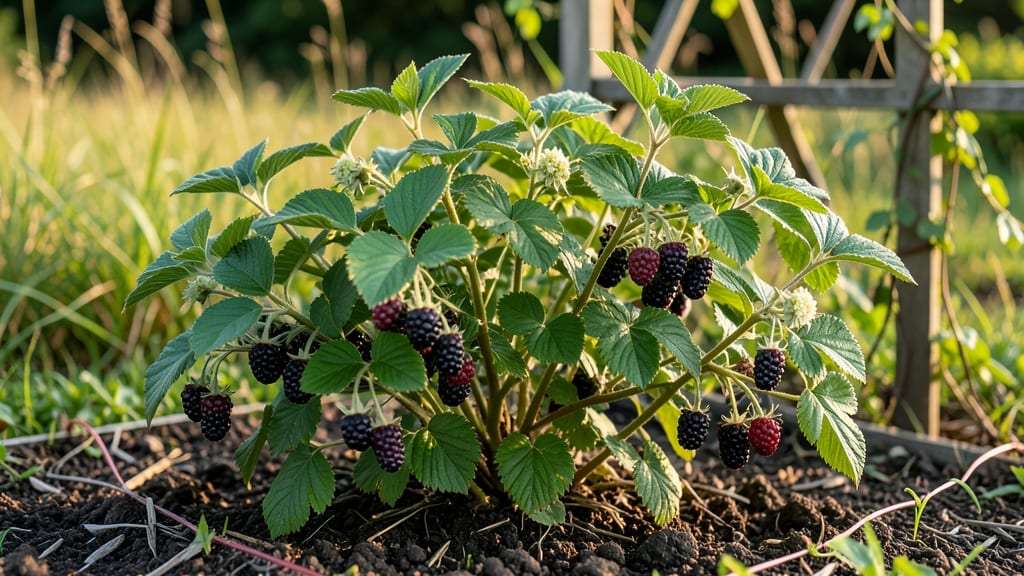
Boysenberry trees or bushes grow as vigorous, sprawling vines that resemble bushes but need sturdy trellising to manage their aggressive growth. For small spaces, choose dwarf varieties or use espalier techniques to maximize berry production without sacrificing garden real estate.
The boysenberry tree or bush isn't a true bush—they're hybrid brambles with canes that spread horizontally like vines but grow vertically like shrubs, reaching 6-10 feet without support. 🌿 The key to managing them is understanding their aggressive growth habit: left unchecked, they'll spread outward aggressively, smothering nearby plants.
That's why gardeners swear by trellising systems or espalier training, which not only saves space but also improves airflow to prevent fungal diseases. Dwarf varieties like 'Black Diamond' are bred specifically for smaller gardens, producing just as many sweet berries in a fraction of the footprint.
What many don't realize is that these space-saving methods come with trade-offs. While dwarf varieties require less room, they often need more frequent pruning to maintain productivity. The Thornless Boysenberry cultivar, for example, eliminates the painful thorns but may produce slightly smaller fruit.
For container growing, choose compact rootstocks and ensure containers are at least 18 inches deep—shallow pots restrict root development and reduce yields.
💡 In This Article
- Boysenberry Vine Growth Habits Explained
- Best Space-Saving Boysenberry Varieties for Small Gardens
Boysenberry vine growth habits explained
Boysenberries aren't true bushes—they're hybrid brambles with a unique growth structure. Their canes emerge from a deep, fibrous root system that spreads aggressively, sending up multiple shoots each year. Unlike annual plants, boysenberries are perennial, meaning they regrow from the same roots for 10-15 years with proper care.
The vines themselves can reach 6-10 feet tall when trellised, but left unsupported, they sprawl horizontally up to 15 feet wide, smothering nearby plants. 🌱
The aggressive sprawl happens because boysenberries produce new canes from the base annually, while older canes die back after fruiting. This biennial growth pattern (first year grows vegetative, second year fruits) creates dense thickets if not managed.
Trellising transforms this wild habit into vertical growth, increasing sunlight exposure by 30-40%—critical for sweet fruit development. Without support, shaded inner canes produce smaller, tart berries while outer canes bear the sweetest fruit.
The thorny stems (up to 1 inch long) further complicate unmanaged growth, making harvesting painful and inefficient.
Pruning plays a crucial role in yield and health. In late winter, cut back old canes to 6-8 inches from the ground to encourage new growth. Summer pruning involves removing weak or crossing canes to improve airflow, reducing fungal diseases like botrytis by 50%.
The trade-off? Aggressive pruning can temporarily reduce first-year yields by 20-30% as the plant redirects energy to new canes. However, long-term benefits include larger berries and easier harvesting. 🌿
For small spaces, consider the espalier technique, which trains vines along a flat surface (like a fence or wall). This method can reduce the vine's footprint by 70% while maintaining production.
The key is to space canes 12-18 inches apart on the trellis, allowing each cane to receive adequate sunlight. Without proper spacing, canes compete for resources, leading to smaller berries and reduced sweetness.
The Thornless Boysenberry cultivar is particularly well-suited for espalier, as its lack of thorns makes pruning and harvesting far easier.
Another critical factor is soil depth. Boysenberries develop deep taproots that need at least 24 inches of loose, well-draining soil to thrive. In shallow soils, roots struggle to access water and nutrients, resulting in stunted growth and poor fruiting.
This is why container growing requires 18-inch-deep pots with excellent drainage—shallow containers restrict root development and reduce yields by 30-40%. The right soil mix should contain 50% organic matter, like compost or aged manure, to support the plant's vigorous growth.
Here's what happens when you ignore these growth habits: Unmanaged boysenberry plants become tangled, thorny messes that produce small, tart berries in low quantities. The lack of airflow leads to fungal infections, and the dense canopy shades out lower canes, reducing overall productivity.
By contrast, a well-trellised plant with proper pruning can yield 5-10 pounds of berries per plant annually, with each berry weighing 1-2 grams—nearly double the size of unmanaged plants. 💫