
Trees
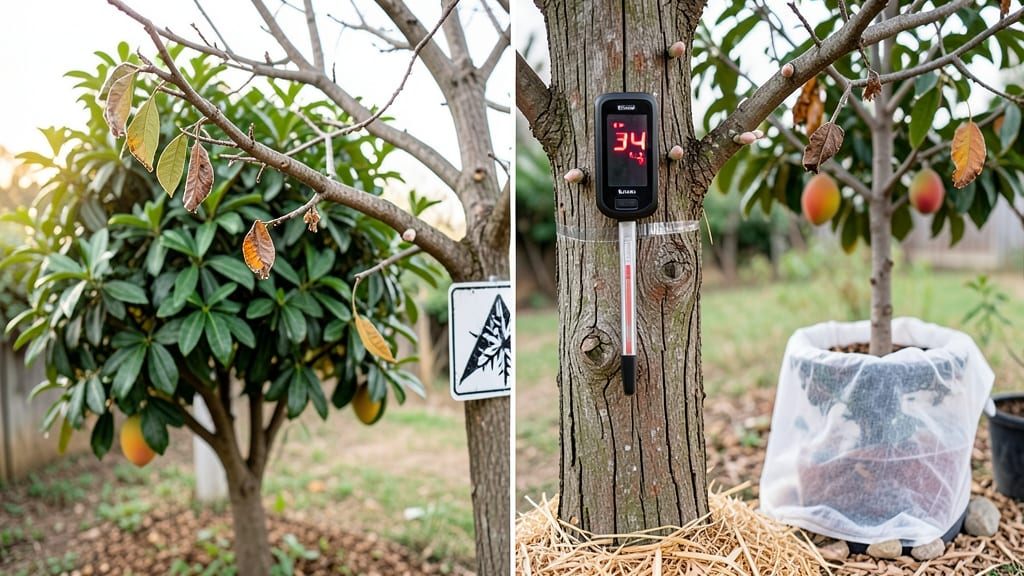
Mango trees cannot survive winter in cold climates without protection, as they thrive in USDA Zones 10-11 and suffer damage below 30°F. Young trees, potted plants, and tropical varieties need winter care like mulching, wrapping trunks, or moving indoors to prevent frost injury or death.
Mango trees are tropical plants that simply don't tolerate freezing temperatures. 🌱 In areas outside their native Zones 10-11, even a single night below 32°F can cause irreversible damage to leaves and branches. The key is understanding your local climate and implementing protective measures before the first frost arrives.
For example, gardeners in Zone 8 often use a combination of thick mulch and frost blankets to shield their trees, while those in Zone 7 may need to move potted specimens indoors entirely.
The goal is to maintain root and trunk temperatures above 40°F—any colder and you risk stunted growth or complete dieback.
What's interesting is how different parts of the tree react to cold. Leaves typically show frost damage first, turning black and crispy, while the trunk may develop cracks if temperatures drop too quickly. 🌡️ Root systems are particularly vulnerable because cold soil prevents water uptake, leading to dehydration stress.
That's why winter prep should focus on insulating both above and below ground—whether you're dealing with a young sapling or a mature tree in a container.
💡 In This Article
- USDA Hardiness Zones for Mango Trees
- Winter Protection Methods for Mango Trees
USDA hardiness Zones for mango trees
Mango trees originate from tropical regions where temperatures rarely drop below 60°F, making them highly sensitive to cold. The USDA divides growing zones based on average minimum winter temperatures, and mangoes thrive exclusively in Zones 10-11, where winters stay above 30°F.
In Zone 10 (average lows of 30-40°F), mature trees may survive brief dips with protection, but anything colder triggers cellular damage through ice crystal formation in leaves and stems.
The real danger occurs when temperatures fall below 32°F—this is when water inside plant cells freezes, rupturing cell walls and causing irreversible damage. 🌡️ Leaves show the first signs, turning black and crispy within hours, while bark may develop cracks if frozen for more than 24 hours.
Roots are equally vulnerable because frozen soil prevents water absorption, leading to dehydration stress even if air temperatures aren't extreme. For example, a Zone 8 winter (lows of 10-20°F) would kill an unprotected mango tree within days.
What makes this particularly challenging is how quickly damage occurs. Unlike hardy fruit trees that can acclimate to cold, mangoes have no cold-hardiness mechanisms. Even a single night below 30°F can kill young trees, while mature specimens may survive if protected—but only if their roots stay above 40°F.
This is why gardeners in Zone 9 (lows of 20-30°F) often use a combination of mulching and frost blankets, while those in Zone 7 (lows of 0-10°F) must move potted trees indoors entirely.
Geographically, this means mango cultivation is limited to coastal California, southern Florida, and Hawaii in the U.S., where winters rarely drop below 32°F.
Inland areas like Arizona's Zone 9b can grow mangoes outdoors with heavy winter protection, but northern states like New York (Zone 5-7) require container growing with indoor overwintering. The key difference between protected and unprotected trees is maintaining a 10°F buffer—keeping trunk temperatures above 40°F prevents fatal damage.
Interestingly, some hybrid varieties like 'Julie' or 'Ice Cream' have slightly better cold tolerance (28°F for short periods), but they still require protection.
These hybrids were developed through selective breeding to extend the tree's range, but they're not truly cold-hardy—they simply tolerate brief cold snaps better than traditional varieties. 🌱 For comparison, a citrus tree (also tropical) can survive down to 20°F with protection, but mangoes remain far more sensitive due to their thinner bark and less resilient leaves.