
Companion Plants
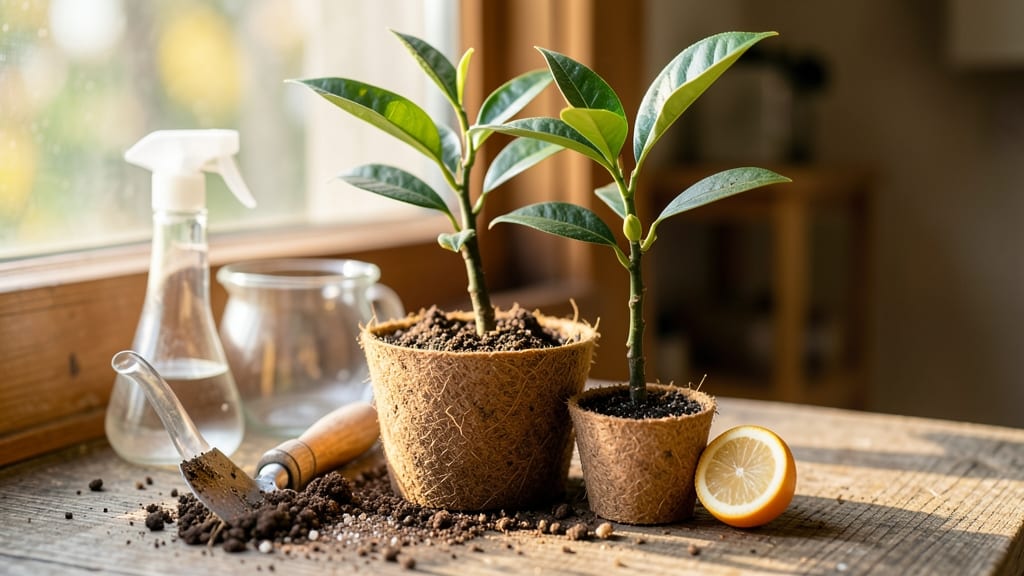
You can grow an orange tree from an orange seed, but the tree will likely produce bitter, inedible fruit. Start by drying the seed, planting it in moist soil, and keeping it warm with indirect sunlight until germination (2-4 weeks). Patience is key, as maturity takes 5-10 years.
Growing citrus from seeds is a rewarding but long-term project that requires careful attention to detail. 🌱 The seeds you save from store-bought oranges often come from hybrid varieties bred for taste and shelf life—not for fruit quality.
This explains why your homegrown tree might produce small, seedy, and bitter oranges that aren't suitable for eating. That said, the process itself teaches valuable lessons about plant genetics and citrus cultivation.
For best results, I recommend selecting seeds from organic or heirloom oranges when possible, as these varieties might retain some of their original traits. The germination phase is particularly delicate—maintaining consistent moisture and warmth (around 70-75°F) is crucial during those first few weeks.
Many gardeners swear by using a seedling heat mat to simulate tropical conditions, which can dramatically improve sprouting rates.
💡 In This Article
- Orange Seed Germination Process Explained
- Caring for a Seed-Grown Orange Tree: Long-Term Tips
Orange seed germination process explained
The orange seed's journey begins with its natural dormancy state. When you extract a seed from an orange, it's coated in a thin, protective layer called the testa, which helps regulate moisture and oxygen intake.
To break this dormancy, start by drying the seed completely for 3-5 days at room temperature—this mimics the natural drying process that occurs when fruit falls to the ground.
Once dry, you can either plant it directly or soak it in warm water for 12-24 hours to soften the testa and kickstart hydration. 🌱
For ideal germination, use a well-draining potting mix with a 50/50 blend of peat moss and perlite, which mimics the airy, slightly acidic soil of citrus trees' native habitats. The soil should stay consistently moist (like a wrung-out sponge) but never soggy—overwatering causes root rot in citrus seedlings.
Place the seed ½ inch deep in the soil and maintain a temperature between 70-75°F using a seedling heat mat if needed. Germination typically occurs within 2-4 weeks, though some seeds may take up to 8 weeks.
Once sprouted, the seedling enters a critical phase where light becomes essential. Provide bright, indirect sunlight (like an east-facing window) for the first 2 weeks to prevent leggy growth. After this period, you can gradually introduce 4-6 hours of direct sunlight daily.
The first leaves will be small and rounded, but true citrus leaves appear later with their distinctive glossy texture and serrated edges. At this stage, avoid fertilizing—seedlings are sensitive to nutrients and can burn if overfed. 💛
What most gardeners overlook is the role of humidity during germination. Citrus seeds thrive in environments with 50-70% humidity. If your home is dry, cover the seedling with a clear plastic dome or use a humidity tray filled with pebbles and water.
This creates a mini greenhouse effect that replicates tropical conditions. Without proper humidity, seedlings often develop brown tips or stunted growth—a common issue that can be easily prevented with a simple plastic cover.
Here's a pro tip: If you're planting multiple seeds, label them with the variety (e.g., "Navel Orange") and date, as this helps track growth patterns. Some seeds may germinate faster than others, and keeping records helps you adjust care routines.
For example, if one seedling emerges 10 days earlier than its siblings, it may need slightly more water or sunlight to stay on par with its peers. 🌟
Finally, be patient with the root development. The first roots grow downward (taproot) while lateral roots spread horizontally. Once the seedling reaches 3-4 inches tall and has 4-6 true leaves, it's ready for its first transplant into a slightly larger pot.
This gradual transition prevents shock and encourages stronger root systems. The key is to handle the seedling gently—citrus roots are delicate and can break easily during this early stage. ✨