
Propagation
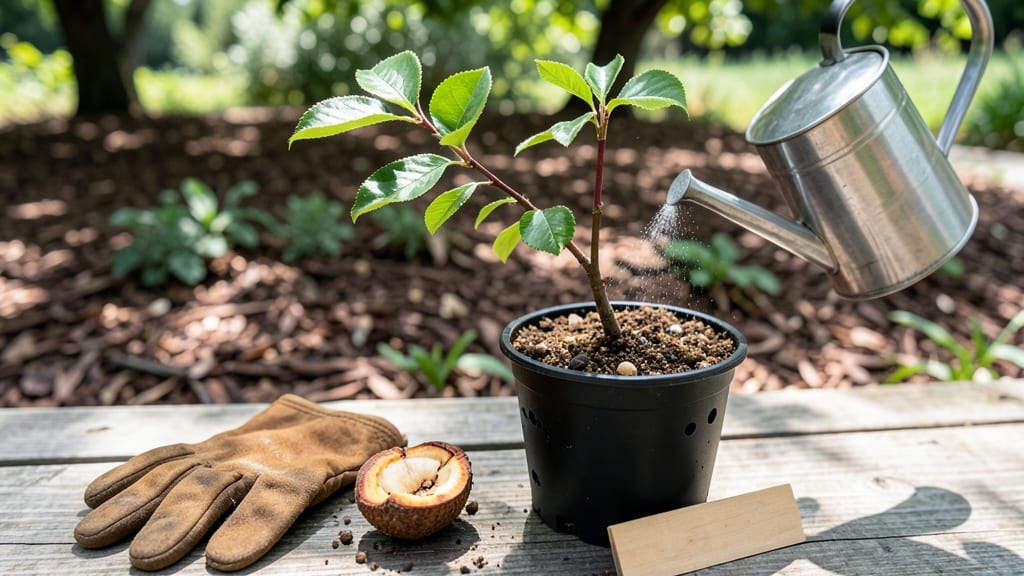
You can start a peach tree from a peach pit, though it requires patience and specific conditions to succeed. The process involves soaking the pit for 24 hours, planting it in well-draining soil, and maintaining cold, moist conditions for 3-6 months before transplanting outdoors in spring.
Growing a peach tree from a pit is more art than science—success hinges on breaking the seed's natural dormancy. 🌱 Unlike store-bought seedlings, homegrown trees may take 2-5 years to bear fruit, and their quality varies since the genetics aren't controlled.
I've found that using pits from ripe, organic peaches (not canned) improves germination odds, though even then, only about 10-30% of pits sprout. The cold stratification mimics winter conditions, tricking the seed into thinking it's time to grow.
Once sprouted, young seedlings need bright indirect light and consistent moisture—overwatering is a common killer. 💧 Transplanting too early can shock the delicate roots, so wait until all frost risk has passed and soil temperatures reach 60°F+.
While the process is unpredictable, the reward of watching a tree you grew from scratch produce fruit makes it worthwhile for patient gardeners.
💡 In This Article
- Understanding Peach Pit Germination Science
- Step-by-Step Peach Pit Propagation Guide
Understanding peach pit germination science
Peach pits enter a state called dormancy—a survival mechanism that prevents germination until conditions are ideal. Most peach seeds experience combination dormancy, meaning they need both physical scarification (breaking the hard outer shell) and cold stratification (mimicking winter).
The pit's stone-like endocarp (the hard shell) can block water absorption, while the embryo inside requires 4-8 weeks of cold (34-40°F) to break chemical dormancy. Without this, enzymes that trigger growth remain inactive, leaving the seed lifeless despite moisture.
Temperature plays a critical role: at 50°F or below, the seed's metabolic processes slow to prepare for germination, while above 60°F, it may rot before sprouting.
Humidity must stay between 40-60%—too dry, and the seed desiccates; too wet, and fungal growth takes over. 🌱 The pit's genetic makeup also matters: commercial peaches often come from hybridized seeds that may not grow true to the parent tree, resulting in weaker or even non-fruiting trees.
This unpredictability is why gardeners report success rates as low as 5-20% for peach pits.
Light exposure is another factor—peach seeds need darkness to germinate. When planted too shallowly, they may produce weak, leggy sprouts that struggle to survive. The ideal depth is 1-2 inches below soil, where light doesn't penetrate but moisture and air circulate.
Once the seed absorbs enough water, it swells and cracks the endocarp, allowing the radicle (root) to emerge. This process can take 2-4 weeks under perfect conditions, but often stretches to months if stratification is incomplete.
What most people overlook is the seed's natural hormonal balance. Gibberellins (growth hormones) and abscisic acid (a growth inhibitor) must reach a precise equilibrium for germination. Cold stratification helps regulate this balance, but if temperatures fluctuate too much, the seed may never "wake up."
For example, a pit kept at 70°F for a month might never sprout, even if later exposed to cold—it's missed its window for hormonal adjustment. 💫
Even when germination succeeds, the resulting seedling's vigor depends on the parent tree's health. Pits from disease-resistant varieties or organically grown peaches tend to produce hardier seedlings. Chemical treatments (like fungicides) on commercial fruit can leave residues that inhibit germination, so organic sources are preferable.
The science shows that while peach pits can grow into trees, nature stacks the odds against you—making each successful sprout a small miracle.