
Pruning
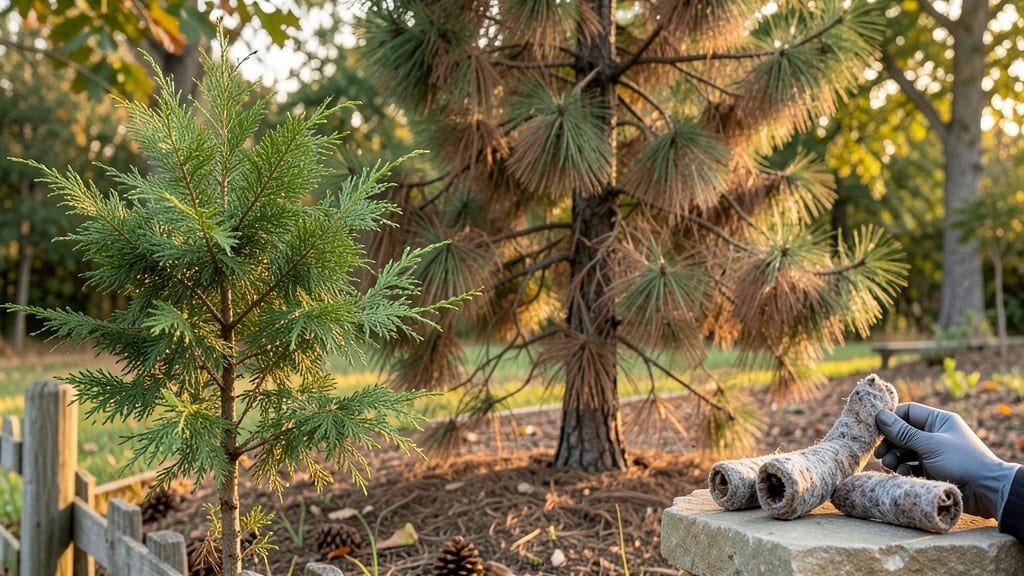
Bagworms turn your cedar trees into brown, sagging messes faster than you can say "fall cleanup." 🌿 The good news? A sharp pair of pruners and the right timing can remove these pests within 30 minutes—no ladder required for most infestations.
I learned this the hard way after watching my favorite cedar's branches droop under the weight of last year's bags.
These fuzzy caterpillars spin protective cases that look like tiny pinecones, and by the time you notice them, they've already stripped the tree of needles. The key is acting before they pupate—typically between late May and early July—when they're most vulnerable.
Pruning them off early saves your tree from permanent damage and stops the cycle before next year's hatch.
You'll end up with a tree that looks full and healthy again, not just a skeleton with a few stubborn branches. The bags drop to the ground like confetti, and you can crush them or toss them in soapy water—no chemicals needed.
This method works best for small to medium infestations, but even heavy cases can be tackled in stages.
Works for all cedar varieties, from dwarf to towering giants, and prevents future outbreaks if you stay vigilant. The secret? Check your trees every two weeks during peak season—early detection is your fastest defense.
What Triggers Bagworm Infestations
Bagworms thrive in cedar trees due to a mix of environmental, biological, and human-related factors. Understanding these causes helps you take proactive steps to prevent or manage outbreaks before they spiral out of control.
Let’s break down the key reasons why these pests target your trees—and how they become such a nuisance.
Cedar trees under stress are prime targets for bagworms because their weakened defenses make them easier to colonize. Here’s why stress plays a role:
- Competition for Resources: Overcrowded cedars (or those planted too close to other trees/shrubs) struggle to access sunlight, water, and nutrients.
Weakened foliage becomes an inviting buffet for hungry larvae. - Poor Soil Conditions: Compacted, nutrient-poor, or overly wet/dry soil stresses trees, reducing their ability to produce defensive chemicals like tannins (which deter insects). - Drought or Heat Stress: Prolonged dry spells or extreme heat force trees to divert energy to survival rather than pest resistance.
Bagworms detect this vulnerability and strike. - Improper Pruning: Aggressive or irregular pruning (e.g., removing too many branches at once) can shock the tree, making it more susceptible to infestations.
Actionable Tip: 💡 Monitor your cedars for signs of stress—yellowing needles, stunted growth, or excessive leaf drop—and address soil health or watering habits promptly.
Bagworms aren’t just accidental guests—they’re highly efficient at exploiting cedar trees thanks to their biology:
- One Generation per Year: Unlike some pests that take multiple years to mature, bagworms complete their life cycle in one season, allowing populations to explode quickly. - Females Never Leave the Bag: After mating, female bagworms (which are wingless) stay inside their protective silk bags to lay hundreds of eggs.
This means the infestation grows exponentially without adult dispersal. - Male Moths Are Short-Lived: Male bagworms emerge as moths, mate, and die within days. Their sole purpose?
Fertilizing females to ensure the next generation’s survival. - Early Hatching Timing: Eggs hatch synchronously in late spring/early summer, releasing thousands of tiny larvae that immediately start feeding on fresh needles.
Key Insight: 🔍 The earlier you spot the first bags (often in May–June), the harder it is to control the outbreak. Larvae grow rapidly, and by midsummer, they’re nearly full-sized.
Not all trees are equally appealing to bagworms—cedars are a favorite for these reasons:
- Soft, Nutrient-Rich Needles: Cedar needles contain high levels of proteins and lipids, which are ideal for larval growth.
Other trees (like pines or spruces) may host bagworms, but cedars are their primary food source. - Evergreen Nature: Unlike deciduous trees that shed leaves seasonally, cedars retain their foliage year-round.
This provides a continuous food supply for bagworms, even in winter. - Low Natural Predators: While birds, parasitic wasps, and other insects prey on bagworms, cedar trees in urban or suburban areas often lack enough natural predators to keep populations in check.
Pro Tip: ✨ If your cedar is surrounded by other evergreens (like junipers or arborvitae), bagworms may spread more easily between hosts.
Bagworm outbreaks are heavily influenced by weather conditions, which can either suppress or supercharge infestations:
| Weather Factor | How It Affects Bagworms | What to Watch For |
|---|---|---|
| Mild Winters | Fewer egg or larval deaths over cold months → larger surviving populations. | Areas with short winters see worse outbreaks. |
| High Humidity | Moisture keeps eggs from drying out and helps larvae stay hydrated while feeding. | Damp springs = earlier hatching. |
| Drought Followed by Rain | Stressed trees (from drought) rebound with fresh growth, attracting hungry larvae. | Post-drought blooms = bagworm feast time. |
| Warm, Dry Summers | Accelerates larval growth and increases mating success rates. | Hot spells = faster infestation spread. |
Actionable Tip: 🌡️ If your region experiences unusually warm winters or prolonged dry spells, be extra vigilant for bagworm activity in spring.
Sometimes, well-meaning actions inadvertently create the perfect conditions for bagworms:
- Lack of Pruning: Dead or dying branches provide shelter and moisture for bagworm bags, protecting them from natural predators and treatments. - Over-Fertilization: While you might think feeding your tree helps, excess nitrogen can make cedars grow too soft and tender, making them more palatable to larvae. - Ignoring Early Signs: Many homeowners mistake bagworms for twigs, pinecones, or bird nests until the damage is severe.
Early removal is critical. - Moving Infested Plants: Unknowingly transporting bagworm-infested clippings or nursery trees can introduce the pest to new areas.
Prevention Hack: 🎯 Always inspect new plants or cuttings before bringing them home, especially if they’re from areas with known bagworm problems.
Natural Ways to Remove and Prevent Bagworms
Bagworms can turn your cedar trees into a tangled mess, but the good news is you can tackle them effectively—without harsh chemicals. Below, we’ve mapped out practical, eco-friendly solutions tailored to the root causes of infestations.
Whether you’re dealing with early signs or a full-blown outbreak, these methods will help you restore your trees’ health while keeping your yard safe for kids and pets.
If you spot small bags (quarter-sized) or silk webbing in late spring or early summer, you’ve got a window to intervene before the worms mature.
🍳 Manual Removal (Best for Small Infestations) How to do it:
- 👨🍳 Put on gloves and safety goggles—bagworms can irritate skin and eyes.
- 🥘 Shake or scrape bags into a bucket of soapy water (1 tbsp dish soap per gallon).
This kills larvae on contact. - 🔪 For stubborn bags, use pruning shears to snip them off branches, then dispose of them in a sealed trash bag. - ⏰ Do this in the morning when larvae are sluggish and easier to remove.
💡 Pro Tip: Focus on new growth areas first—these are where bagworms love to hide.
Once larvae grow larger (over 1 inch), manual removal becomes tricky. These natural sprays disrupt their life cycle without harming beneficial insects.
🌡️ Bacillus thuringiensis (Bt) – The Gold Standard
- Why it works: A naturally occurring soil bacterium that targets caterpillars (including bagworms) by disrupting their digestive systems.
- How to apply:
- Mix 1 tbsp Bt per gallon of water in a spray bottle or backpack sprayer.
- 🎯 Spray thoroughly on the underside of branches and areas with webbing (larvae hide there!).
- ✨ Best time: Early morning or late evening to avoid harming bees.
- Reapply every 7–10 days until bags turn brown and drop (signs of death).
💡 Pro Tip: Bt works best before larvae pupate (usually by late July). After that, it’s less effective.
🍃 Neem Oil – A Multi-Purpose Repellent
- Why it works: Disrupts feeding and growth hormones, making it harder for larvae to survive.
- How to apply:
- Mix 1–2 tbsp neem oil + 1 tsp mild soap per gallon of water.
- Spray directly on bags and foliage, focusing on new growth.
- Reapply every 5–7 days during active infestation periods (May–August).
⚠️ Warning: Avoid spraying neem oil on hot days (above 90°F)—it can burn leaves.
🌱 Horticultural Oil – Smothering the Problem
- Why it works: Coats larvae in a thin film, cutting off their oxygen supply.
- How to apply:
- Use a pre-mixed horticultural oil (like dormant oil) or mix 1 tbsp vegetable oil + 1 tsp soap per gallon of water.
- Spray evenly on all surfaces of branches and bags.
- Best for: Late-stage infestations when other methods aren’t enough.
💡 Pro Tip: Test a small branch first—some trees (like arborvitae) are sensitive to oils.
Prevention is key! If your cedar trees are chronically infested, these steps will help break the bagworm cycle for good.
🔪 Strategic Pruning to Reduce Hideouts
- 🌿 Trim back dense branches where bags cluster—this improves airflow and makes it harder for larvae to spin webs.
- 🪓 Remove heavily infested branches (up to ⅓ of the tree’s volume if necessary) and burn or bag them (do not compost!).
- ✂️ Prune in late winter or early spring (before eggs hatch) to remove egg sacs hiding in branch crevices.
💡 Pro Tip: Use sterilized pruners to avoid spreading pests to healthy trees.
🛡️ Physical Barriers: Protect New Growth
- 🧶 Wrap young cedar trees in fine mesh netting (like tulle or insect barrier fabric) to block adult moths from laying eggs.
- 🪟 Install pheromone traps in early summer to catch male moths before they mate.
Once you’ve treated an infestation, stop it from coming back with these low-effort maintenance steps:
| Method | How It Works | When to Do It |
|---|---|---|
| 🌿 Mulch with cedar chips | Repels moths naturally. | Spring and fall. |
| 🌱 Plant companion plants | Marigolds, lavender, and catnip deter moths. | Year-round (perennial plants). |
| 💦 Water deeply in drought | Stressed trees attract more pests. | During dry spells. |
| 🕵️ Regular inspections | Catch eggs/bags before they multiply. | Monthly from May–September. |
🎯 Ultimate Goal: A healthy cedar tree is the best defense—strong branches, good airflow, and minimal stress make it harder for bagworms to take hold.
🔥 Ready to reclaim your cedar trees? Start with manual removal and Bt spray for active infestations, then prune and prevent to keep them bagworm-free for years. Your trees (and your sanity!) will thank you.
Frequently asked questions
How do I tell if those brown bags on my cedar are bagworms?
Look for 1–2 inch cylindrical bags that look like tiny pinecones or twigs. When you gently shake a branch, you might see fuzzy caterpillars dropping to the ground. These bags are actually protective cases the larvae spin around themselves—if you cut one open, you’ll find a pale green worm inside.
Can I use regular dish soap to kill bagworms?
Yes! Mix 1 tablespoon of dish soap per gallon of water in a spray bottle and apply directly to the bags. The soap breaks down their protective coating. For best results, spray in the morning when larvae are sluggish. Reapply every 3–5 days until all bags turn brown and fall off.
Why do bagworms only attack cedar trees?
Cedars have soft, nutrient-rich needles that bagworms love, plus their evergreen nature provides a year-round food source. Other trees like pines or spruces may host them, but cedars are their primary food source. The lack of natural predators in suburban areas also makes cedars easy targets.
Is it too late to treat bagworms if they’re already 1 inch long?
Not necessarily! While early treatment is easier, you can still act. Use Bacillus thuringiensis (Bt) or horticultural oil—these work best on larger larvae too. For severe cases, prune infested branches and dispose of them in sealed bags. The key is consistency: reapply treatments every 7–10 days until all bags drop.
Will bagworms kill my cedar tree?
Heavy infestations can weaken trees over time, but they rarely kill mature cedars. The real danger is chronic defoliation, which stresses the tree and makes it vulnerable to disease. Act fast: remove 80% of bags in the first treatment to break the cycle. A healthy tree can recover even after severe damage.