
Pruning
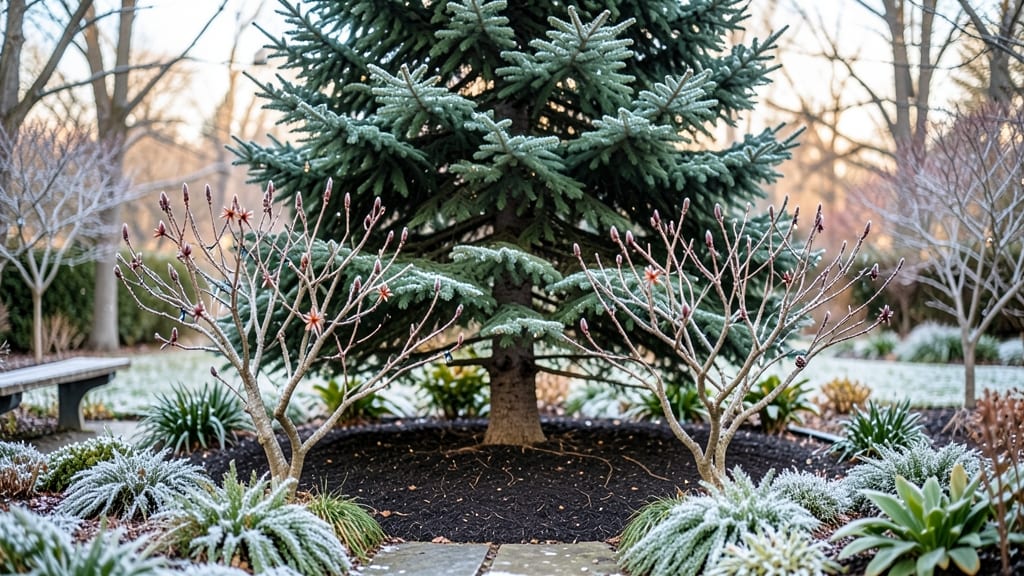
Your front yard could look like a painting all year—just pair a Christmas tree with magnolias. ✨ The contrast of evergreen needles against velvety magnolia blooms creates a dramatic vertical statement that shifts from winter evergreen to spring floral drama.
Start with spacing: plant magnolias 10-15 feet from the tree’s drip line to avoid root competition while keeping the visual harmony intact. Southern magnolias thrive in partial shade under the tree’s canopy, while star magnolias need full sun—place them to the east or west for balanced light.
By late winter, the tree’s structure provides a perfect backdrop for magnolia buds swelling into rosy-pink or creamy-white blooms. In summer, the tree’s foliage softens the bold magnolia leaves, while fall’s golden needles complement the tree’s changing hues.
This combo works in any climate zone where both plants thrive—just adjust spacing for dwarf varieties. The result? A garden feature that’s stunning in every season.
📚 In This Guide
- What you need
- Instructions
- Tips and common mistakes
- Wrapping up and next steps
What you need
- ● Magnolia tree: A small, slow-growing variety like Magnolia grandiflora or Magnolia stellata (3–5 feet tall, potted or bare-root).
- ● Large decorative container: A 12–18-inch-wide pot or planter with drainage holes (choose a rustic or elegant style to match your aesthetic).
- ● High-quality potting mix: A well-draining blend (e.g., 60% peat moss, 30% perlite, 10% compost).
- ● Slow-release fertilizer: A balanced, organic option (e.g., 10-10-10 or a magnolia-specific formula).
- ● Pruning tools: Bypass pruners (for clean cuts on small branches).
- ● Loppers (for thicker stems, if needed).
- ● Sharp pruning saw (for stubborn branches).
- ● Mulch: Pine bark or shredded cedar (2–3 inches) to retain moisture and suppress weeds.
- ○ Decorative elements (optional but fun!): Miniature Christmas ornaments (non-toxic, if used indoors).
- ● Fairy lights or solar-powered string lights (weatherproof for outdoor use).
- ● Artificial snow or faux greenery for a festive touch.
- ● Gloves: Heavy-duty gardening gloves to protect hands during pruning.
- ● Watering can or hose: With a gentle spray nozzle for post-pruning hydration.
- ● Measuring tape: To ensure even spacing for a balanced tree shape.
- ● Spray bottle (for indoor setups): To mist leaves if keeping the tree inside.
- ● Knowledge of magnolia care: Research your specific variety’s sunlight, water, and pruning needs beforehand!
Step-by-Step instructions for designing a Christmas tree with magnolias
Here's how to create a bold vertical garden that thrives year-round with magnolia's evergreen structure and seasonal blooms.
🌱 Step 1: Select and Prepare Your Magnolia Specimens
Choose dwarf or semi-dwarf magnolia varieties like Magnolia grandiflora 'Little Gem' or Magnolia stellata—they'll stay compact enough for layered planting. Prune each plant to remove lower branches up to 12-18 inches from the base, creating a natural tiered silhouette. This mimics the layered look of a Christmas tree while ensuring the lower branches won't overcrowd the space.
I always sterilize pruning shears with rubbing alcohol between cuts to prevent disease spread. After pruning, soak the cut ends in water for 10 minutes to help seal the wounds and reduce sap bleeding. This step is crucial—skipping it can lead to fungal infections that weaken your plants before they even establish.
🪴 Step 2: Build a Multi-Tiered Planting Structure
Construct a vertical frame using 4x4 pressure-treated lumber cut into 24-inch vertical posts and 12-inch horizontal supports. Assemble a triangular pyramid shape with three levels: the base at 6 feet, middle at 4 feet, and top at 2 feet. This mimics a Christmas tree's natural taper while providing stable planting platforms.
Line each platform with landscape fabric to prevent soil from falling through gaps. I use a heavy-duty fabric with ¼-inch mesh—it lets roots breathe while holding soil securely. Fill each tier with 3 cubic feet of well-draining potting mix (equal parts peat moss, perlite, and compost) to ensure proper root development.
✂️ Step 3: Plant and Stagger Magnolias for Year-Round Interest
Begin with the largest magnolia at the base, planting it in the center of the bottom platform. Work upward, placing progressively smaller plants in each tier. Space them 18-24 inches apart to allow for future growth while maintaining the tree-like shape. The key here is to alternate between evergreen and deciduous varieties—evergreens like Magnolia grandiflora provide winter structure, while deciduous types like Magnolia soulangeana offer spring blooms.
After planting, water deeply until moisture reaches 6 inches down in each tier. I use a soaker hose to avoid disturbing the soil surface. Mulch each platform with 2 inches of pine bark to retain moisture and regulate soil temperature. This layered approach ensures your "tree" stays lush through all seasons without requiring constant watering.
☀️ Step 4: Position for Optimal Light and Seasonal Care
Place your magnolia tree in full sun to partial shade, depending on your climate. Southern exposures work best for most magnolias, but varieties like Magnolia 'Black Tulip' tolerate partial shade. The triangular structure naturally channels sunlight to all branches, preventing the "browning" that occurs when lower limbs get shaded out.
During the first year, monitor soil moisture weekly—magnolias hate soggy roots but also can't tolerate drought. I check by inserting my finger 2 inches deep; if it feels dry, water thoroughly. In winter, wrap the base with burlap to protect young roots from freezing temperatures. This simple step prevents root heave and ensures your tree stays healthy through cold snaps.
🌿 Step 5: Prune and Maintain for Long-Term Structure
Prune annually in late winter or early spring before new growth begins. Remove any crossing branches or those growing inward to maintain the tree's open, airy form. I always step back and visually check the shape—if one side looks denser, I thin it out slightly. This prevents the tree from becoming too crowded, which can lead to disease.
Fertilize lightly in early spring with a balanced 10-10-10 formula applied at half strength. Over-fertilizing causes rapid, weak growth that's prone to breakage. Instead, focus on building strong root systems. With proper care, your magnolia Christmas tree will reward you with fragrant blooms in spring and evergreen foliage year-round—making it the ultimate vertical garden statement.
Tips & tricks for perfect magnolia Christmas trees
Creating a stunning magnolia Christmas tree takes thoughtful planning—here's how to elevate your design from ordinary to extraordinary.
Pruning Precision: When removing lower branches in Step 1, aim for clean cuts just above outward-facing buds. This encourages new growth in the right direction while maintaining that tiered look. I use sharp bypass pruners and make cuts at a 45-degree angle to prevent water pooling, which can lead to rot. The 10-minute water soak after pruning is non-negotiable—it's the difference between healthy plants and ones struggling with fungal issues.
Structural Stability: For Step 2, reinforce your 4x4 frame with galvanized metal brackets at each corner joint. The triangular shape is brilliant, but without proper reinforcement, wind can cause the structure to sway dangerously. I also recommend pre-drilling holes for your screws to prevent wood splitting, especially with pressure-treated lumber which can be more brittle. The 3 cubic feet of potting mix per tier is perfect, but weigh down the edges slightly to prevent shifting during watering.
Plant Placement Strategy: In Step 3, plant your largest magnolia slightly off-center toward the front of the base tier. This creates visual depth and prevents the tree from looking flat. For the middle and top tiers, stagger plants diagonally rather than in straight lines—this mimics natural branching patterns. The 18-24 inch spacing gives you flexibility to adjust as plants grow, but don't exceed 24 inches or you'll create gaps that look unnatural.
Seasonal Light Management: During Step 4, consider adding adjustable shade cloth to the southern side of your tree during summer months. Magnolias appreciate filtered light in hot climates, and this prevents leaf scorch while still allowing sunlight to reach all branches. I've seen beautiful magnolia trees turn brown because homeowners assumed "full sun" meant unfiltered afternoon rays. The 2-inch deep moisture check is your best friend—it's better to water thoroughly once than give light sprinkles daily.
Pro Tips for Christmas Tree With Magnolias
- Creating a stunning magnolia Christmas tree takes thoughtful planning—here's how to elevate your design from ordinary to extraordinary.
- Pruning Precision: When removing lower branches in Step 1, aim for clean cuts just above outward-facing buds.
- Structural Stability: For Step 2, reinforce your 4x4 frame with galvanized metal brackets at each corner joint.
Frequently asked questions
Got questions about creating a stunning Christmas tree with magnolias? Here are some answers to help you bring this elegant vision to life—without the hassle!
When is the best time to plant magnolias for a Christmas tree effect?
Plant magnolias in early spring or fall (3–4 months before your first frost) for optimal root growth. If you’re layering them like a tree, space them 1–2 feet apart and prune aggressively in late winter to shape them. For a year-round look, choose evergreen varieties like Magnolia grandiflora or M. virginiana.
Can I use any magnolia species for this design?
Not all magnolias work—opt for smaller, slow-growing varieties like Magnolia stellata (star magnolia) or M. ‘Little Gem’. Avoid giant species (e.g., M. grandiflora) unless you have decades to wait for a tree shape! Prune regularly to maintain symmetry, and avoid deciduous types (like M. soulangeana) if you want year-round foliage.
How long does it take to create a full Christmas tree look?
With consistent pruning and layering, you can achieve a miniature tree in 3–5 years. For a bold statement, plant 3–5 magnolias in a tight cluster and prune annually in late winter. Patience is key—think of it as a living sculpture! Use support stakes in the first year to encourage upward growth.
What if my magnolias aren’t growing as expected?
Troubleshoot with these fixes:
Yellow leaves? Overwatering or poor drainage—amend soil with sand or perlite.
No new growth? Prune back 1/3 of the plant in late winter to stimulate regrowth.
Pests (aphids, scale)? Spray with neem oil or insecticidal soap.
Magnolias thrive in partial shade and acidic soil (pH 5.0–6.0)—test your soil if growth stalls!Are there alternatives if magnolias are too tricky?
Try these low-maintenance evergreens for a similar look:
- Podocarpus (e.g., ‘Shamrock’)—fast-growing, dense, and deer-resistant.
- Thuja occidentalis ‘Smaragd’—compact, columnar, and great for hedging.
- Ilex crenata ‘Green Lustre’—hardy, glossy, and perfect for shaping.
Wrapping up and next steps
A Christmas tree with magnolias isn’t just a holiday centerpiece—it’s a year-round masterpiece that brings elegance and life to your garden. By blending seasonal charm with evergreen structure, you’ve created a vertical garden that thrives in every season, from snowy winters to blooming springs.
This project proves that creativity and nature can work hand-in-hand to elevate your outdoor space.
Now that you’re inspired, why not take the next step? Sketch your design, gather your materials, and start transforming your space into a stunning, multi-seasonal garden. Your future self—and your neighbors—will thank you! 🌿✨