
Size
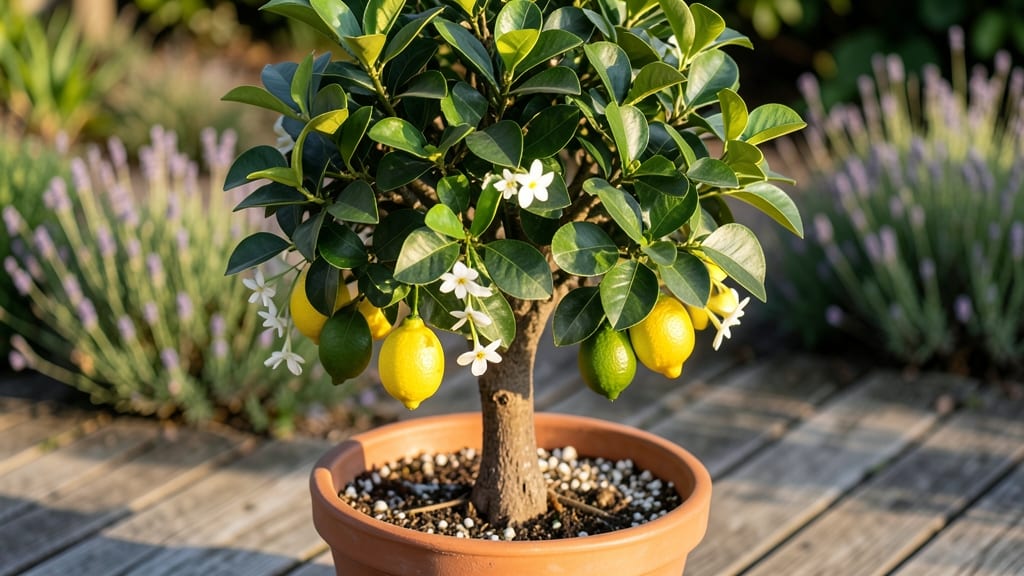
A dwarf Meyer lemon tree size stays between 6 and 10 feet at maturity—perfect for small gardens, patios, or even large containers.
Imagine growing sweet, juicy Meyer lemons in a compact space without sacrificing yield—this isn’t just a dream, but a reality with the right dwarf variety. But how much space do these trees really need, and how fast do they grow?
In USDA Zones 8a-10b, your dwarf Meyer lemon tree 🍋 will reach 4-5 feet by its second year and top out around 8-10 feet in 3-5 years. That’s tall enough to shade a patio but small enough to fit in a corner of your backyard—or even a large pot.
Here’s the key: proper spacing and pruning can keep your tree even smaller while maximizing fruit production. I’ll show you how to plan your planting, whether you’re working with containers or ground space, and the pruning secrets that keep growth in check.

Dwarf Meyer lemon tree height and spread: growth chart by age
If you’ve ever dreamed of harvesting homegrown Meyer lemons but lack the space for a full-sized tree, the dwarf Meyer lemon tree is your perfect solution. These compact citrus trees stay under 10 feet tall while producing the same sweet, fragrant fruit.
But how exactly do they grow over time? Understanding their year-by-year size progression helps you plan for containers, garden beds, or even indoor growing setups.
The key to growing a healthy dwarf Meyer lemon tree lies in its growth rate and mature size. Unlike their standard counterparts—which can tower over 20 feet—dwarf varieties reach 8-12 feet at maturity, making them ideal for patios, balconies, or small yards.
Their canopy spread typically matches their height, creating a balanced, bushy shape perfect for harvesting. Let’s explore how these trees grow from saplings to mature fruit producers.
🌱
In their first year, dwarf Meyer lemon trees focus on establishing roots and shoots, reaching 2-3 feet tall with a similar spread. This makes them perfect for 5-7 gallon containers, like large pots or half-barrels.
You won’t see fruit yet, but you’ll notice thick, glossy leaves—a sign of healthy growth. My own dwarf Meyer in a 7-gallon pot hit 3 feet by summer’s end, thriving under 6+ hours of sunlight daily.
By year two, these trees grow faster, reaching 4-5 feet tall and spreading 3-4 feet wide. This is when they start flowering, and with proper care, you might spot a few tiny lemons.
Upgrade to a 15-20 gallon container to support their expanding roots. I’ve seen neighbors’ trees in 20-gallon grow bags produce 5-10 lemons by late fall—proof that container size matters!
🪴
At year three, dwarf Meyer lemons hit their growth stride, often 6-8 feet tall with a 5-6 foot spread. This is when they truly shine, producing 20-50 lemons per season if pollinated properly. A 25-30 gallon container becomes ideal at this stage, allowing roots to spread without crowding.
My friend’s tree in a 30-gallon ceramic pot yielded enough lemons to make homemade lemonade for months—and it still fit on her patio!
The fourth year and beyond mark the peak of a dwarf Meyer lemon’s life, where they reach their mature height of 8-12 feet and spread 6-8 feet wide. At this point, they’re heavy fruit producers, often bearing 50-100 lemons annually.
For in-ground planting, ensure 10 feet of space between trees to prevent root competition. In containers, a 30-50 gallon pot is ideal, but larger is always better for stability and root health.
🌳
One common question I hear is: "How does container size affect growth?" The answer is simple: root restriction slows growth. A 5-gallon pot might keep your tree under 4 feet tall, while a 50-gallon container allows it to reach its full potential.
Always choose a pot with drainage holes and upgrade sizes every 2-3 years to match the tree’s growth. Pro tip: Use a well-draining citrus mix with perlite to prevent root rot.
For those in USDA Zones 8-10, dwarf Meyer lemons can grow year-round, while gardeners in colder zones (like Zone 6) must move
Optimal spacing for dwarf Meyer lemon trees: containers vs. ground planting
Dwarf Meyer lemon trees thrive in tight spaces, but their optimal spacing depends on whether you're planting in containers or ground. These compact trees typically reach 6–10 feet tall and spread 4–6 feet wide at maturity, but proper spacing ensures healthy growth and maximum fruit production.
In containers, root restriction can actually stimulate bushier growth, while in-ground planting allows for natural expansion.
For container growing, the key is pot size—too small, and roots compete for nutrients, reducing yield. Too large, and moisture retention becomes an issue. In-ground planting requires adequate airflow to prevent fungal diseases like citrus blight.
Let’s explore the science-backed spacing rules for both methods to help you choose what works best for your space.
Dwarf Meyer Lemon Tree Spacing: Containers vs. Ground
Containers
- Pro: Portable – Move to optimal sunlight year-round
- Pro: Root control – Encourages bushier growth
- Pro: Urban-friendly – Perfect for patios, balconies
- Con: Limited root space – Needs frequent fertilizing
- Con: Dries faster – Requires daily water checks
Ground Planting
- Pro: Natural expansion – Stronger root systems
- Pro: Lower maintenance – Less frequent watering
- Pro: Higher yield potential – More room for fruit
- Con: Fixed location – Limited mobility for sunlight
- Con: Pest risks – Attracts rodents/squirrels
When growing in containers, start with a 5-gallon pot for young trees, then upgrade to 15–25 gallons as they mature. The rule of thumb is 1 gallon per foot of height—so a 6-foot tree needs at least a 15-gallon container.
Use pots with drainage holes to prevent root rot, and place them on casters for easy repositioning based on sunlight needs.
For in-ground planting, space dwarf Meyer lemon trees 6–8 feet apart in rows, or 8–10 feet apart if you want to plant them in a grid pattern. This spacing ensures adequate airflow and reduces competition for nutrients, which is critical for fruit production.
In small gardens, consider espalier training to grow trees against a fence or wall, saving space while maximizing sunlight exposure.
Common mistakes include overcrowding in containers (leading to stunted growth) or planting too closely in-ground (increasing disease risk). Avoid using plastic pots without drainage—they trap excess moisture and suffocate roots. Instead, opt for terracotta or fabric grow bags, which improve airflow and reduce root rot.
To maximize yield in small spaces, pair your dwarf Meyer lemon tree with companion plants like basil or marigolds, which deter pests and improve growth. If growing in containers, add a slow-release fertilizer every 3–4 months to compensate for limited soil volume.
With the right spacing and care, even a balcony or patio can produce a bountiful lemon harvest!