
Trees
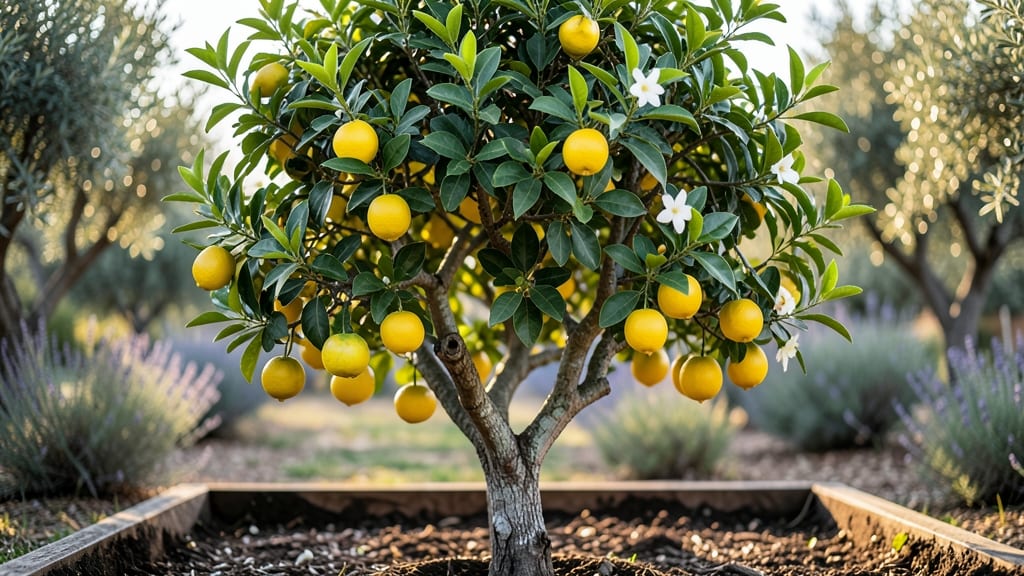
The Eureka lemon tree height you can expect depends entirely on whether you choose a standard or dwarf variety—with mature sizes ranging from 6 feet to a towering 20 feet.
Picture this: a fragrant 🍋 citrus tree bursting with lemons year-round, but suddenly crowding your patio or overshadowing your garden beds. The good news?
With the right pruning techniques and space planning, you can keep your Eureka lemon tree at your ideal height—whether that’s a compact 8-foot bush or a manageable 12-foot specimen.
In this guide, we’ll break down the growth charts for both standard and dwarf varieties, share pruning secrets to control height naturally, and address the most common questions about fitting an Eureka lemon tree into small yards or containers.
By the end, you’ll know exactly how to nurture your tree—without it outgrowing your space or your patience. Let’s get started!

Eureka lemon tree height: standard vs. dwarf varieties growth chart
Choosing the right Eureka lemon tree variety starts with understanding its mature height. Standard Eureka lemon trees typically reach 12-16 feet tall, while dwarf varieties stay between 6-10 feet. This difference isn't just about aesthetics—it impacts your yard layout, pruning needs, and even fruit accessibility.
Whether you have a spacious backyard or a cozy patio, knowing these dimensions helps you plan for the perfect citrus addition.
Your tree's height also depends on growing conditions like sunlight exposure, soil quality, and pruning habits. In ideal conditions with full sun and regular care, standard varieties can even exceed 16 feet, while dwarf types may max out around 8 feet.
The growth rate also varies yearly—young trees grow faster than mature ones, with most reaching 50% of their mature height within the first three years.
Space requirements are critical when selecting a variety. Standard Eureka lemon trees need at least 10-12 feet of clearance for branches to spread, while dwarf varieties thrive in 6-8 feet of space. If you're growing in containers, dwarf varieties are the clear winner, as they adapt better to 5-gallon pots or larger while still producing abundant fruit.
When planning your Eureka lemon tree's placement, consider how its height progression will affect nearby structures. Standard varieties may eventually overhang roofs or block windows if planted too close. Dwarf types, however, offer flexibility—you can place them near patios, decks, or even large containers on balconies.
Always leave extra space for branch spread, which can be nearly as wide as the tree's height.
For container growers, dwarf Eureka lemon trees are the best choice. A 15-gallon pot can comfortably accommodate a mature dwarf tree, while standard varieties require 55-gallon containers or larger. If you're using containers, ensure they have drainage holes and use a well-draining citrus mix to prevent root rot.
Remember, container-grown trees may grow slightly slower but can still produce abundant fruit with proper care.
Your tree's height isn't set in stone—pruning plays a huge role in controlling its size. Regular pruning in late winter or early spring encourages bushier growth and prevents the tree from becoming too tall.
Aim to prune 25-30% of new growth annually to maintain your desired height. Always use sterilized pruning shears to prevent disease spread between cuts.
Climate also affects growth rates. In warmer climates (USDA Zones 9-11), Eureka lemon trees grow faster and may reach mature height sooner. In cooler zones (USDA Zones 6-8), growth slows significantly, and trees may take 5-7 years to reach half their mature height.
If you're in a cooler zone, choose a dwarf variety or plan to grow your tree in a protected microclimate, like near a south-facing wall.
One common misconception is that dwarf varieties produce far fewer lemons than standard trees. In reality, dwarf trees produce proportionally less fruit but still yield dozens of lemons annually with proper care. The key is to balance pruning for size control with pruning for fruit production—never remove
How to control Eureka lemon tree height: pruning tricks for compact growth
Pruning your Eureka lemon tree is the secret to keeping it at your desired height while maximizing fruit production. Without proper pruning, these trees can reach 15-20 feet tall, which may be too tall for small yards or containers.
The good news? With the right techniques, you can maintain a compact shape without sacrificing those juicy lemons.
Timing is everything when it comes to pruning. I recommend focusing on two main pruning sessions: late winter/early spring (just before new growth starts) and late summer/early fall (after harvest). This timing helps the tree recover quickly and prepares it for the next growing season.
Always use clean, sharp pruning shears to make precise cuts just above a leaf node or bud.
- ✂️ Prune selectively—remove only 1/3 of new growth per session to avoid stressing the tree.
- 🌱 Encourage bushiness by cutting back vertical shoots to promote lateral branches where fruit forms.
- 🍋 Prioritize fruit-bearing branches—never prune heavily on branches with lemons to avoid reducing harvest.
- 🌡️ Avoid winter pruning—cold weather slows healing, increasing disease risk.
- 🪴 Use containers wisely—root-bound trees grow slower; repot every 2-3 years for compact growth.
To encourage a bushier shape, focus on pruning the central leader (the main upward-growing branch). By cutting it back by 1/3 to 1/2, you’ll stimulate side branches that produce more fruit.
Always make cuts at a 45-degree angle just above an outward-facing bud to direct new growth where you want it.
For container-grown Eureka lemon trees, pruning is even more critical. Since their roots are restricted, they naturally grow slower, but you’ll still need to prune to maintain shape. I recommend light pruning every 2-3 months during the growing season to keep the tree from becoming top-heavy or leggy.
Use a small hand pruner for precision in tight spaces.
One common mistake is over-pruning, which can weaken the tree and reduce fruit production. If you accidentally prune too much, don’t panic—just reduce pruning in the next session and focus on fertilizing and watering to help the tree recover.
A balanced approach ensures your Eureka lemon tree stays healthy, productive, and at your desired height.
With these pruning tricks, your Eureka lemon tree will stay manageable in size while still gifting you with an abundance of lemons. Happy pruning—your future lemonade will thank you! 🍋