
Trees
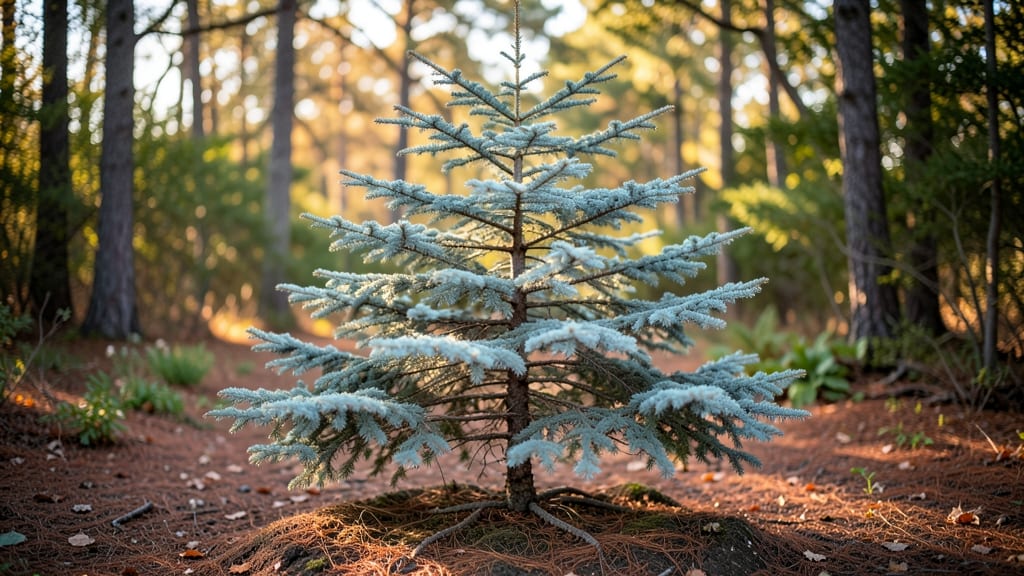
A sparse-branched evergreen transforms your garden into a sculptural masterpiece—where winter stays elegant and summer feels intentional. 🌲 I fell for these trees when I realized how they turn bare branches into design statements, not mistakes.
Their airy structure lets light dance through while providing year-round structure that other plants can’t match.
Think of them as living art installations: perfect as a bold focal point near your front door or as a dramatic border that frames a path. Pair them with low-growing perennials like heuchera or sedum to highlight their skeletal beauty, or let them stand alone as a minimalist statement.
The right species—like Italian stone pine or eastern red cedar—can handle drought once established, making them low-maintenance stars.
What you’ll love most is how they anchor your garden’s style—whether modern, cottage, or Zen. Their evergreen foliage softens hard lines while their open branches create layers of texture.
Place one where it can be seen from inside your home, and you’ll have a daily reminder of your garden’s quiet elegance, no matter the season.
For city gardens or small yards, their compact growth makes them ideal. Just avoid planting too close to sidewalks—their mature size still needs room to breathe. Here’s how to choose the perfect one for your space and vision.
Understanding Sparse Branch Growth
If your evergreen tree is sporting a sparse, airy canopy instead of the lush, dense foliage you envisioned, don’t panic—there’s usually a logical (and often fixable) reason behind it.
Sparse branching in evergreens isn’t always a sign of poor health; it can stem from natural growth patterns, environmental factors, or even intentional cultivation techniques. Below, we break down the most common causes—so you can diagnose the issue and take action.
Some evergreen species are hardwired to grow with sparse branches. For example:
- Pines (e.g., Pinus sylvestris): Many pine species naturally develop a whorled branching pattern—where branches grow in distinct horizontal tiers—leaving gaps between layers. This isn’t a defect; it’s an adaptation for light penetration and seed dispersal.
- Juniper (Juniperus spp.): Species like the Juniperus virginiana (eastern redcedar) often grow in a columnar or irregular shape with sparse, wiry branches, especially in exposed or dry conditions.
- Dwarf or slow-growing cultivars: Many ornamental evergreens (e.g., Picea pungens ‘Glauca Globosa’) are bred for compact, sparse growth to fit specific garden designs.
What to do: If you love the tree’s shape but want denser foliage, consider pruning strategically (see below) or selecting a fuller-growing cultivar next time. For example, Picea pungens ‘Fat Albert’ is a denser alternative to the classic blue spruce.
Evergreens are tough, but they’re not immune to environmental challenges. Poor growing conditions can halt lateral branch development, leaving your tree looking bones with a few leaves. Here’s what’s likely happening:
💧 Water Woes: Too Much or Too Little
Evergreens thrive in consistent moisture, but extremes—whether drought or waterlogging—can stunt branch growth.
- Drought stress: When roots can’t access enough water, the tree prioritizes survival over foliage. New branches may fail to develop, or existing ones produce sparse, stunted needles.
- Overwatering: Poor drainage (common in clay soils) can suffocate roots, leading to chlorosis (yellowing) and branch dieback. Roots deprived of oxygen can’t support new growth.
Actionable fixes:
- 🌡️ Check soil moisture by sticking your finger 3 inches deep—if it’s dry, water deeply (1–2 inches per week). If soggy, improve drainage with organic matter (compost) or sand.
- 🌱 Mulch properly: Apply 2–3 inches of mulch (wood chips or pine straw) to retain moisture and regulate soil temperature.
🌡️ Temperature Extremes: Cold or Heat Shock
Evergreens are adapted to specific climates, and sudden temperature swings can disrupt growth hormones.
- Winter burn: In dry, cold winters, desiccated branch tips may die back, leaving a sparse, “frost-bitten” look. This is common in Pinus and Juniperus species.
- Heat stress: Intense summer heat (especially with low humidity) can scorch new growth, causing branches to stunt or fail to emerge.
Actionable fixes:
- ❄️ Protect young trees in winter with burlap wraps or anti-desiccant sprays (e.g., Wilt-Pruf).
- 🌞 Provide afternoon shade in hot climates with light fabric shade cloth (30–50%) during peak heat.
🌬️ Wind and Salt Exposure
Coastal evergreens or those in windy areas often develop sparse, flag-shaped branches as they grow toward shelter.
- Wind pruning: Constant wind can shear off tender new growth, leaving only hardy, exposed branches.
- Salt spray (coastal areas): Salt buildup in soil can burn roots and foliage, leading to reduced branching.
Actionable fixes:
- 🌊 Flush salt-affected soil with fresh water (1–2 inches) during growing season.
- 🏡 Plant windbreaks (e.g., shrubs or fences) to reduce exposure.
Evergreens are slow growers, and a lack of key nutrients can lead to sparse, weak branches. The most critical deficiencies include:
| Nutrient | Symptoms | Solution |
|---|---|---|
| Nitrogen (N) | Pale yellow needles, stunted new growth, sparse branching. | Apply slow-release nitrogen fertilizer (e.g., 10-10-10) in early spring. |
| Phosphorus (P) | Purple or dark green needles, fewer lateral branches, slow root development. | Use bone meal or rock phosphate in fall or early spring. |
| Potassium (K) | Brown needle tips, weak branch structure, increased disease susceptibility. | Add wood ash or greensand (potassium-rich) annually. |
| Iron (Fe) or Magnesium (Mg) | Yellowing between veins (chlorosis), reduced foliage density. | Apply chelated iron or Epsom salt (for Mg) in early spring. |
Pro tip: 💡 Test your soil (via a local extension service or home kit) before fertilizing—evergreens hate excess salts, which can burn roots.
Pruning can encourage or discourage branching, depending on how (and when) you do it.
- Shearing too aggressively: Cutting into old wood (especially on mature evergreens) can
Revive & restore your tree’s beauty
If your once-lush evergreen now resembles a sparse, skeletal silhouette, don’t despair—most cases of thin branching can be reversed with targeted care. Below, we break down the most common causes and practical, step-by-step fixes to help your tree regain its year-round structure. Prevention tips are included to keep it thriving long-term.
---
If your tree’s branches look stunted or uneven, aggressive pruning (especially in winter) can stress it, leading to sparse growth. Evergreens rely on gradual shaping, not drastic cuts.
#### How to Fix It: 🔥 📝 Assess the Damage - Examine the tree for overly thin canopies or bare patches. - Look for stubby, broken branches—these won’t regrow.
🍳 🌿 Prune Strategically (Best in Late Spring or Early Fall) - Remove only dead or crossing branches (never more than 25% of the canopy at once). - Use clean, sharp pruners to make cuts just above a leaf node or bud. - Avoid "topping" (cutting back to a stub)—this encourages weak regrowth.
👨🍳 💧 Boost Recovery with Fertilizer - Apply a balanced, slow-release fertilizer (e.g., 10-10-10) in early spring. - For nutrient deficiencies, use an iron or manganese supplement (common in sparse growth).
🥘 🌡️ Mulch & Water Deeply - Spread 2–3 inches of organic mulch (wood chips or pine straw) around the base (keep it 6 inches away from the trunk). - Water deeply 1–2 times per week during dry spells (evergreens hate drought stress).
Shade from buildings, other trees, or overcrowded roots can weaken evergreens, causing stunted, sparse branches. If your tree is in a low-light spot, it may struggle to photosynthesize efficiently.
#### How to Fix It: 🔥 🌿 Improve Light Exposure - If possible, thin nearby trees or shrubs to allow more sunlight. - For indoor or heavily shaded evergreens (like dwarf varieties), consider grow lights in winter.
🍳 🌱 Relocate or Transplant (If Needed) - If the tree is in a permanently dark spot, replant it in a sunnier location (most evergreens need 6+ hours of light daily). - Dig a wider than deep hole to encourage root spread.
👨🍳 💧 Adjust Watering for Root Health - Overwatering in shade can suffocate roots. Let the top 2 inches of soil dry out between waterings. - If roots are competing with grass or weeds, apply pre-emergent herbicide in spring.
Evergreens are tough, but extreme conditions
#### How to Fix It: 🔥 💧 Rehydrate & Protect from Wind - Water slowly and deeply (1–2 inches per week) to revive drought-stressed roots. - For wind exposure, install a windbreak (like a fence or burlap barrier) on the prevailing wind side.
🍳 🌿 Apply Anti-Transpirants (For Winter Burn) - In late fall, spray branches with anti-desiccant spray to lock in moisture. - Avoid salty or icy de-icing products near the base (they damage roots).
👨🍳 🌡️ Mulch for Insulation - Add a 4-inch layer of mulch in late fall to protect roots from freezing. - For young trees, wrap the trunk with tree guard fabric to prevent sunscald.
If your evergreen’s branches are thinning unevenly with sawdust-like frass, holes, or oozing sap, pests (like spider mites, bark beetles, or aphids) or diseases (like root rot or needle blight) may be to blame.
#### How to Fix It: 🔥 🔍 Identify the Culprit - Check for: - Webbing (spider mites) - Bore holes (bark beetles) - Yellowing needles (aphids or fungal issues)
🍳 🛡️ Treat Infestations Immediately - For pests: Spray with neem oil or insecticidal soap (follow label rates). Repeat every 7–10 days. - For fungal issues: Apply copper fungicide in early spring before new growth.
👨🍳 🌱 Prune & Dispose of Infested Branches - Remove and burn or bag heavily infested branches (don’t compost them!). - Sterilize pruners with rubbing alcohol between cuts.
Once your tree recovers, keep it lush with these low-maintenance habits:
- ✨ Prune in late spring—avoid winter cuts that stress the tree.
- 🌡️ Mulch annually—replenish mulch in early spring to protect roots.
- 💧 Water deeply but infrequently—evergreens hate soggy soil but need consistent moisture.
- 🌿 Fertilize twice a year—spring and early fall with a balanced formula.
- 🛡️ Monitor for pests—inspect branches monthly, especially after extreme weather.
With patience and the right care, your evergreen can bounce back—restoring that dramatic, year-round structure you love. Most trees recover within 1–2 growing seasons with consistent effort. Happy gardening! 🌲✨
Frequently asked questions
Why do some evergreen trees naturally have sparse branches?
Many evergreens—like Italian stone pine or eastern red cedar—evolved with open canopies to allow light penetration and reduce competition. Their whorled or irregular branching patterns are actually adaptations for survival, not flaws. For example, pines grow in horizontal tiers, while junipers often develop wiry, exposed branches in dry conditions.
What are the best evergreen trees for small gardens with minimalist designs?
For compact spaces, try dwarf cultivars like Picea pungens 'Glauca Globosa' (blue spruce) or Juniperus squamata 'Blue Rug'. These stay under 3–5 feet tall while maintaining their airy, sculptural forms. Their sparse branches create visual interest without overwhelming smaller yards—perfect for modern or Zen garden styles.
How can I use a sparse-branched evergreen as a focal point in my landscape?
Plant it where its structure can be seen from multiple angles—like near a front door or along a pathway. Pair it with low-growing perennials (e.g., heuchera or sedum) to highlight its skeletal beauty. For height contrast, add a grasses or ornamental grass (like Miscanthus) at its base to frame the open branches.
Will pruning make my evergreen denser, or should I accept its natural shape?
Pruning can encourage denser growth, but many sparse-branched evergreens are prized for their airy forms. If you want fuller foliage, prune in late spring by cutting just above leaf nodes. However, avoid shearing—it creates dense, unnatural growth that may look artificial. For species like Italian stone pine, embrace their natural shape for a more organic look.
Are there evergreen trees with sparse branches that thrive in urban environments?
Dwarf Alberta spruce (Picea glauca 'Conica') and creeping juniper (Juniperus horizontalis 'Blue Rug') are excellent choices. They tolerate pollution, compacted soil, and container growing. Their drought tolerance makes them ideal for city gardens where watering is limited. Just ensure they get at least 4–6 hours of sunlight daily.