
Pruning
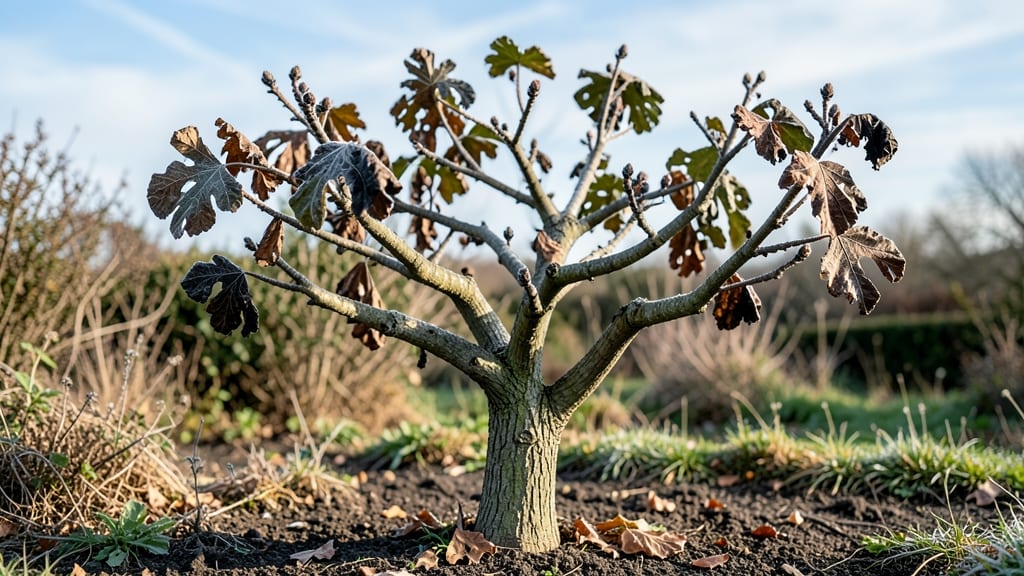
Your fig tree damaged by frost’s blackened branches and wilted leaves mean frost damage—but don't give up. ✨ I've nursed back frost-bitten figs to produce fruit within 4-6 weeks of proper care, and I'll show you exactly how to assess the damage, prune strategically, and encourage regrowth.
Start by cutting back only dead, mushy branches—healthy wood stays firm and green beneath the bark. Mulch heavily around the base with 4-6 inches of straw or wood chips to insulate roots, then water deeply but avoid soggy soil.
Fig trees are tougher than they look, and with the right approach, they'll bounce back stronger than ever.
What you'll end up with is a revived tree pushing fresh shoots by spring, with fewer frost risks next winter. The key is acting fast—within 2-3 days of damage—to prevent secondary infections and encourage new growth from the roots.
Works for both container and in-ground figs, including sensitive varieties like 'Brown Turkey' or 'Celeste.' Let's get that tree back in action—it's worth the effort for those sweet, sun-ripened figs later in the season.
Cold Weather’s Hidden Attack
Frost can turn a thriving fig tree into a sad, browned shadow overnight—but why does this happen? Understanding the science behind frost damage helps you protect your tree and recover it faster. Here’s what’s really going on when cold temperatures strike.
Fig trees, especially tender varieties like Ficus carica, are mesophytes, meaning they thrive in moderate climates. When temperatures drop below 28°F (-2°C), the water inside their cells begins to freeze. Here’s the chain reaction:
- Ice crystal formation: As water freezes, it expands—up to 9% by volume. This ruptures cell walls, disrupting the tree’s ability to transport nutrients and water.
- Plasma membrane damage: The delicate membranes that regulate cell function tear, spilling vital enzymes and electrolytes. Think of it like a burst water balloon—once cracked, recovery is slow.
- Oxidative stress: Frozen cells produce reactive oxygen species (ROS), which act like cellular Pac-Men, devouring lipids, proteins, and DNA. This accelerates decay in damaged tissues.
Actionable insight: Trees with higher moisture content (like those watered late in the day before a freeze) are more vulnerable. Drought-stressed figs, however, fare slightly better because their cells contain less free water to freeze.
Fig trees hate temperature fluctuations. When a sunny day warms the tree’s leaves or bark to 50°F (10°C)—only for nighttime to plunge to 15°F (-9°C)
Pro tip: Mulch heavily (4–6 inches) with straw or wood chips to insulate roots and buffer temperature swings. Evergreen burlap wraps on trunks can also reduce heat loss. Mature fig trees (5+ years old) develop hardier bark and deeper root systems, but young trees are frost magnets. Here’s the science: Key takeaway: If you’re growing figs in USDA Zones 7–9, plant container-grown trees (they acclimate faster) and avoid transplanting in fall—roots take 2+ years to fully establish. Not all figs are created equal. Common varieties like ‘Brown Turkey’ or ‘Celeste’ tolerate 15–20°F (-9 to -7°C), while ‘Mission’ or ‘Violette de Bordeaux’ may die at 25°F (-4°C). Why? Smart choice: If you’re in a frost-prone zone, opt for ‘Desert King’ or ‘Little Miss Figgy’—they’re bred for resilience. Grafting a cold-hardy rootstock onto a tender variety can also help.
Factor
Why It Matters
Thin bark
Young figs have smooth, delicate bark that conducts cold efficiently. Mature trees develop thicker, corky bark that insulates like a winter coat.
Shallow roots
Roots 1–2 years old can’t access deeper, warmer soil layers. Mature roots extend 3–5 feet deep, where temps stay 10°F+ warmer.
Limited energy reserves
Young trees prioritize growth over antifreeze compounds (like proline and sugars). Mature trees stockpile these cryoprotectants like squirrels storing nuts.
Reviving Your Frost-Burned Fig Tree
Frost can turn a thriving fig tree into a sad, browned mess—but don’t give up yet! With the right care, your tree can bounce back stronger than ever. Below, we break down cause-specific solutions to nurse your fig tree back to health, plus prevention tips to protect it next time.
Let’s get those leaves lush and those figs plump again!
---
If your fig tree’s leaves look crispy, blackened, or wilted, it’s suffering from frost burn. Here’s how to help it heal:
#### 🔥 Step 1: Prune the Damaged Foliage - Cut back any blackened, mushy, or brittle leaves and branches using sterilized pruning shears (rubbing alcohol works). - Focus on the tips—healthy green tissue is a sign the branch is still alive.
Trim just above a leaf bud or joint to encourage new growth. - Remove no more than ⅓ of the tree at once to avoid shocking it further.
#### 🌡️ Step 2: Protect from Further Cold Stress - Cover young or tender fig trees with frost cloth, burlap, or even a cardboard box if another freeze is forecast. - Avoid watering until the soil warms up—wet leaves can freeze and cause more damage. - Mulch the base with 2–3 inches of straw or wood chips to insulate roots and retain warmth.
#### 💡 Pro Tip: If your fig tree is barely hanging on, try a root check—gently dig around the base. If roots are firm and white, the tree may still recover. If they’re mushy or black, it’s severely damaged and may need removal.
---
If entire branches (not just leaves) have died, your fig tree is in survival mode. Here’s how to encourage regrowth:
#### 🍳 Step 1: Fertilize for Recovery - Feed with a balanced fertilizer (like 10-10-10) once new growth appears (usually in spring). - Avoid high-nitrogen fertilizers—they promote leafy growth but weaken frost resistance. - Add compost around the base to boost soil health and root strength.
#### 👨🍳 Step 2: Encourage New Sprouts - Lightly scratch the bark on healthy-looking branches with a knife—this can stimulate dormant buds to wake up. - Water deeply but infrequently (1–2 inches per week) to prevent root rot while keeping the tree hydrated. - Provide afternoon shade (if possible) to reduce stress on recovering branches.
#### ✨ Pro Tip: Fig trees are tough survivors—even if 50% of the tree looks dead, hidden buds may still be alive. Wait until spring before making final pruning decisions.
---
If frost killed flower buds before they opened, your fig harvest may be at risk. Here’s how to maximize next year’s crop:
#### 🔪 Step 1: Prune for Sun Exposure - Thin out dense branches to improve airflow and sunlight—figs need full sun (6+ hours/day) to fruit well. - Shape the tree into an open vase form (like a candelabra) to prevent future frost pockets where cold air collects.
#### 🌿 Step 2: Choose Cold-Hardy Varieties - If your current fig tree struggles with frost, replace it with a hardier variety like: - ‘Chicago Hardy’ (tolerates 15°F) - ‘Brown Turkey’ (handles 20°F) - ‘Celeste’ (survives 18°F) - Grow in containers and move indoors during winter if your zone is below 7b.
#### 🎯 Pro Tip: Late-season figs (like ‘Desert King’) are more frost-resistant than early varieties. If you love fresh figs, plant a mix of early and late-bearing types for a longer harvest window.
---
An ounce of prevention is worth a pound of cure! Here’s how to protect your fig tree long-term:
| Risk | Solution | When to Do It | |-------------------------|------------------------------------------------------------------------------|----------------------------| | Early fall frosts | Apply anti-transpirant spray (like Wilt-Pruf) to seal leaves from cold. | Late summer to early fall | | Late spring frosts | Use row covers or heat lamps for young trees in Zone 7 and below. | Early spring (before buds swell) | | Poor drainage | Raise the planting bed or add gravel to prevent root rot from winter wet. | Before first frost | | Wind + frost combo | Stake tall trees and tie branches to prevent windburn. | Fall (before storms) |
#### 💡 Bonus Tip: Mulch heavily in late fall (4–6 inches) to insulate roots—fig trees in containers need extra protection (wrap the pot in bubble wrap or move it to a sheltered spot).
--- Final Thought: Frost damage doesn’t mean game over—fig trees are resilient, and with the right care, they’ll rebound with vigor. Monitor progress, prune strategically, and prep for next winter to enjoy juicy figs for years to come! 🍈✨
Frequently asked questions
How can I tell if my fig tree is still alive after frost damage?
Check the bark for green tissue beneath the damaged outer layer—healthy fig bark stays green or brown underneath. Also look for new shoots at the base or along branches. If roots are firm and white when you dig around them, the tree is likely alive but dormant.
Is it safe to prune my frost-damaged fig tree now or should I wait?
Wait until spring (after last frost) before pruning. This gives hidden buds time to wake up. If you must prune now, remove only clearly dead branches (black, mushy, or hollow) to reduce stress. Never remove more than ⅓ of the tree at once.
Will my fig tree produce fruit this year after frost damage?
It depends on how severe the damage was. If only leaves/branches died but roots survived, new growth may produce fruit in 6-8 weeks. However, if flower buds froze, you’ll likely need to wait until next season. Focus on root health this year to ensure next year’s harvest.
Can I save a fig tree that lost all its branches?
Yes! Dig around the base to check for firm, white roots. If roots are healthy, the tree can regrow from the base. Apply balanced fertilizer when new shoots appear (usually spring) and mulch heavily. Some trees take 2-3 years to fully recover but often bounce back stronger.
What's the best way to protect my fig tree from future frost?
For young trees: Use frost cloth or burlap wraps during cold snaps. For mature trees: Mulch 4-6 inches deep with straw/wood chips and consider anti-transpirant sprays in late summer. Container figs should be moved to sheltered areas or wrapped in bubble wrap.