
Blooming
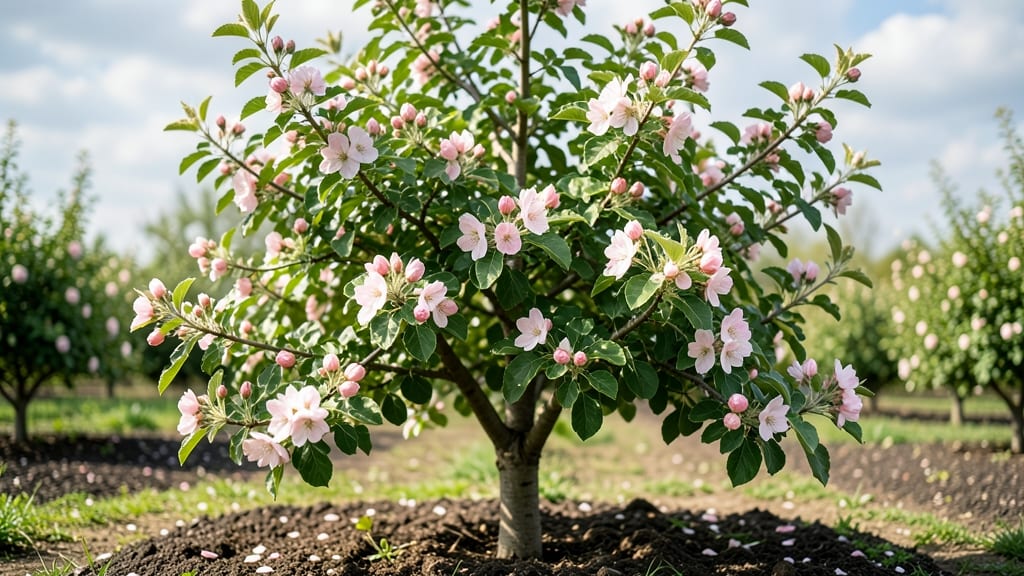
Fuji apple trees burst into bloom between late April and early May in most climates—though in warmer zones like California's Central Valley, you might see flowers as early as February. 🌸 I’ve watched my tree’s delicate pink blossoms unfurl right on schedule, but frost can still turn that beauty into a heartbreaking loss if you’re not prepared.
The secret to maximizing fruit set lies in pruning 6-8 weeks before bloom to open the canopy to sunlight and air circulation. Thin out crowded branches now, and you’ll encourage stronger flower clusters that lead to bigger, sweeter apples.
Water deeply in the weeks leading up to bloom—drought stress weakens flowers—then taper off once they appear to prevent rot. During bloom, keep an eye out for late frosts (below 28°F) that can damage flowers.
If frost threatens, drape a frost cloth over the tree or run a sprinkler to create insulating ice. Once pollinated, those tiny blossoms will transform into fruit—so protect them now for a harvest of juicy, red-gold Fuji apples by fall.
This timing works for most U.S. growing zones (5-8), but adjust for your region: Southern gardeners should prune earlier, while Northern growers may delay slightly. The key is matching your prep to your tree’s natural rhythm.
📚 In This Guide
- What you need
- Instructions
- Tips and common mistakes
- Wrapping up and next steps
What you need
- ● Pruning shears: Sharp, bypass-style shears (10-12" blade length) for clean cuts. Pro tip: 💡 Sanitize blades with rubbing alcohol before and after use to prevent disease spread!
- ● Loppers: For thicker branches (1.5–2" diameter), with a bypass or anvil head (14-18" blade).
- ● Pruning saw: Curved-tooth saw for branches >2" thick.
- ● Gloves: Heavy-duty, cut-resistant gloves (e.g., 12-14" length) to protect hands.
- ● Disposable pruning bags: 3-gallon capacity (2-3 bags) to collect trimmings.
- ○ Tree wound dressing: Optional but helpful for large cuts (e.g., Tanglefoot Tree Wound Pruning Sealer).
- ● Ladder or step stool: Extendable (8-12 ft) for tall branches. Safety first! 🔥
- ● Rag or paper towels: For wiping tools and hands.
- ● Best pruning window: Late winter to early spring (just before buds swell, ideally 2-4 weeks before Fuji bloom, which varies by climate zone).
- ● Weather check: Prune on a dry, calm day (avoid frost or rain within 24 hours).
- ● Tree health: Ensure your Fuji apple tree is 3-5 years old (younger trees need minimal pruning).
- ○ Safety gear: Optional but recommended—safety glasses and long sleeves for protection.
- ● Fertilizer: Balanced 10-10-10 or organic compost (apply after pruning).
- ● Mulch: Wood chips or straw (2-3" layer) to retain moisture.
- ● Tree ties or stakes: If your tree needs support after heavy pruning.
Step-by-step guide to timed pruning for Fuji apple tree bloom
Here's how I time pruning to boost Fuji apple blossoms and fruit production—no guesswork involved.
⏰ Step 1: Prune in Late Winter Before Bud Swell
Fuji apple trees bloom best when pruned 4-6 weeks before buds swell—typically February to early March in most climates. This timing ensures the tree directs energy into new growth rather than fruit production too early. Look for dormant buds (still tight, not puffy) as your cue to start.
Use clean, sharp pruners to remove dead, crossing, or inward-growing branches. I cut just outside the branch collar (the swollen area where the branch meets the trunk) to prevent tearing. Avoid heavy pruning—remove no more than 25% of the tree's canopy at once. Fuji trees are sensitive to over-pruning and may produce fewer blossoms if stressed.
☀️ Step 2: Thin Blossoms After Full Bloom
Once the Fuji tree finishes blooming (usually late April to early May), thin clusters so 6-8 flowers remain per spur. This prevents overcrowded fruit, which leads to small, misshapen apples. I use sterilized pruning shears to snip excess blossoms at their base, leaving only the healthiest blooms.
Thinning isn’t just about quantity—it’s about quality. Focus on blossoms with strong, upright stems and vibrant pink buds. Avoid thinning on rainy days, as wet tools spread disease. If you miss this step, the tree will produce too many apples, straining its resources and reducing fruit size.
✂️ Step 3: Light Summer Pruning After Fruit Set
About 6-8 weeks after bloom, do a light pruning pass to remove suckers (shoots growing from the base or trunk) and water sprouts (fast-growing vertical shoots). These compete with fruit-bearing branches for nutrients. Use hand pruners for small growth and loppers for thicker stems.
This isn’t a heavy pruning—just 10-15 minutes of cleanup. Remove any branches rubbing against each other, as friction weakens the tree. Fuji apples need good airflow to prevent fungal diseases like apple scab. If you see yellowing leaves or powdery mildew, prune those branches immediately to improve circulation.
🌿 Step 4: Post-Harvest Pruning for Next Year’s Bloom
After harvesting Fuji apples (typically September to October), prune again to shape the tree and prepare for next year’s bloom. Remove dead wood, diseased branches, and any growth that crosses or rubs. I also thin out crowded branches to let sunlight reach the center of the tree.
This final pruning should be light but strategic. Avoid heavy cuts now—the tree needs energy to recover before winter. If you prune too late, new growth won’t harden off properly, making it vulnerable to frost damage. Aim to finish by mid-November in most regions.
Tips & tricks for perfect Fuji apple tree bloom timing
Here's what nobody tells you about making your Fuji apple tree's pruning work harder for bigger, better fruit.
Timing is Everything: The 4-6 week window before buds swell is critical—this is when Fuji trees are most receptive to shaping. I've learned the hard way that pruning too early (when buds are still dormant) or too late (when they start swelling) can stress the tree and reduce blossoms. Mark your calendar for February to early March in most climates, but always check for those tight, dormant buds first.
Pruning Precision: When removing branches in Step 1, focus on making clean cuts just outside the branch collar. I use a sharp pruner and make a slight upward angle—this prevents tearing and allows proper healing. Remember the 25% rule: never remove more than a quarter of the canopy at once. Fuji trees are sensitive, and over-pruning can lead to fewer blossoms next season.
Blossom Selection Strategy: During Step 2, when thinning blossoms to 6-8 flowers per spur, prioritize those with strong stems and vibrant pink buds. These are your highest-quality blooms that will develop into the best apples. I always work on dry days with sterilized tools to prevent disease spread. This step might seem tedious, but it's what separates small, misshapen apples from premium fruit.
Seasonal Maintenance: The light summer pruning in Step 3 shouldn't take more than 10-15 minutes of focused cleanup. This is your chance to improve airflow and prevent fungal diseases. I keep an eye out for water sprouts and suckers—they're energy vampires that drain resources from fruit production. Remove them immediately, but don't overdo it; Fuji trees need their energy for fruit development.
Pro Tips for Fuji Apple Tree Bloom
- Here's what nobody tells you about making your Fuji apple tree's pruning work harder for bigger, better fruit.
- Timing is Everything: The 4-6 week window before buds swell is critical—this is when Fuji trees are most receptive to shaping.
- Pruning Precision: When removing branches in Step 1, focus on making clean cuts just outside the branch collar.
Frequently asked questions
Got questions about timing, care, or troubleshooting your Fuji apple tree’s bloom? Here are answers to the most common queries—so you can enjoy a bountiful harvest!
When is the best time to prune a Fuji apple tree after it blooms?
Prune your Fuji apple tree after the bloom season (late spring to early summer) to avoid removing potential fruit buds. Focus on shaping the tree, thinning crowded branches, and removing dead wood. Wait until 6–8 weeks post-bloom for optimal fruit set and recovery.
How long does it take for a Fuji apple tree to bloom after planting?
Fuji apple trees typically take 3–5 years to bloom and produce fruit after planting, depending on climate and care. Young trees may show blossoms earlier, but full fruit production usually starts around year 4–5. Patience and proper pruning speed up the process!
Why did my Fuji apple tree bloom but not set fruit?
Several factors can cause poor fruit set: lack of pollination (Fuji trees need cross-pollination), late frost damaging blossoms, or nutrient deficiencies. Ensure you plant a second variety nearby (e.g., Gala or Granny Smith) and protect blossoms from frost. Check for pests or diseases too!
Can I prune a Fuji apple tree during its bloom season?
Avoid heavy pruning while the tree is in bloom—this removes flower clusters and reduces fruit potential. Light trimming (e.g., removing broken branches) is fine, but save major pruning for post-bloom. Think of it like waiting for the "all-clear" before reshaping!
What’s the ideal temperature for Fuji apple tree blooms?
Fuji apple trees thrive in USDA zones 5–8, with blossoms appearing in spring (March–May) when temps stabilize above 45°F (7°C). Cold snaps below 28°F (-2°C) can damage buds, while heatwaves may stress the tree. Monitor forecasts and use frost cloth if needed!
Wrapping up and next steps
The Fuji apple tree bloom is a breathtaking sight—and with the right pruning techniques, you can turn that beauty into a bountiful harvest! 🍎✨ By timing your cuts strategically, you’ll encourage healthier growth, better fruit set, and stronger branches.
Whether you’re a seasoned gardener or just starting out, these steps make the process simple and rewarding.
Now that you’re armed with the knowledge, roll up your sleeves and get pruning! Grab your tools, step outside, and give your Fuji apple tree the care it deserves. Before you know it, you’ll be enjoying homegrown apples straight from your own backyard. Happy gardening! 🌱👩🌾