
Pruning
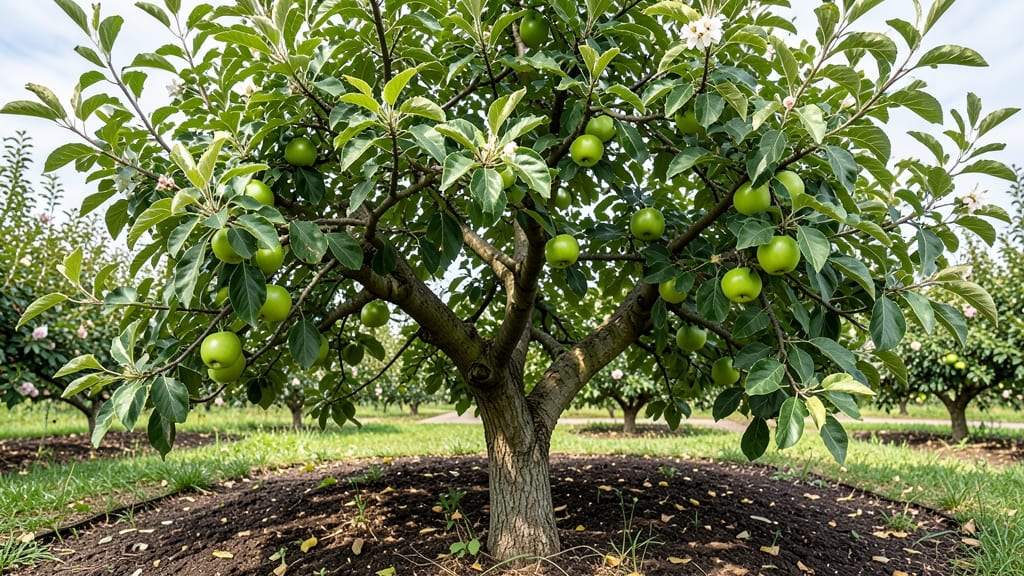
A Granny Smith apple tree with the right size can stay as small as 6 feet tall—or tower over your backyard like a jungle giant. 🌳 The difference? Rootstock. Dwarf varieties fit in tight spaces, while standard trees need room to spread their branches wide.
I’ve grown both, and the right choice depends on your yard’s size and your patience for pruning.
Dwarf trees mature at 6-8 feet with a spread of 4-6 feet, perfect for containers or small backyards. Semi-dwarf varieties grow 10-15 feet tall, offering more fruit without sacrificing space. Standard trees reach 20+ feet—ideal for large properties but impractical for urban gardens.
Spacing matters: dwarf trees need 6-8 feet between them; standard trees require 20+ feet to avoid shading and disease.
Pruning early and often keeps even standard trees manageable. My semi-dwarf produces bushels of tart apples every year, but I prune aggressively in winter to control height. The key? Start pruning when the tree is young—it trains the branches to grow the way you want.
With the right approach, you’ll end up with a tree that fits your space and your harvest goals.
For small gardens, dwarf or semi-dwarf is the way to go. They fruit faster, produce more consistently, and make picking apples a breeze. Just remember: smaller trees need more frequent pruning to stay productive.
Whether you’re planting in a pot or along a fence, size matters—choose wisely, and you’ll enjoy fresh Granny Smiths for decades.
📚 In This Guide
- What you need
- Instructions
- Tips and common mistakes
- Wrapping up and next steps
What you need
- ● Granny Smith apple tree (choose size based on space: dwarf (6–8 ft), semi-dwarf (10–12 ft), or standard (16+ ft))
- ● Shovel or trowel (for digging holes—12–18 inches wide for dwarf/semi-dwarf, 24+ inches for standard)
- ● Garden gloves (to protect your hands from thorns and soil)
- ● Well-draining soil mix (compost, peat moss, or a 50/50 blend of native soil and organic matter—at least 5 gallons)
- ● Organic mulch (wood chips or straw—2–3 inches thick, covering a 3-foot radius around the base)
- ● Balanced fertilizer (e.g., 10-10-10 or 5-10-10—1–2 pounds per tree)
- ○ Staking materials (optional but recommended for young trees): 2–3 5-foot bamboo stakes or metal tree supports
- ● Soft tree tie straps (3–4 pieces)
- ● Watering can or hose with a gentle spray nozzle (5+ gallons of water for initial planting)
- ● Tree guard or wire cage (to protect from pests like deer or rabbits)
- ● Pruning shears (for shaping after planting—bypass pruners recommended)
- ● Soil pH tester (Granny Smiths thrive in slightly acidic soil (pH 6.0–6.5))
- ● Slow-release fertilizer tablets (for long-term nutrient boost)
- ● Drip irrigation kit (for consistent moisture in small gardens)
Granny Smith apple tree size: choosing the right variety for your space
Selecting the perfect Granny Smith apple tree size depends on your garden’s layout and long-term vision. Here’s how to match tree size to your space—and avoid outgrowing it in five years.
🌱 Step 1: Understand the Three Key Size Categories
Granny Smith apple trees come in three primary sizes, each with distinct space requirements and growth habits. Dwarf varieties top out at 6-8 feet tall, making them ideal for small patios or containers. Semi-dwarf trees reach 10-12 feet and bridge the gap between compact and full-size orchards. Standard trees grow 15-20 feet tall, demanding ample yard space and regular pruning to maintain shape.
I always recommend dwarf or semi-dwarf for urban gardens—they fruit earlier and produce more consistently when properly cared for. The trade-off? They require more frequent pruning to prevent overcrowding of branches. If you’re unsure, measure your space first: Dwarf trees need at least 6 feet of clearance in all directions, while semi-dwarfs require 10-12 feet.
☀️ Step 2: Match Tree Size to Your Garden Layout
Before planting, sketch your garden’s layout. Dwarf trees thrive in containers or along fences, while semi-dwarfs work well in mixed borders with shrubs. Standard trees belong in rural settings or large backyards. Pay attention to sunlight: Granny Smiths need full sun (6-8 hours daily), but dwarf varieties can tolerate partial shade better than their taller counterparts.
Here’s the rule I follow: Plant dwarf trees 5-6 feet apart in rows, semi-dwarfs 8-10 feet apart, and standards 15-20 feet apart. This spacing prevents root competition and ensures airflow, which is critical for disease prevention. If you’re planting near a wall or fence, leave at least 3 feet of clearance for dwarf trees to avoid root damage.
✂️ Step 3: Plan for Pruning and Long-Term Growth
Pruning isn’t optional—it’s how you control size and shape. Dwarf trees need annual pruning in late winter to remove dead wood and open the canopy for sunlight. Use sharp bypass pruners to make clean cuts just above outward-facing buds. For semi-dwarfs, focus on structural pruning in the first three years to establish a strong framework.
Real talk: Even dwarf trees will outgrow their space if neglected. I’ve seen clients’ once-compact Granny Smiths sprawl into tangled messes because they skipped pruning. Prune 20-30% of the canopy annually to maintain size and encourage fruit production. Thin out crowded branches first—they’re the biggest culprits for small, misshapen apples.
🪴 Step 4: Select the Right Rootstock for Your Goals
The rootstock determines how much the tree will grow. Dwarfing rootstocks like M.9 or B.9 keep trees small but reduce lifespan to 15-20 years. Semi-dwarf rootstocks (e.g., MM.106) balance size and productivity, lasting 25-30 years. Standard trees use seedling or vigorous rootstocks, which can live 50+ years but require more maintenance.
If you’re growing in containers, choose columnar dwarf rootstocks—they stay narrow and produce fruit along the entire trunk. For in-ground planting, MM.111 is a great semi-dwarf option that tolerates a range of soil types. Always check the rootstock compatibility with your nursery before buying—some combinations stunt growth unexpectedly.
⏰ Step 5: Time Planting and Expectations for Maturity
Plant in early spring or fall, when temperatures are mild. Dwarf trees bear fruit in 2-3 years, semi-dwarfs in 3-4 years, and standards in 5-7 years. Patience is key—rushing to harvest too early leads to small, underdeveloped apples. I’ve seen impatient gardeners prune back fruit to "encourage bigger ones," but that actually stresses the tree.
Once established, dwarf trees produce 20-30 pounds of apples annually, semi-dwarfs 50-80 pounds, and standards 100+ pounds. Granny Smiths are biennial bearers, meaning they alternate between heavy and light fruit years. To balance this, I thin excess fruit in heavy years to 6-8 inches between apples—this ensures larger, higher-quality harvests next season.
Tips & tricks for perfect Granny Smith apple tree selection
Choosing the right Granny Smith apple tree size can transform your garden from a cramped mess to a productive, space-efficient orchard. Here’s what I’ve learned from years of helping clients navigate this decision—without the trial-and-error.
Sunlight Strategy: While Granny Smiths need full sun (6-8 hours daily), dwarf varieties can handle partial shade better than their taller counterparts. If your space gets only 4-5 hours of direct sunlight, opt for a dwarf tree—it’ll still produce fruit, just with slightly smaller yields. Position semi-dwarfs where they’ll get morning sun and afternoon shade to maximize their tolerance for less-than-perfect conditions.
Rootstock Reality Check: The rootstock you choose isn’t just about size—it’s about long-term commitment. Dwarfing rootstocks like M.9 or B.9 will keep your tree compact but limit its lifespan to 15-20 years. If you’re planting for future generations, consider semi-dwarf rootstocks like MM.106, which balance size and longevity (25-30 years). I’ve seen clients regret choosing dwarf rootstocks when they realized they’d need to replant within a decade.
Pruning Precision: When you’re pruning that 20-30% of the canopy annually (as recommended in Step 3), focus on removing branches that cross or rub against each other. These are the hidden culprits behind poor fruit quality and disease. Use a sharp bypass pruner to make clean cuts at a 45-degree angle just above an outward-facing bud. This simple technique prevents water from pooling at the cut site, which is crucial for preventing fungal infections in Granny Smiths.
Container Considerations: If you’re growing in containers, columnar dwarf rootstocks are your best bet—they stay narrow and produce fruit along the entire trunk. But here’s the catch: you’ll need to repot every 2-3 years as the roots outgrow their space. Choose containers with drainage holes and use a high-quality potting mix designed for fruit trees. I’ve had clients use 5-gallon buckets with great success, but make sure the container is at least 18 inches deep to accommodate root growth.
Pro Tips for Granny Smith Apple Tree Size
- Choosing the right Granny Smith apple tree size can transform your garden from a cramped mess to a productive, space-efficient orchard.
- Sunlight Strategy: While Granny Smiths need full sun (6-8 hours daily), dwarf varieties can handle partial shade better than their taller counterparts.
- Rootstock Reality Check: The rootstock you choose isn’t just about size—it’s about long-term commitment.
Frequently asked questions
Got questions about your Granny Smith apple tree? Whether you’re planning for a small garden or troubleshooting growth, here are the most common queries—plus straightforward answers to help you grow the perfect tree!
How big does a mature Granny Smith apple tree get?
A standard Granny Smith tree can reach 20–30 feet tall and spread 15–25 feet wide, making it ideal for large properties. For small gardens, opt for dwarf varieties (6–10 ft tall) or semi-dwarf (12–16 ft tall)—both stay manageable with proper pruning.
How long does it take for a Granny Smith tree to bear fruit?
Dwarf trees typically produce fruit in 2–3 years, while standard trees may take 4–6 years. Patience pays off—ensure your tree gets full sun (6+ hours/day), well-draining soil, and regular watering to speed up fruiting. Pro tip: Plant two trees for cross-pollination!
Can I grow a Granny Smith tree in a container?
Yes! Dwarf or semi-dwarf varieties thrive in 15–25 gallon containers with drainage holes. Use a high-quality potting mix, repot every 2–3 years, and move the container to a sunny spot in winter. Just remember: container-grown trees need more frequent watering and pruning to stay healthy.
How do I prune a Granny Smith tree to control its size?
Prune in late winter/early spring (before buds swell) to shape the tree and encourage airflow. Remove dead, crossing, or overcrowded branches first, then trim back 1/3 of new growth to maintain size. Warning: Avoid heavy pruning in fall—it can stimulate new growth vulnerable to frost.
Why isn’t my Granny Smith tree growing as expected?
Slow growth often stems from poor soil, lack of sunlight, or overcrowding. Check for compacted soil (amend with compost) and ensure it gets 6+ hours of sun daily. Yellow leaves? Test for nutrient deficiencies (like nitrogen or iron) or pests (aphids, mites). If roots are bound, gently loosen soil or repot (for container trees).
Wrapping up and next steps
Choosing the right Granny Smith apple tree size for your space is all about balancing dreams and reality—whether you’re dreaming of a backyard orchard or just a few crisp, tangy apples! 🍏 From dwarf varieties (perfect for containers) to standard trees (ideal for larger gardens), there’s a size for every gardener’s needs.
Now that you’re armed with pruning tips and care advice, it’s time to roll up your sleeves and get planting!
💡 Next step: Sketch a quick layout of your garden, measure available space, and pick the tree size that fits—then dig in! Happy growing! 🌱