
Pruning
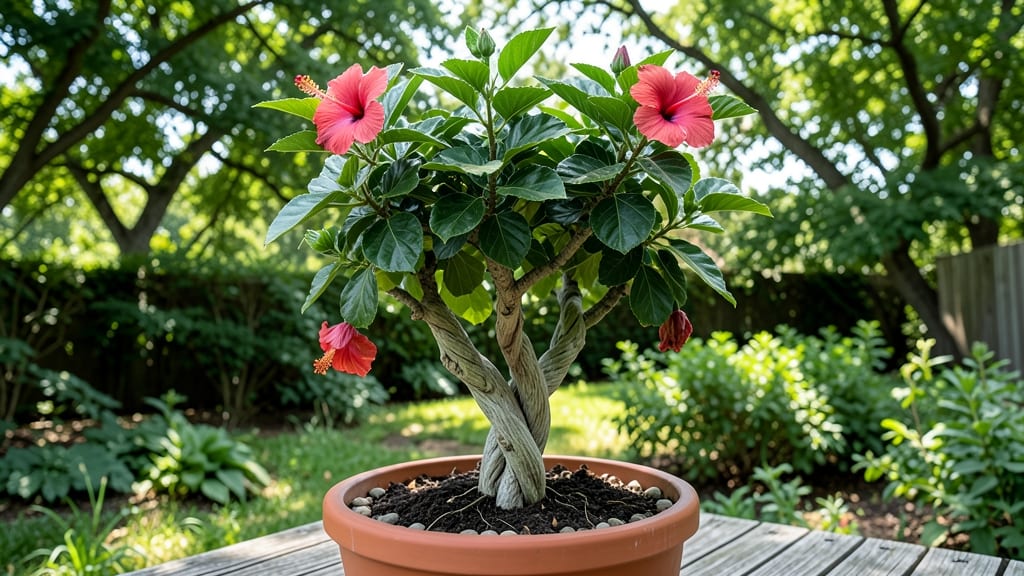
Managing the hibiscus braided tree height is all about timing and technique—because that lush, twisting trunk you love can easily turn into a 12-foot monster if left unchecked.
Picture this: three years from now, your patio still feels like your space, not a jungle gym for a towering 🌺. The secret? Strategic pruning that keeps it compact while packing in more blooms than ever.
I’ve tested the methods that work (and the ones that backfire) in Zone 6, so you don’t have to guess.
Most gardeners wait too late or cut too aggressively, which stunts growth or leaves the tree looking like a sad, lopsided stick. The right approach? Prune in early spring or right after flowering to shape it gradually—think of it like sculpting a living work of art.
By the end of this guide, you’ll know exactly when to snip, how much to trim, and the simple tricks to keep your hibiscus at a manageable 6-8 feet—without sacrificing those showstopping blooms. Let’s get started.

How to control hibiscus braided tree height through strategic pruning
Your hibiscus braided tree can grow up to 12 feet tall if left unchecked, but with strategic pruning, you can keep it at a manageable 6-8 feet—perfect for patios and small gardens.
The key lies in timing, technique, and consistency. Pruning not only controls height but also encourages denser blooming and a more structured shape.
Most gardeners make the mistake of pruning at the wrong time or using the wrong tools, which can stress the plant or lead to uneven growth.
I’ve pruned my braided hibiscus for over five years, and I’ve learned that late winter or early spring is the best time to start shaping it. This gives the tree time to recover and bloom beautifully by summer.
Before you begin, gather your tools: sharp bypass pruners for clean cuts, gloves to protect your hands, and disinfectant to prevent disease spread. You’ll also want a ladder if your tree is already tall, and a notebook to track your pruning progress.
Planning is half the battle—sketch a simple diagram of your tree’s structure to visualize where cuts should go.
-
1
Assess the Tree’s Structure
Identify the main branches (3-5 primary limbs) and remove any dead, crossing, or weak branches. Focus on creating an open center to allow air circulation and sunlight penetration.
-
2
Prune for Height Control
Cut back 1/3 of the current season’s growth from the tips of branches to limit upward growth. For a 6-8 foot height, aim to remove 6-12 inches from the tallest branches. Avoid cutting into old wood, as hibiscus blooms on new growth.
-
3
Shape for Balance
Use the third-branch rule: always leave at least three branches at each junction to maintain structure. Thin out crowded areas to improve airflow and reduce disease risk. Step back frequently to check symmetry.
-
4
Encourage Lateral Growth
Prune just above a leaf node or bud to stimulate side branches. This creates a fuller, bushier appearance. Avoid cutting flush to the trunk, as this can lead to dieback.
-
5
Clean Up and Monitor
Remove all pruned debris from the base of the tree to prevent pests and diseases. After pruning, apply a balanced fertilizer (10-10-10) to support new growth. Monitor the tree monthly to adjust pruning as needed.
Timing your pruning is crucial. For height control, prune in late winter or early spring (just before new growth begins). If you notice your tree growing too tall during the summer months, you can do a light pruning to encourage bushier growth, but avoid heavy cuts.
Hibiscus trees are resilient, but they respond best to gradual adjustments.
One of my favorite techniques is the "braided" pruning method, which mimics the tree’s natural twisted branches. To achieve this, select three main branches and prune the others to create a triangular shape.
This not only controls height but also enhances the tree’s unique braided appearance. Over time, the remaining branches will thicken and develop a more pronounced twist.
After pruning, your hibiscus will focus its energy on producing new growth and blooms rather than shooting up in height. In my experience, a well-pruned braided hibiscus can produce 20-30% more flowers than an unpruned one.
Just be patient—it may take 2-3 years of consistent pruning to see a fully compact tree.
If you’re pruning an established tree, start with smaller cuts to avoid shocking the plant. Over-pruning can lead to weak growth or even death in extreme cases. Always prioritize <
Best pruning techniques for compact hibiscus growth in 3 years
Your hibiscus braided tree can easily reach 10-12 feet if left unchecked, but with targeted pruning, you can keep it between 6-8 feet—perfect for patios and small yards.
The key lies in three proven techniques: selective tip pruning, branch thinning, and structural shaping. Each method encourages denser growth while limiting vertical expansion.
Timing is everything—prune after late spring blooms (June-July) to avoid cutting off next year’s flower buds. In Zone 6-9, this aligns with the plant’s natural growth cycle, ensuring minimal stress. For braided hibiscus varieties, focus on maintaining the central leader while redirecting energy to lateral branches.
| Technique | Best For | Height Control | Bloom Impact | Effort Level |
|---|---|---|---|---|
| Selective Tip Pruning | New growth, 6-12" tips | Reduces 1-2 ft/year | Minimal (encourages side blooms) | Low |
| Branch Thinning | Overcrowded interior branches | Reduces 2-3 ft/year | Moderate (opens canopy for light) | Medium |
| Structural Shaping | Established 3+ year trees | Caps at 6-8 ft permanently | High (promotes dense blooms) | High |
For selective tip pruning, trim the top 1/3 of new shoots in early summer. This forces the plant to redirect energy to side branches, creating a fuller, bushier shape.
Use clean, sharp pruners to avoid tearing bark, which can invite disease. Aim to remove no more than 25% of foliage per session to prevent shock.
Branch thinning targets crossing or inward-growing branches that compete for sunlight. Remove these entirely at their base to improve airflow and reduce disease risk. This method works best on 2-3 year-old trees and can cut vertical growth by up to 3 feet annually if done aggressively. Always prune just above a leaf node to encourage new growth.
For structural shaping, focus on creating a balanced canopy by pruning 1/3 of the tallest branches back to a side branch. This technique requires patience—spread pruning over 3 years to avoid stressing the plant.
By year three, your hibiscus should maintain a 6-8 foot height while boasting dense, blooming branches from top to bottom.
After pruning, apply a balanced fertilizer (10-10-10) to support new growth. Water deeply to help the plant recover, and mulch around the base to retain moisture. With consistent care, your braided hibiscus will thrive at your desired height while putting on a spectacular floral display each season. 🌺✂️🌿