
Blooming
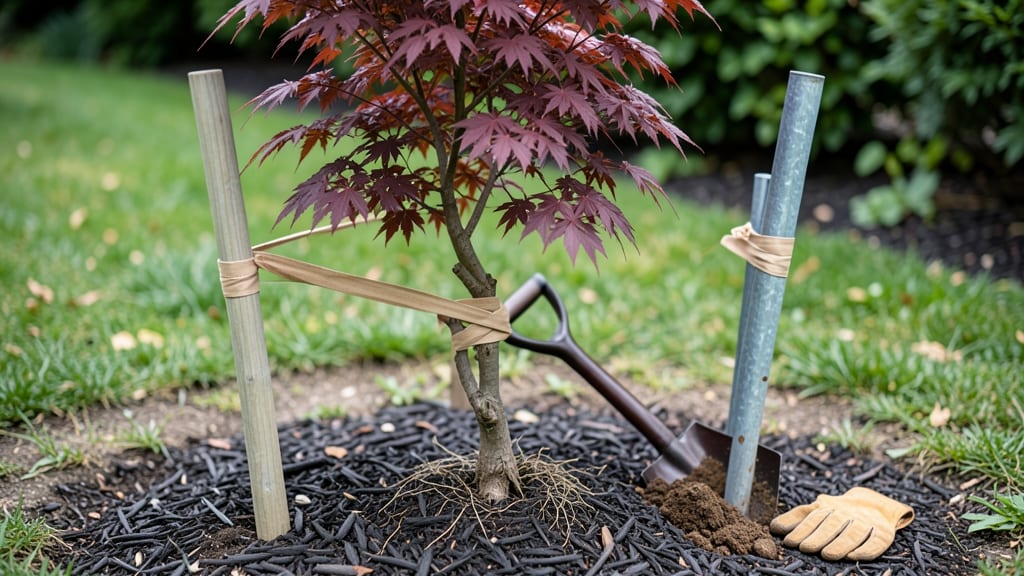
To determine how long a tree should be staked, plan for 6 to 12 months for young saplings, adjusting based on species, root strength, and environmental conditions. Removing stakes too early risks wind damage, while leaving them too long can stunt trunk development.
Staking duration varies because tree roots develop at different rates depending on the species and growing conditions. 🌳 For example, fast-growing willows may only need support for 6 months, while slower-growing oaks could require stakes for up to 2 years.
I always check trunk flexibility—if it bends slightly but springs back, it’s likely ready for stake removal. Environmental factors like high winds or loose soil also play a role in how long you should keep stakes in place.
When assessing whether to remove stakes, look for these signs: the tree should have established a strong root ball and show signs of self-support, like a thicker trunk base.
For fruit trees, I recommend waiting until the first year’s growth is visible before considering stake removal, as they often need extra support during their early bearing years.
💡 In This Article
- Factors Determining Staking Duration for Trees
- Species-Specific Staking Guidelines for Common Trees
Factors determining staking duration for trees
The primary reason staking timelines vary is how quickly a tree develops a stable root system. Root growth rates differ dramatically between species—fast-growing trees like willows can establish sufficient anchorage in as little as 3-6 months, while slower-growing trees like oaks may require 2-3 years of support.
This difference stems from their natural growth strategies: willows prioritize rapid vertical growth to reach sunlight, while oaks invest energy in deep, sturdy root systems for long-term stability. 🌳
Soil composition plays a critical role too. Loose, sandy soils offer minimal resistance to wind, forcing trees to rely on stakes longer than those planted in clay or loamy soils.
For instance, a 2-inch diameter sapling in sandy soil might need stakes for 12-18 months, whereas the same tree in clay soil could be ready in 8-10 months. The key mechanism here is root-soil friction: denser soils provide natural support, reducing the need for artificial staking.
Climate factors like wind exposure and rainfall patterns create additional variables. Trees in exposed locations experience 30-50% more wind stress than sheltered ones, often requiring stakes for 25% longer. Heavy rainfall can also loosen soil around young roots, temporarily increasing the need for support.
I’ve noticed that in windy coastal regions, even well-established saplings may need stakes for 18-24 months to prevent toppling during storms.
Trunk flexibility is the most reliable indicator of readiness for stake removal. A properly supported tree should show 1-2 inches of bend at the base when gently pushed—if it springs back immediately, the roots have developed enough strength.
For example, a 3-year-old apple tree with a 1.5-inch diameter trunk should demonstrate this flexibility before stake removal. The goal is to let the tree develop natural strength without becoming dependent on artificial support.
Timing also matters seasonally. Planting in early spring allows roots to establish before summer heat stress, often reducing staking needs by 2-3 months compared to fall planting.
The root zone needs 60-70°F soil temperatures for optimal growth, which is why spring-planted trees in temperate zones typically reach stake-removal readiness faster than those planted in cooler autumn months.
One common mistake is leaving stakes too long, which can cause the trunk to grow abnormally thin at the stake line—a condition called "girdling." This happens when the tree’s natural growth pattern is disrupted by prolonged support, creating a weak point that’s vulnerable to breakage.
To prevent this, I always check for smooth, even trunk thickening around the stake area before removal. 🌱