
How To
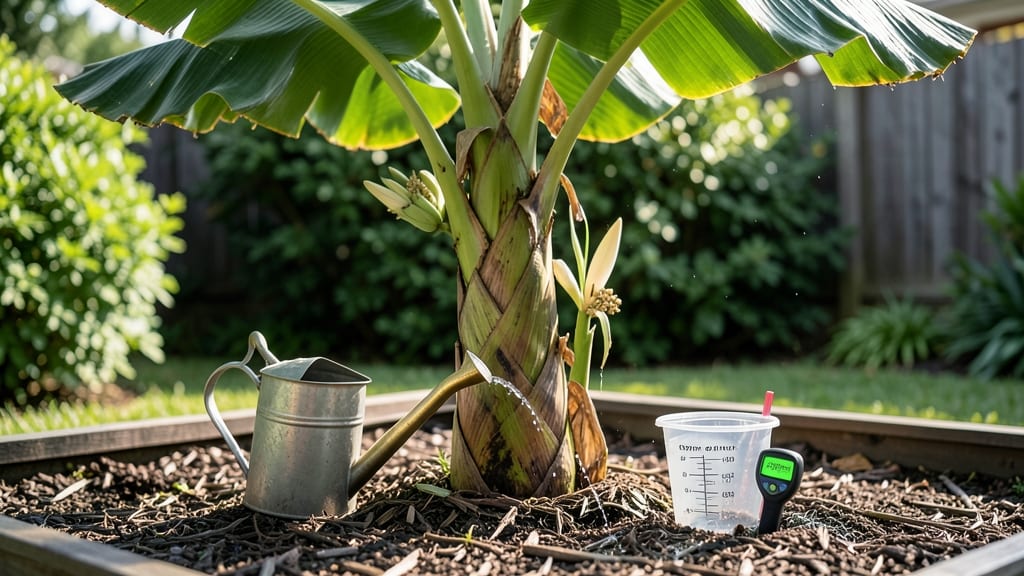
A banana tree 🍌 needs how much water does it need per day—1–3 gallons for young plants and 5–10 gallons for mature trees, depending on heat and soil.
Banana trees thrive on consistency—give them too little water, and their leaves wilt; too much, and their roots suffocate. But how do you strike the perfect balance for daily hydration?
Climate and soil type change everything: sandy soil drains fast, while clay holds moisture longer. A mature tree in USDA Zones 10–12 might need double the water in summer compared to cooler months.
Below, I break down daily needs by growth stage, plus signs of over- or under-watering so you can adjust before damage sets in.


Banana tree watering requirements by growth stage: daily needs explained
Banana trees are tropical powerhouses that demand consistent moisture, but their water needs shift dramatically as they grow. A seedling in a pot requires far less than a mature 20-foot tree bearing fruit in Florida’s summer heat.
Understanding these stages helps prevent both root rot and drought stress, both of which can kill your tree quickly. The key? Deep, infrequent watering tailored to each phase.
Climate plays a huge role too. In USDA Zones 10-12, banana trees may need daily watering during peak summer, while in cooler microclimates (like coastal California), you might stretch waterings to every 2-3 days.
Soil type matters just as much—sandy soil drains fast and needs frequent top-ups, while clay soil holds moisture longer, reducing daily needs by 30-50%. Let’s break it down by growth stage so you can water with confidence.
| Growth Stage | Daily Water Needs (Gallons) | Key Factors Affecting Needs | Signs of Over/Under-Watering |
|---|---|---|---|
| Seedlings (0-1 year) | 1–3 gallons | Container size, humidity, root development | Wilting fronds (under), yellowing leaves (over) |
| Vegetative Growth (1-3 years) | 3–5 gallons | Soil type, air temperature, wind exposure | Dry soil cracks (under), mushy stems (over) |
| Flowering Stage | 5–7 gallons | High metabolic demand, fruiting energy | Dropping flowers (under), fungal spots (over) |
| Fruiting Stage | 7–10 gallons | Heat stress, fruit weight, root spread | Shriveled fruit (under), blackened pseudostem (over) |
| Dormancy (Winter) | 2–4 gallons | Cooler temps, reduced growth | Brown leaf tips (under), moldy soil (over) |
For seedlings, focus on keeping the top 2 inches of soil consistently moist—never soggy. A 3-gallon pot may need watering every 1-2 days in summer, while a 5-gallon container can stretch to every 3 days.
The trick? Stick your finger 1 inch deep—if it’s dry, water until it drains from the bottom. Overwatering at this stage causes root rot, which is often fatal.
Once your banana tree hits the vegetative growth stage (1-3 years old), it’s time to ramp up volume. A mature tree in ground needs 5-7 gallons daily in hot climates, while container-grown trees may require even more due to faster evaporation.
Use a moisture meter or the trowel test: Dig down 6 inches—if the soil is dry, water deeply until it seeps 4-6 inches down.
During the flowering and fruiting stages, your banana tree’s water needs peak. This is when you’ll see the biggest difference between tropical climates (daily watering) and temperate zones (every 2 days). A 10-gallon watering for mature trees isn’t excessive—think of it as hydration for the fruit.
Watch for yellowing fronds or premature fruit drop, which are classic signs of thirst. Conversely, blackened pseudostems or mushy soil mean you’re overdoing it.
In dormancy (winter months in cooler zones), cut back by 50-70%. A 2-4 gallon watering every 3-5 days is usually enough. The goal is to keep the roots slightly moist, not drenched.
This is also the best time to audit your watering system—check for clogged drippers, cracked pots, or poor drainage, which can turn winter into a disaster.
Pro tip: Mulch heavily (3-4 inches of straw or wood chips) to lock in moisture and reduce daily watering by 30%. And always water at the base of the tree, never the leaves—this prevents fungal diseases like sigatoka leaf spot, which thrives in damp foliage.
With these stage-specific guidelines, your banana tree will stay lush, productive, and drought-resistant—no guesswork required.
How to adjust watering for soil type and climate: avoiding root rot and drought stress
Your banana tree’s watering needs shift dramatically based on whether you’re growing it in sandy soil (which drains fast) or clay soil (which holds moisture). In tropical climates, daily watering may be essential, while temperate zones can stretch intervals to every 2-3 days.
The key is matching your watering routine to your local conditions—and your tree’s age.
Start by testing your soil’s moisture retention. Stick your finger 2 inches deep into the soil: if it feels dry, it’s time to water. For container-grown banana trees, the soil dries out faster, often requiring daily checks in hot weather.
In-ground trees, however, can go slightly longer between waterings, especially in clay-heavy soil.
⚠️ WARNING: Overwatering is just as deadly as underwatering for banana trees. Too much moisture leads to root rot and fungal diseases like Panama wilt, while too little causes leaf scorch and stunted growth. Watch for these critical red flags:
🚨 Overwatering vs. Underwatering Risks
- ❌ Overwatering: Yellowing leaves with mushy stems, soil pulling away from pot edges, or a sour smell from roots.
- ❌ Underwatering: Crispy leaf edges, fronds curling inward, or dry, brittle soil that crumbles easily.
🔍 Pro Tip: Use a trowel check—dig 6 inches deep near the roots. If the soil is soggy, hold off on watering. If it’s bone-dry, give it a deep soak.
In sandy soil, water more frequently but in shorter bursts to prevent runoff.
Aim for 1–2 gallons per watering for young trees, increasing to 5–10 gallons for mature trees during peak summer. Clay soil, on the other hand, retains moisture longer, so you can space waterings 3–4 days apart unless temperatures exceed 90°F.
Climate plays a huge role: in humid tropical zones, focus on morning watering to reduce fungal risk, while arid regions may need evening waterings to cool the roots. Always water at the base of the plant, avoiding the fronds to prevent disease.
A 2–3 inch mulch layer of straw or wood chips helps retain moisture and regulates soil temperature.
Monitor your banana tree’s leaf color and frond health as the best indicators. Dark green fronds signal optimal hydration, while pale or yellowing leaves mean it’s thirsty. In drought-prone areas, consider drip irrigation for precise, slow watering that mimics natural rainfall.
Adjust your routine seasonally—reduce watering by 30–50% in winter or during rainy periods.
🌱 Remember: Banana trees are heavy drinkers, but they hate soggy roots. Balance is everything—stay vigilant, and your tree will reward you with lush growth and abundant fruit.