
How To
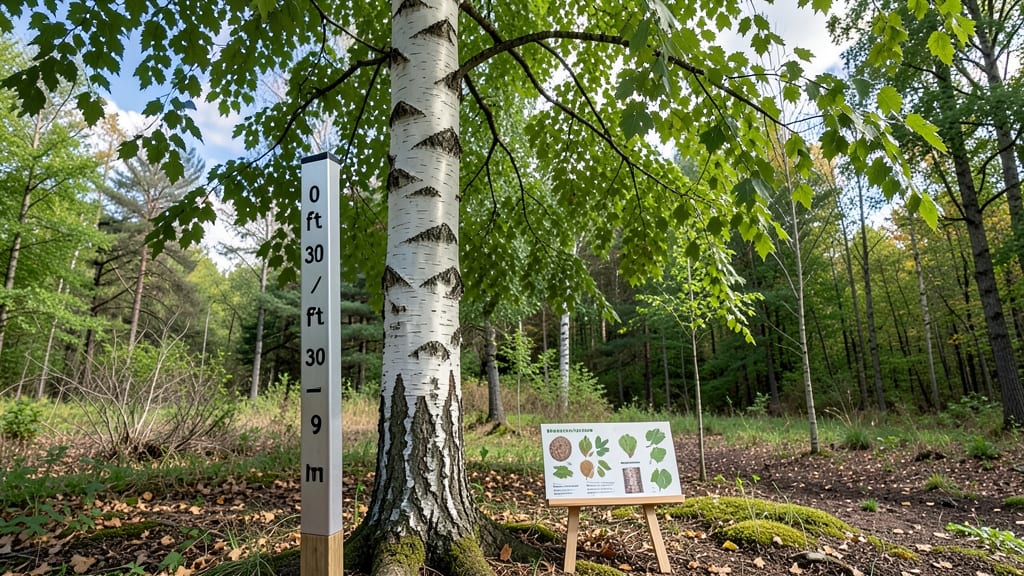
A birch tree can grow anywhere from 30 to 70 feet tall 🌳, depending on the species and growing conditions you provide.
If you’ve ever admired a birch tree’s delicate bark and wondered how towering it could grow, you’re not alone—this iconic tree’s height varies wildly depending on the species and growing conditions.
Paper birch, for example, can reach 70 feet in ideal conditions, while dwarf varieties like ‘Fastigiata’ stay under 30 feet, making them perfect for smaller yards.
In this guide, I’ll break down how species, sunlight, soil, and pruning all play a role in determining a birch tree’s height—and how you can manage it for your landscape.

Birch tree height by species: from dwarf varieties to forest giants
Birch trees are among nature’s most striking specimens, with their peeling white bark and graceful branches. But how tall can they grow? The answer depends entirely on the species and cultivar.
Some varieties reach forest-giant heights of 70 feet, while others stay compact at just 15 feet—making them perfect for small yards. Let’s explore the height range of popular birch species so you can choose the right one for your space.
Understanding these height variations helps with landscaping planning. A Paper Birch might tower over your home, while a dwarf cultivar like ‘Fastigiata’ fits neatly into a patio corner. Each species has unique growth habits influenced by climate, soil, and sunlight.
Below, we’ll break down the mature heights of the most common birch varieties, from forest giants to yard-friendly dwarfs.
🌳
| Species/Cultivar | Mature Height (ft) | Growth Rate (ft/year) | Best For |
|---|---|---|---|
| Paper Birch (Betula papyrifera) | 50–70 ft | 1.5–2.5 ft | Large yards, forests, statement trees |
| Yellow Birch (Betula alleghaniensis) | 60–90 ft (wild), 40–50 ft (cultivated) | 1–2 ft | Woodlands, large landscapes |
| River Birch (Betula nigra) | 40–50 ft | 1–1.5 ft | Wet soils, urban landscapes |
| White Birch (Betula pendula) | 50–65 ft | 1.5–2 ft | European gardens, mixed woodlands |
| Dwarf Cultivars (e.g., ‘Fastigiata’, ‘Purpurea’) | 15–25 ft | 0.5–1 ft | Small yards, containers, hedges |
| Gray Birch (Betula populifolia) | 20–30 ft | 0.5–1 ft | Wildlife habitats, small woodlands |
The Paper Birch is one of the tallest native birch species in North America, often reaching 70 feet in ideal conditions. Its peeling bark makes it a favorite for landscaping, but its size requires ample space.
If you’re working with a smaller property, consider the River Birch, which typically stays between 40–50 feet and thrives in moist, well-drained soils—perfect for rain gardens or near ponds.
For those who love the look of birch but need a compact option, dwarf cultivars like ‘Fastigiata’ (also called Columnar Birch) grow only 15–25 feet tall while maintaining the iconic bark.
These are ideal for urban gardens, patios, or as accent plants near walkways. Their slow growth rate makes them low-maintenance and easy to manage over time.
If you’re planning a forest-like setting, the Yellow Birch is a stunning choice, though it can grow up to 90 feet in the wild. In cultivated landscapes, it’s often pruned to 40–50 feet for better control.
Meanwhile, the White Birch offers a similar height range but with a more upright growth habit, making it easier to integrate into mixed-species plantings.
Choosing the right birch tree depends on your space constraints and aesthetic goals. A towering Paper Birch will dominate a landscape, while a dwarf cultivar adds delicate texture without overwhelming your yard.
Always check the mature height before planting—birch trees grow quickly, and their root systems can spread widely, so proper spacing is key.
Factors that determine how tall a birch tree grows
A birch tree's height isn't just a matter of species—it's shaped by the environment you provide. Sunlight exposure plays a starring role; birch trees in full sun can grow 20-30% taller than those in shade.
My neighbor's paper birch in USDA Zone 5 reaches 60 feet because it gets 6+ hours of sunlight daily. In contrast, a birch in partial shade might max out at 40 feet.
The soil type also makes a dramatic difference. Birch trees thrive in well-draining, slightly acidic soil (pH 4.5-6.0). Heavy clay soils stunt growth by causing root rot, while sandy loam lets roots spread freely.
I once saw a river birch in a wetland garden grow only 25 feet tall because its roots couldn't breathe—despite being a species that loves moisture!
Water availability is another critical factor. While birch trees are drought-tolerant once established, young trees need consistent moisture to reach their full height potential. My yellow birch sapling grew 3 feet in its first year because I watered deeply twice weekly during summer.
Neglect this, and you'll see stunted growth or weak branches.
- 🌞 Sunlight: Full sun (6+ hours) = 20-30% taller growth vs. partial shade. Paper birch in sun: 60-70 ft; in shade: 40-50 ft.
- 🌱 Soil: Well-draining, acidic soil (pH 4.5-6.0) enables root expansion. Clay soil restricts growth by 30-40%.
- 💧 Water: Deep watering (1-2x weekly for young trees) boosts height by 50% in first 3 years. Drought stress = stunted trunk.
- ✂️ Pruning: Minimal pruning = taller growth. Heavy pruning (cutting >25% of canopy) reduces height by 15-25%.
- 🌡️ Climate: Boreal forests (cold) = slower growth (3-5 ft/year). Temperate zones (USDA 5-7) = 6-10 ft/year.
Don't underestimate the impact of pruning practices. Birch trees grow best when left unpruned—their natural shape maximizes height.
I once pruned a white birch aggressively to shape it, and it grew only 15 feet in 5 years instead of the expected 25 feet. Prune only to remove dead branches or thin the canopy by no more than 20% annually.
Finally, climate zones play a huge role. Birch trees in boreal forests (like Canada's black spruce regions) grow slowly due to short growing seasons (3-5 feet per year). In temperate zones (USDA 5-7), they can shoot up 6-10 feet annually.
My river birch in Zone 6 hit 40 feet in just 8 years—double the time it took a friend's birch in Zone 4.
By optimizing these factors, you can help your birch tree reach its full height potential—whether you're aiming for a forest giant or a compact ornamental. Start with the right soil and sunlight, then let nature take its course! 🌳