
How To
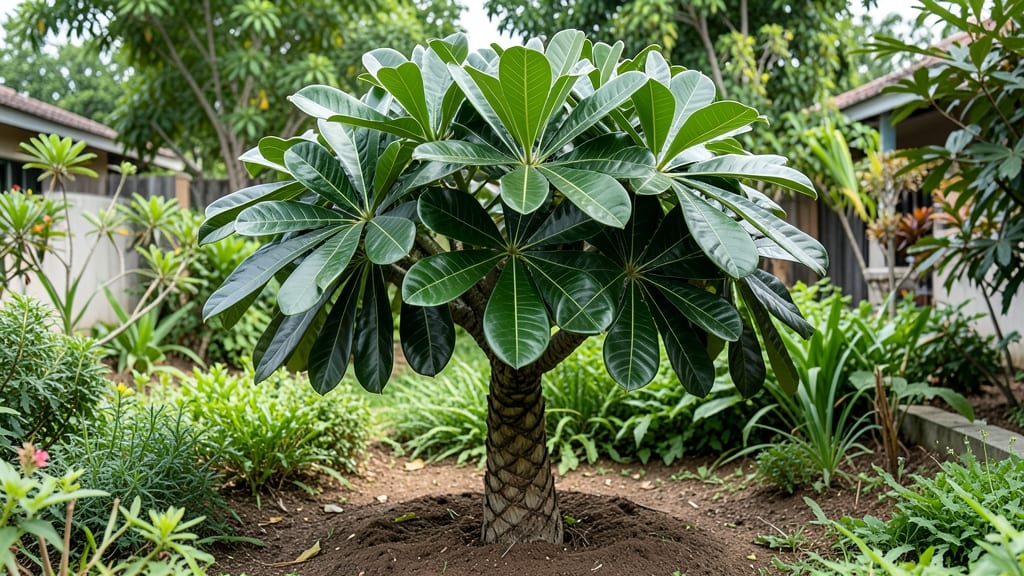
Natural height limits of money trees indoors: what science says
Your money tree (Pachira aquatica) may seem like it could grow forever, but science reveals strict height limits based on its tropical genetics. Indoors, most varieties max out between 3–10 feet, with dwarf types rarely exceeding 4 feet.
The key factors? Light exposure, pot size, and genetic variety—not just your care routine. Let’s break down why your plant might stop growing taller and how to work with (not against) its natural ceiling.
First, understand that money trees grow vertically only when they have enough root space and light energy to fuel upward growth. In small pots, roots become root-bound, triggering a survival response: the plant focuses on leaf production instead of height.
This is why many money trees hit a 3–5 foot plateau after 2–3 years unless you intervene with repotting or pruning techniques. The science? Limited root space = stunted stem elongation.
Here’s the hard truth: genetics set the upper limit. Standard money trees (like the 'Money Tree Braided' variety) can reach 8–10 feet indoors with ideal care, but dwarf varieties like 'Pachira aquatica 'Mini Money Tree' are bred to stay under 4 feet.
Even with perfect conditions, you won’t coax a dwarf into becoming a giant—its growth hormones are genetically capped. Think of it like a growth plateau your plant hits when it’s mature.
Light is the #1 factor controlling height. Money trees are tropical plants that evolved to grow tall in full-sun conditions. Indoors, they rely on bright indirect light (like an east- or west-facing window) to produce enough chlorophyll for vertical growth.
Without it, your plant may grow bushier but shorter. Test this: Move your money tree to a sunniest spot for 2 weeks—you’ll often see new growth shooting upward within 4–6 weeks.
Pot size directly impacts height. A 10-inch pot might support 3–4 feet of growth, but a 16-inch pot could push your money tree toward 6–8 feet. The rule? Repot every 1–2 years into a container just 2 inches wider than the current one.
Pro tip: Use a well-draining soil mix (like 60% potting soil + 30% perlite + 10% orchid bark) to prevent root rot, which can stall growth entirely.
Don’t ignore humidity levels. Money trees thrive in 60–80% humidity, but most homes sit at 30–50%. Low humidity triggers stress responses, including stunted growth. Fix this by placing your plant on a pebble tray or using a humidifier nearby.
Watch for crispy leaf edges—a classic sign your plant isn’t growing to its potential due to dry air. With higher humidity, you’ll often see longer internodes (the spaces between leaves), which directly boost height.
Pruning can trick your money tree into growing taller. When you trim the top of the plant, it triggers auxin hormones to redirect energy toward lateral branches—but if you prune just below a leaf node, you encourage a taller central stem.
For maximum height, avoid heavy pruning. Instead, snip just above a leaf to promote upward growth. Just remember: over-pruning can set your plant back for 6–12 months.
Seasonal slowdowns are normal. Money trees enter dormancy in winter (November–February), when growth nearly stops. This isn’t a sign of poor care—it’s biological. During this time, reduce watering and fertilizer to let the plant conserve energy. Resume
5 Proven ways to maximize your money tree’s height (without overpruning)
Your money tree (Pachira aquatica) can reach 6–10 feet indoors with the right care—but most growers never see that potential. The key isn’t just pruning (or avoiding it); it’s creating the perfect conditions for vertical growth.
Let’s explore 5 science-backed strategies to help your plant stretch toward its full height without sacrificing health or structure.
First, understand that light exposure is the #1 factor. Money trees thrive in bright, indirect sunlight (4–6 hours daily). Place yours near an east- or west-facing window, or use a grow light if natural light is limited.
Without enough light, your plant will focus energy on leaf production instead of height growth, leading to a bushy but stunted appearance.
Next, let’s talk repotting. Money trees grow best when slightly root-bound, but if roots circle the pot, growth will stall. Repot every 2–3 years into a container just 1–2 inches larger than the current one.
Use a well-draining mix (equal parts potting soil, perlite, and orchid bark) to prevent compaction, which restricts root expansion and height potential.
For fertilizer, focus on balanced nutrition to encourage vertical growth. A 10-10-10 NPK fertilizer applied every 4–6 weeks during spring and summer will support steady height increases. Reduce feeding in fall and winter—your plant’s growth slows naturally during these seasons.
Pro tip: Dilute fertilizer to half-strength for mature plants to avoid leaf burn, which can stress the plant and halt upward growth.
When it comes to pruning, less is more. Money trees respond poorly to heavy pruning, which can trigger bushier growth instead of height. Instead, focus on maintenance pruning: Remove only dead, yellow, or damaged leaves. If you want a taller stem, try air-layering.
Select a healthy stem, wrap it with moist sphagnum moss, cover with plastic, and secure with tape. In 4–8 weeks, roots will form—simply cut below the rooted section and pot it separately for a new vertical plant.
Avoid these height-killers: Overwatering (leads to root rot), low humidity (causes leaf drop), and inconsistent light (stunts growth). Keep your money tree in a humidity-tolerant environment (e.g., bathroom or kitchen) and mist leaves weekly.
If your plant starts dropping leaves, it’s a sign to adjust care immediately—height growth will resume once conditions improve.