
Size
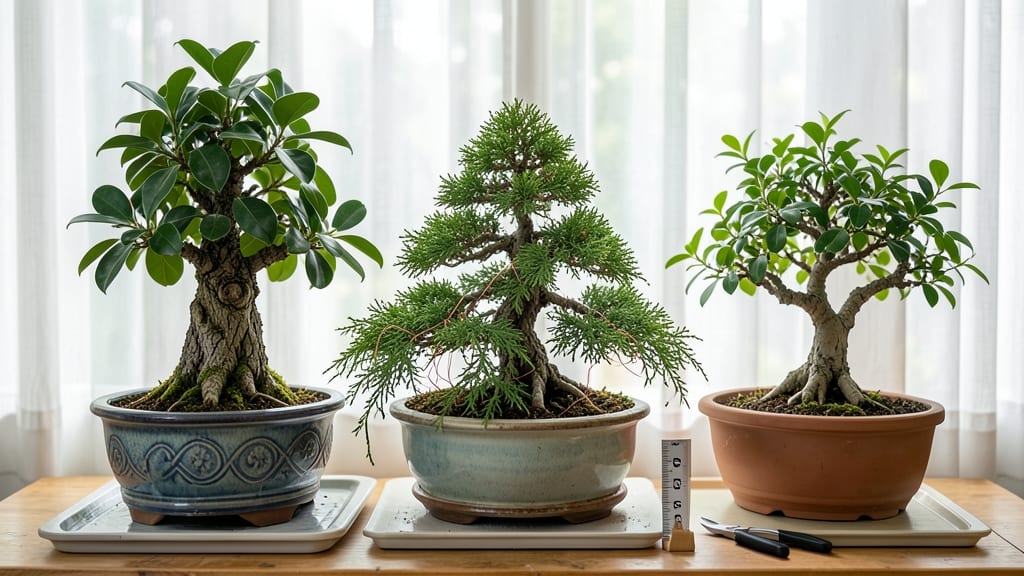
How tall a bonsai tree grows depends entirely on how you cultivate it—some stay under 3 inches while others reach 6 feet, all from the same species.
If you’ve ever dreamed of owning a bonsai tree but worried about space constraints, you’re not alone—many beginners assume these delicate artworks stay tiny forever.
The truth? Bonsai heights vary dramatically depending on species, pruning, and the style you choose. A Japanese black pine 🌳 can stay palm-sized, while a ficus bonsai might grow tall enough to sit on a shelf.
In this guide, I’ll break down the height ranges of popular bonsai types, share proven techniques to control growth, and help you pick the perfect size for your space—whether you want a desktop masterpiece or a statement piece for your living room.

Bonsai tree height ranges: from miniature to standard sizes
When I first started growing bonsai, I assumed all varieties stayed the size of a houseplant—until I saw a Japanese black pine bonsai standing over 3 feet tall at a local nursery. Bonsai heights aren’t one-size-fits-all; they range from palm-sized tabletop displays to floor-standing masterpieces that rival small shrubs.
The key difference? It’s not the species alone, but how you prune, wire, and cultivate it over time.
The smallest bonsai—like dwarf junipers or azaleas—often stay under 12 inches, while ficus or oak bonsai can reach 36 inches with proper training.
Even the same species can vary wildly: a Chinese elm bonsai might be 6 inches in a miniature style but 24 inches in a literati or broadleaf style. Understanding these ranges helps you choose the right tree for your space—and your patience level!
🌱
The age of your bonsai plays a huge role in its height. A 5-year-old juniper might still be 6 inches tall, while a 50-year-old oak bonsai could tower at 3 feet with thick, gnarled trunk.
I once saw a Japanese white pine bonsai at a show that was over 100 years old but only 2 feet tall—decades of careful pruning had shaped it into a living sculpture.
Patience is key: some species, like Chinese elms, respond quickly to pruning, while others, like oaks, grow slowly but develop stunning bark textures over time.
Pruning techniques are the real game-changers. Defoliation (removing leaves) on juniper or pine bonsai can stunt growth by up to 50%, while root pruning during repotting limits nutrient uptake, keeping the tree compact.
I learned this the hard way with my first ficus bonsai: I skipped root pruning for two years, and it shot up from 12 inches to 24 inches in a single season! Now, I repot every <
How to control bonsai growth: pruning, wiring, and repotting techniques
Mastering bonsai growth control transforms your tree from a wild sapling into a refined miniature masterpiece. The key lies in three core techniques: pruning, wiring, and repotting—each serving a unique purpose in shaping your bonsai's height and form.
For example, a Japanese black pine can grow 2-3 feet tall in its natural state, but with careful pruning, it stays under 12 inches while maintaining its majestic presence. Let's dive into the seasonal rhythms that keep your bonsai thriving at your desired size.
Your bonsai's height isn't just about genetics—it's a delicate balance of timing and technique. Spring is prime time for repotting and heavy pruning, while summer focuses on shaping with wiring. Winter becomes a period of rest, where you refine your plan for the next growing season.
For instance, I once saw a ficus bonsai grow 6 inches in just two months during spring—until I pruned it back to maintain its compact form. The secret? Consistent care tailored to each species' growth cycle.
⚠️ Common Mistake Alert: Over-Pruning
Beginners often panic and prune too aggressively, thinking it will keep their bonsai small. This causes stunted growth and weak branches. For example, cutting back a juniper bonsai by more than 1/3 in one session can shock the tree and lead to dieback. Instead, prune incrementally—remove no more than 20-30% of new growth at a time during spring.
Let's start with pruning, the foundation of height control. Use sharp, clean concave cutters to remove branches just above a leaf node or bud. For height reduction, focus on the topmost branches—this prevents the tree from growing taller while maintaining its natural shape.
I recommend a seasonal pruning schedule: light pruning in late spring to shape new growth, followed by more aggressive cuts in early summer if needed. Remember, less is more—bonsai respond better to gradual adjustments than drastic changes.
Next comes wiring, the sculpting tool for bonsai artists. Aluminum or copper wires (1-3mm thickness) gently guide branches into desired positions. Wrap the wire around the branch and trunk, leaving room for growth—about 1/3 of the branch's diameter.
For example, to create a weeping style in a ficus, I wire the branches downward and leave them for 3-6 months. Check wires monthly to avoid girdling—where the wire cuts into the bark as the tree thickens.
Remove wires once the branch holds its new shape, usually after one growing season.
Don't overlook repotting, which refreshes the root system and controls growth. Most bonsai need repotting every 2-3 years in early spring, before new leaves emerge.
Use a pot just 1-2 inches larger in diameter than the previous one, and trim 1/3 of the roots—especially long, thick roots that can fuel rapid growth. After repotting, place your bonsai in shade for 2-3 weeks to reduce stress.
This is also when I apply a slow-release fertilizer to encourage balanced growth without sudden height spikes.
To avoid common pitfalls, monitor your bonsai's growth closely. Yellowing leaves often signal overwatering or poor drainage, while thin, sparse foliage may indicate underwatering or nutrient deficiency. I keep a growth journal noting height measurements every season—this helps me adjust my pruning and wiring plans.
For instance, if my Chinese elm grows 4 inches taller than desired in spring, I'll increase pruning frequency in the next cycle. Patience is key: a well-maintained bonsai can live for centuries with proper care!