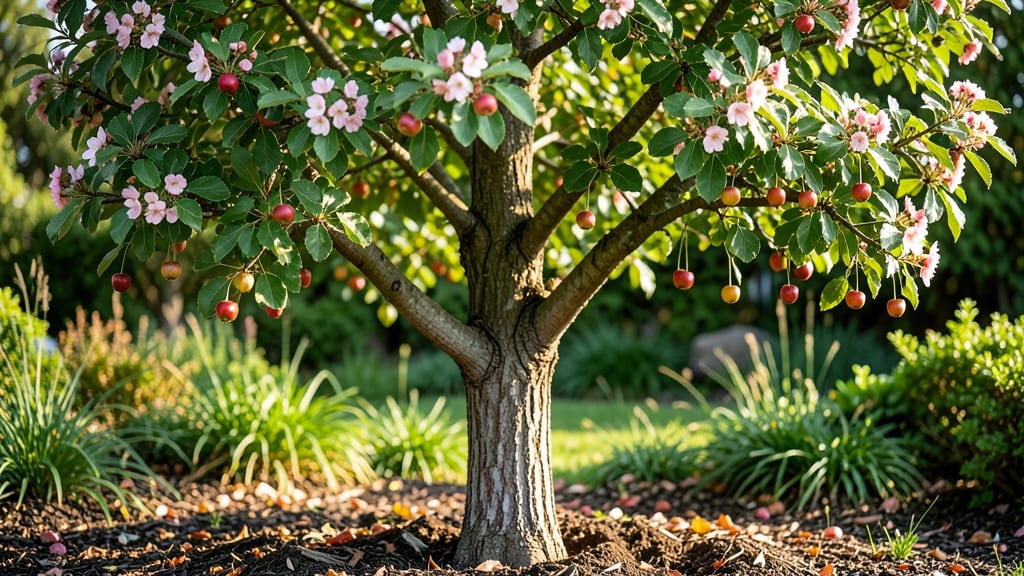
Factors that influence crab apple tree height and growth rate
The height of your crab apple tree depends on several key factors, starting with its cultivar. Some varieties naturally stay compact, while others reach towering heights.
For example, the 'Adams' crab apple can grow up to 25 feet, while dwarf varieties like 'Centennial' max out at 12 feet. Understanding these differences helps you choose the perfect tree for your space.
Another critical factor is sunlight exposure. Crab apple trees thrive in full sun (6+ hours daily), which fuels rapid growth. In partial shade, they may grow 20-30% slower and produce fewer blooms.
If your yard has limited sun, opt for dwarf varieties that tolerate shade better. Always plant in the sunniest spot available to maximize growth potential.
Your soil type also plays a role. Well-draining, slightly acidic soil (pH 6.0-7.0) supports healthy root development, while clay-heavy or waterlogged soil can stunt growth. Amend poor soil with compost or sand before planting. A nutrient-rich environment ensures your tree reaches its full genetic height without stress.
How Tall Does a Crab Apple Tree Grow?
Pros of Standard Varieties
- 🌳 Bold presence in large landscapes
- 🍎 Abundant fruit for wildlife
- 🌿 Longer bloom season (4-6 weeks)
Cons of Standard Varieties
- ⚠️ Requires space (20-25 ft)
- ✂️ Needs pruning for height control
- 💧 Higher water needs early on
Pros of Dwarf Varieties
- 🏡 Perfect for small yards (8-12 ft)
- 🌱 Faster maturity (5-7 years)
- 💰 Lower maintenance (less pruning)
Cons of Dwarf Varieties
- 🍎 Smaller fruit yield
- 🌿 Less dramatic blooms
- 🌡️ Sensitive to cold in Zone 5
💡 Tip: Use root restriction (e.g., planting in a narrow trench) to further limit dwarf variety growth by 20-30%.
Pruning practices are your best tool for controlling height. Young trees benefit from annual pruning in late winter to shape their structure. For height reduction, prune 1/3 of the new growth each year. Avoid heavy pruning in fall, as it encourages tender growth before winter. Regular pruning keeps your tree healthy and manageable, whether you want a compact form or a taller silhouette.
Finally, your climate zone affects growth rate. Crab apple trees thrive in USDA Zones 4-8, but those in warmer climates (Zones 7-8) grow faster due to longer growing seasons. In colder zones (4-5), growth may slow until spring.
If you're in a short-season area, choose dwarf varieties that mature quicker. Always check your zone before planting to set realistic expectations.
By combining the right cultivar, sunlight, soil, pruning, and climate awareness, you can steer your crab apple tree toward your ideal height—whether that’s a towering centerpiece or a neat small-yard accent.
Start with these factors, and watch your tree grow exactly as you envision! 🌳