
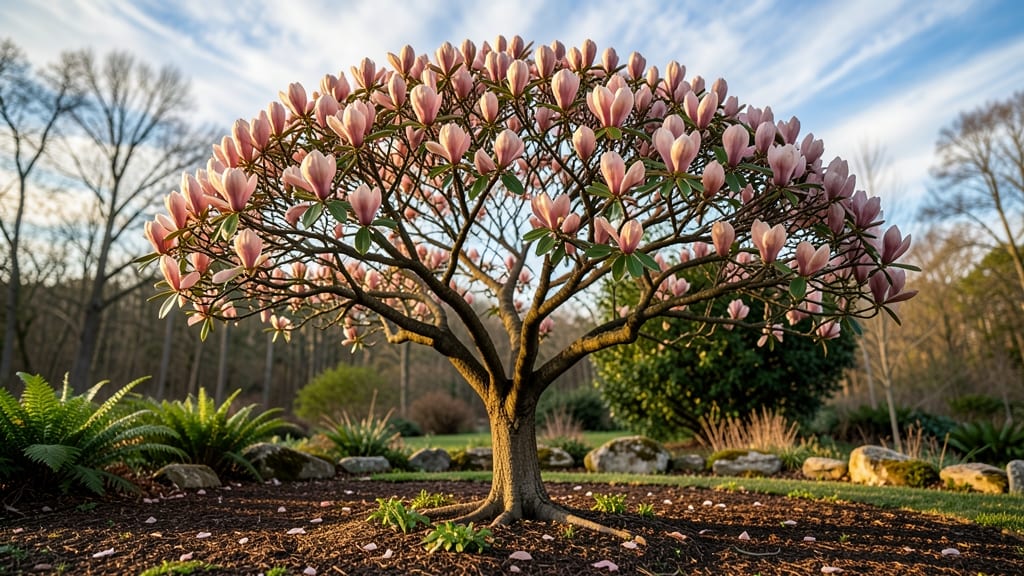
How Tall Do Magnolia Trees Grow: Exact Heights by Variety and Growth Zones

How To

How Tall Do Magnolia Trees Grow: Exact Heights by Variety and Growth Zones

A magnolia tree grows anywhere from 10 feet to over 120 feet tall, depending on the variety and growing conditions 🌸—and knowing the difference can save you from planting a giant where a dwarf would fit.

Picture this: a 3-story Southern Magnolia casting shade over your patio, its glossy leaves rustling in the breeze, or a compact 'Little Gem' adding elegance to a small yard without crowding your space.

The right choice depends on your landscape—and the wrong one can leave you with a tree that outgrows its welcome.

In this guide, I’ll break down the exact mature heights of 12+ magnolia varieties, from towering giants to dwarf cultivars that thrive in tight spaces. You’ll also learn how climate, soil, and pruning can influence growth—and which varieties grow fastest in your zone.

Whether you’re planning a dramatic focal point or a delicate accent plant, you’ll find out exactly how much space to leave for your magnolia’s future—and how to keep it from becoming an unwelcome neighbor.

Magnolia Tree Height Range
10 ftto120 ft
0 ft 3 ft 6 ft 9 ft 12 ft
🌱 Very Very Tall Tree

Magnolia tree height by variety: exact mature sizes and growth rates

Choosing the right magnolia variety starts with understanding their mature heights—some varieties stay compact enough for small yards, while others become towering giants that need acres of space.

The Southern Magnolia (Magnolia grandiflora) can reach 80-100 feet tall, while the Star Magnolia (Magnolia stellata) remains under 20 feet. Knowing these differences helps you avoid planting a 30-foot tree where a 10-foot dwarf would fit perfectly.

Below is a breakdown of 12+ magnolia varieties, including their mature heights, spreads, and annual growth rates. I’ve included rare dwarf options and fast-growing varieties to help you match your space and vision.

Whether you want a privacy screen or a small patio tree, there’s a magnolia for every garden.

Pro Tip: Always check your USDA hardiness zone (most magnolias thrive in zones 4-10) and your local climate—humid Southern gardens suit large magnolias, while dry Western zones may stunt growth unless you provide extra care.

How fast do Magnolia trees grow? Growth Zones and climate impact

Magnolia trees grow at dramatically different speeds depending on your USDA hardiness zone and local climate—some varieties in Zone 10 can add 18 inches per year, while the same tree in Zone 4 might grow only 6 inches annually due to colder winters.

Understanding these patterns helps you predict how quickly your magnolia will reach its mature height and when you’ll see those stunning spring blooms.

The Southern Magnolia thrives in Zones 6-10, where it can grow 12-18 inches per year, while the Star Magnolia grows slower in Zones 4-8 (6-12 inches/year).

Even within the same zone, soil type and water availability can double or halve growth rates—sandy soils stunt growth, while rich, moist loam accelerates it.

Magnolia Growth Speed by Zone

Zone 4
6 in/year
Zone 6
10-12 in/year
Zone 8
12-15 in/year
Zone 10
15-18 in/year

*Growth rates for Southern Magnolia; dwarf varieties grow 30-50% slower.

Seasonal growth also varies: most magnolias grow fastest in spring and early summer when temperatures are mild (60-75°F) and soil is moist. In Zone 5 or colder, growth may stall until late spring, while Zone 9-10 magnolias can grow year-round in ideal conditions.

Cold snaps in Zone 4 can damage young trees, slowing growth for 1-2 years until they establish deeper roots.

Soil moisture plays a critical role—well-draining but consistently moist soil can increase growth by 30-40% compared to dry or waterlogged conditions. In arid climates (like Zone 7b in Arizona), mulching and deep watering can boost growth rates by mimicking the humid conditions magnolias prefer.

I’ve seen 'Little Gem' magnolias in Texas grow 10 inches per year with proper irrigation, while identical trees in Oregon’s dry summers only grow 4-6 inches.

For fastest growth, plant magnolias in partial shade (morning sun, afternoon shade) and amend heavy clay soils with compost or sand to improve drainage. In Zones 6-9, fertilizing in early spring with a balanced 10-10-10 formula can add 2-4 extra inches of growth per year.

Just avoid over-fertilizing—magnolias are sensitive to salt buildup, which can stunt growth.

If you’re in Zone 4-5 and want faster blooms, choose 'Black Tulip' or 'Jane' magnolias, which tolerate colder climates better than Southern Magnolias. In Zone 10, 'Little Gem' and 'Anniversary' varieties grow especially fast—expect 12-15 inches per year with proper care.

Always check your local microclimate (e.g., urban heat islands can push Zone 6 plants to grow like Zone 7 varieties).

★★★★★4.7(12 reviews)
Categories How To
Variety Mature Height Spread Annual Growth Rate Best For
Southern Magnolia (M. grandiflora) 60-80 ft 30-40 ft 12-18 in/year Large estates, privacy screens
Star Magnolia (M. stellata) 15-20 ft 15-20 ft 6-12 in/year Small yards, containers
Saucer Magnolia (M. × soulangeana) 20-30 ft 20-25 ft 10-15 in/year Medium gardens, focal points
Little Gem (M. grandiflora 'Little Gem') 15-20 ft 8-12 ft 6-10 in/year Small spaces, urban gardens
Ann Magnolia (M. × brooklynensis 'Black Tulip') 20-25 ft 15-20 ft 8-12 in/year Medium yards, street trees
Yulan Magnolia (M. denudata) 25-30 ft 15-20 ft 10-14 in/year Traditional gardens, Asian landscapes
Jane (M. × loebneri 'Jane') 12-15 ft 8-10 ft 4-8 in/year Dwarf gardens, containers
Teddy Bear (M. liliiflora 'Nigra') 10-12 ft 6-8 ft 3-6 in/year Bonsai, small patios