
How To
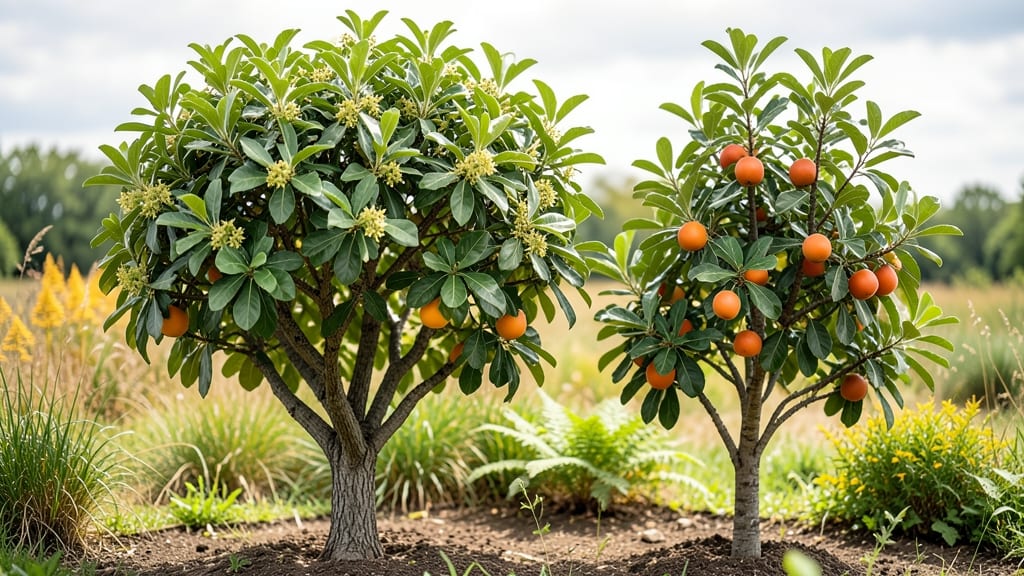
A persimmon tree can how tall it grows dramatically—from a modest 10 feet to a towering 50 feet—depending on the variety you choose.
Wondering whether a persimmon tree will tower over your backyard or fit neatly into a small garden? The height of these fruit-bearing trees can vary dramatically—from compact dwarf varieties to towering giants—making variety selection a critical decision for any gardener.
Standard varieties like the American persimmon (Diospyros virginiana) often reach 30 to 50 feet, while Asian cultivars such as 'Fuyu' or 'Hachiya' typically stay between 15 and 25 feet. Dwarf cultivars, bred for smaller spaces, can even cap out at 10 feet or less.
In this guide, I’ll break down the height ranges for different persimmon types, how pruning and climate affect growth, and which varieties suit your space—so you can pick the perfect tree for your garden.

Standard persimmon tree heights: understanding mature growth ranges
If you're dreaming of a persimmon tree in your landscape, knowing its mature height is essential for planning. Standard persimmon varieties can reach impressive heights, often dwarfing other backyard trees.
The American persimmon (Diospyros virginiana) typically grows between 40 and 60 feet at maturity, while Asian persimmons like Diospyros kaki usually top out around 20 to 30 feet. Understanding these ranges helps you avoid overcrowding and ensures your tree thrives in its space.
For gardeners with limited space, standard persimmon trees may seem overwhelming. However, their growth patterns are predictable when given the right conditions. These trees grow slowly in their early years but experience rapid height increases once established.
Proper pruning techniques and sunlight exposure can influence their ultimate height, making them more manageable in some cases.
Here’s a quick comparison of mature heights for common standard persimmon varieties:
| Variety | Mature Height (ft) | Spread (ft) | Sunlight Needs |
|---|---|---|---|
| American Persimmon (Diospyros virginiana) | 40–60 | 25–35 | Full sun (6+ hrs/day) |
| Asian Persimmon (Diospyros kaki) | 20–30 | 15–25 | Full sun (6+ hrs/day) |
| Hybrid Persimmon (e.g., 'Meader') | 25–40 | 20–30 | Full sun (6+ hrs/day) |
When planning your garden layout, consider the canopy spread of these trees, which can be just as important as height. A mature American persimmon may spread 25 to 35 feet, requiring ample space to avoid shading out other plants.
Asian persimmons are slightly more compact, with spreads of 15 to 25 feet, making them a better fit for smaller yards.
Persimmon trees thrive in full sunlight, needing at least 6 to 8 hours of direct light daily. Without adequate sunlight, their growth will be stunted, and fruit production may suffer.
If your yard has partial shade, consider planting a dwarf variety instead. The right location ensures your tree reaches its full potential height while staying healthy and productive.
Another factor influencing height is the soil quality and water availability. Persimmon trees prefer well-draining, slightly acidic soil with a pH between 5.0 and 7.0.
Poor soil conditions can slow growth, while consistent watering—especially during the first few years—helps the tree establish a strong root system for future height gains.
For gardeners in colder climates, winter hardiness plays a role in long-term growth. Most standard persimmon varieties tolerate USDA zones 5 through 9, with some Asian varieties extending into zone 4.
In colder regions, expect slightly slower growth rates, but the tree will still reach its mature height over time with proper care.
Pruning young persimmon trees can also influence their ultimate height. By removing suckers and competing branches early on, you encourage a single, strong trunk and a more manageable shape. Regular pruning in late winter or early spring helps maintain the tree’s structure while promoting better airflow and fruit production.
If you're unsure whether a standard persimmon tree will fit your space, consider starting with a container-grown sapling. This allows you to monitor its growth rate before planting it permanently.
Many nurseries offer 3- to 5-year-old trees that are already established, giving you a clearer idea of how tall they’ll grow in your specific conditions.
Remember, persimmon trees are long-term investments. While they may take years to reach their mature height, their ornamental value and fruit production make them worth the wait. With the right variety and care, your persimmon tree can become a stunning focal point in your landscape for decades to come. 🌳
Dwarf persimmon trees: compact varieties for small spaces
If you love the idea of growing persimmons but lack space for a towering tree, dwarf varieties are your perfect solution. These compact persimmon trees offer all the sweet rewards without the sprawling canopy, making them ideal for small yards, containers, or urban gardens.
With mature heights between 10-15 feet, they fit neatly into tight spaces while still producing abundant fruit.
Among the most popular dwarf varieties, 'Fuyu' and 'Hachiya' stand out for their fast growth and reliable fruit production. 'Fuyu' matures slightly faster, reaching 8-10 feet in 3-4 years, while 'Hachiya' grows a bit slower but produces larger, sweeter fruits.
For even smaller spaces, the 'Meader' variety tops out around 6-8 feet, perfect for containers or patio gardens.
Dwarf Persimmon Varieties: Pros and Cons
To maximize fruit production in small spaces, prioritize full sun exposure (at least 6-8 hours daily) and well-draining soil. Dwarf persimmons thrive in USDA Zones 7-10, so choose a variety suited to your climate.
For container gardening, use a large pot (20+ gallons) with drainage holes and a balanced fertilizer like 10-10-10 every 4-6 weeks during growing season.
Pruning is key to maintaining size and shape. In late winter or early spring, remove dead or crossing branches and thin out overcrowded growth to improve airflow. For container-grown trees, prune lightly after harvest to encourage compact growth and prevent root-bound stress.
Mulch around the base with organic matter to retain moisture and suppress weeds.
Even in small spaces, you can enjoy a bountiful persimmon harvest with the right variety and care. Whether you choose 'Fuyu' for quick rewards or 'Hachiya' for sweeter fruit, these dwarf trees prove that big flavor doesn't require big space.
With proper pruning and container strategies, you’ll have juicy persimmons in no time—without sacrificing your garden’s layout!