
How To
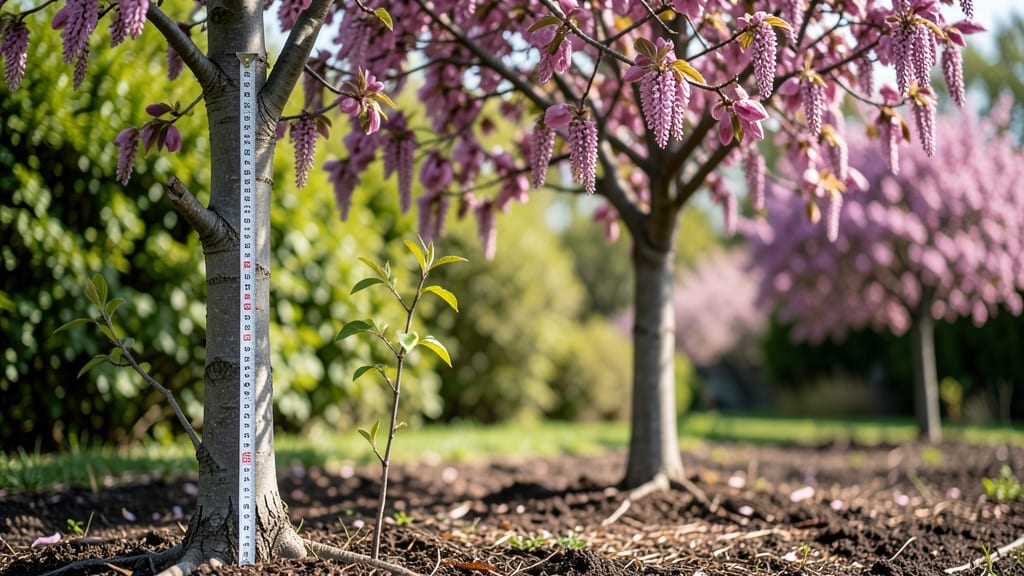
Redbud tree height by variety: mature sizes compared
Choosing the right redbud tree variety depends on your space and vision. Some varieties stay under 10 feet while others reach 30 feet at maturity. Understanding these differences helps you select the perfect tree for your landscape—whether you have a cozy courtyard or a spacious backyard.
The Eastern Redbud (Cercis canadensis) is the most common variety, typically growing 20-30 feet tall, making it ideal for larger properties. However, compact varieties like 'Merlot' or 'Royal Purple' offer stunning color without overwhelming your garden. Let’s compare eight popular redbud varieties to help you decide.
If you're working with limited space, varieties like 'Merlot' or 'Ruby Falls' are perfect—both stay under 12 feet tall while still delivering vibrant blooms. For larger properties, the Eastern Redbud or 'Forest Pansy' will make a bold statement with their towering heights and stunning foliage.
Consider your USDA hardiness zone when selecting a variety. Most redbuds thrive in zones 4-9, but Western Redbud is better suited for drier climates in zones 5-9
How fast do redbud trees grow to mature height?
Redbud trees (Cercis canadensis) are prized for their vibrant spring blooms and compact growth habits, but their height progression varies dramatically by variety. Most gardeners see 6-12 inches of growth per year, though some dwarf types mature in half that time.
Understanding these rates helps you plan for long-term landscaping goals while avoiding overcrowded spaces.
Your redbud's final height depends on three key factors: genetics (variety), growing conditions, and pruning practices. For example, the 'Covey' redbud stays under 10 feet tall while the standard Eastern Redbud can reach 25-30 feet.
Even within the same variety, sunlight exposure and soil quality can shift growth by 20-30%.
To estimate your redbud's maturity timeline, start with its expected final height and divide by its average annual growth. For instance, a 'Merlot' redbud (15-20 feet) growing 8 inches/year will take 20-25 years to fully mature.
Track growth with a measuring tape each spring—most redbuds spurt 50% of their yearly growth in April-May.
If your redbud seems stunted, check these three areas first: root zone compaction (loosen soil), nutrient deficiencies (test soil), or overcrowded roots (prune nearby plants).
I once had a 10-year-old Eastern Redbud that only reached 8 feet—turns out it was planted too close to a foundation, restricting root spread. Moving it solved the issue within 2 growing seasons.
For urban landscapes or small yards, prioritize dwarf varieties like 'Ruby Falls' (weeping habit, 10 feet) or 'Appalachian Red' (8 feet). These stay manageable while still delivering showy spring blooms.
Even standard varieties can be topped annually to keep them under 15 feet, though this may reduce flowering slightly.
Remember: Patience pays off with redbuds. Their slow-to-moderate growth makes them ideal for long-term investments in your landscape. Plant one now, and in 10-20 years, you'll have a stunning focal point that outshines fast-growing but short-lived alternatives. 🌳